Aesthetic Course

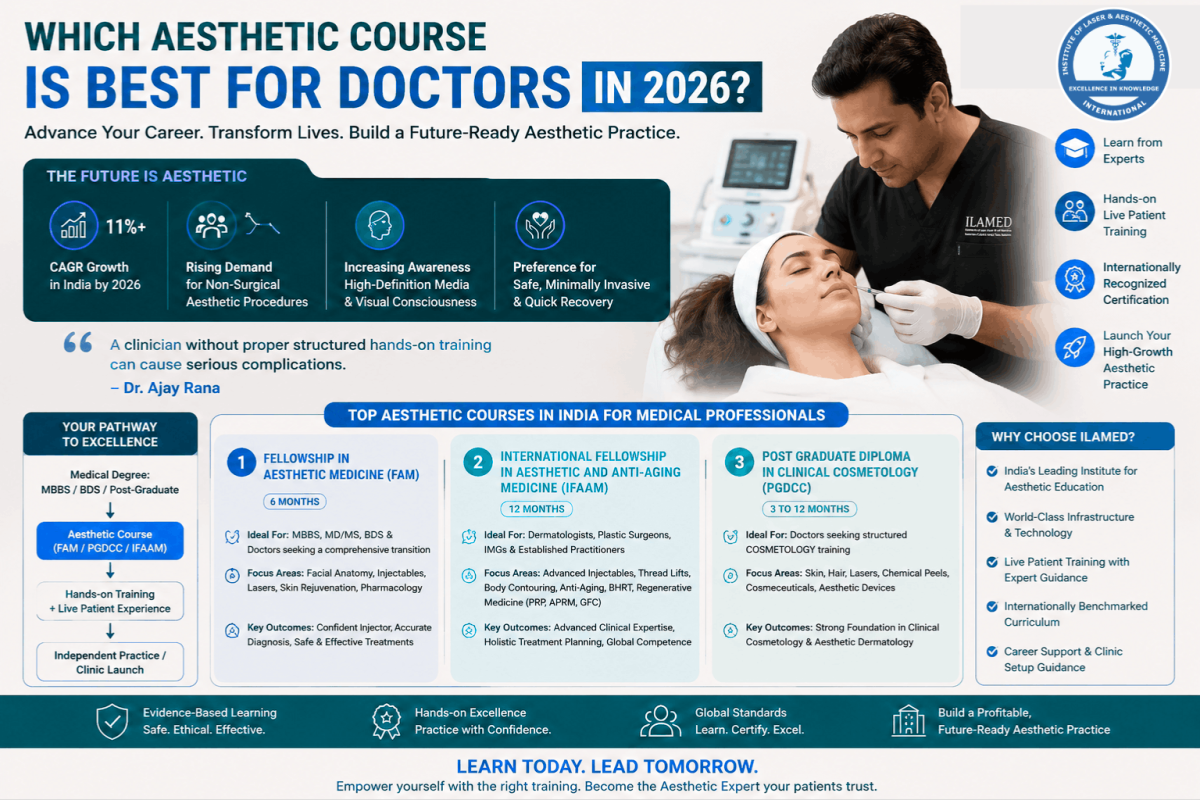
Which Aesthetic Course Is Best for Doctors in 2026?

The Indian Healthcare industry is undergoing a major re-structuring. The scope of traditional clinical practice has been extended for practicing physicians, surgeons and dental professionals. With a changing healthcare landscape, physicians today are seeking to expand their practice beyond medicine to create highly lucrative independent practices and build more sustainable work-life balance. This professional development has catapulted medical aesthetics to a prominent position in post-graduate medical education.

For physicians looking into career transition opportunities, the number one question is: Which aesthetic course is best for doctors in 2026?

Healthcare professionals need to consider key factors such as the depth of the curriculum, international accreditation, scope of practice, and actual patient clinical experience when making a decision. Choosing the right program from the best aesthetic courses in India demands an in-depth study on how specialized training equates to clinical competence and market authority.


Growth of Medical Aesthetics in India 

It has become a norm today that non-surgical cosmetics are expected to be a part of the wellness regime of regular people, not a luxury for the elite. Data which shows the industry’s growth pattern up to 2026, the medical aesthetics industry in India is growing at a rate of more than 11% CAGR. This spike is a result of a mix of factors:

  • An increasingly aging population that wants to avoid getting old.
  • Increasing disposable income of the urban middle and upper class.
  • The omnipresence of high-definition digital media, which boosts visual consciousness.
  • A general preference of the patient to the use of procedures that are less invasive, have minimal recovery times and less risk of surgery.

It is a new clinical challenge for a medical practitioner. But, one should train rigorously to enter this field. The anatomy of the face and neck is delicate, which is why specialized education is essential with aesthetic procedures. As Dr. Ajay Rana, a globally famous dermatologist and Founder and Director of Institute of Laser & Aesthetic Medicine (ILAMED) has said:

A clinical cosmetic veterinarian without proper structured hands-on training and under the supervision of an experienced professional, has a high risk of causing serious clinical problems, such as bruising, infection, necrosis of the skin and devastating vascular occlusion.

Thus, the first requirement for safe and legal practice is to choose a top-notch, scientifically sound training program.


Top Aesthetic Courses in India for Medical Professionals Evaluation

There is no “one-size-fits-all” model for aesthetic education. Programs are structured systematically to match the doctor’s previous medical background, future career plan, and training time. An analytical list of the best clinical courses available for doctors interested in pursuing aesthetic courses in India is presented below.

text

         Medicines Degree: MBBS / BDS / Post-Graduate

                                 │

                ┌────────────────┴────────────────┐

                ▼                                 ▼

       All materials in this publication are subject to copyright protection.

       – FAM (6 Months)                  – PGDCC (3-12 Months)

       Programme CERTIFICATIONS: – IFAAM (1 Year Masterclass) – Specialized Masters (Trichology/Gynec)

                │                                 │

                └────────────────┬────────────────┘

                                 ▼

             This is a model that combines theory and hands-on activities.

                                 │

                                 ▼

            Independent Practice / Clinic Launch


1. Fellowship in Aesthetic Medicine (FAM)

It is believed that the Fellowship in Aesthetic Medicine (FAM) is the benchmark for all physicians that enter the field of medical aesthetics. The course is designed to take a traditional medical school graduate and turn him/her into a self-assured aesthetic injector and laser clinician, and the course lasts for 6 months.

Target Audience: It is an ideal book for all those practicing in core clinical fields, like MBBS graduates, MD/MS specialists and those who need a fast and yet comprehensive transition plan.

Core Curriculum Focus: The program provides core competency in facial anatomy, skin pharmacology, the physics of light-based devices, and non-surgical skin rejuvenation.

Key Educational Outcomes: Delegates work clinically with mapping injection points, calculation of accurate dosages, product rheology (the flow and thickness of dermal fillers) and diagnostic skin evaluations.


2. International Scientific Communication Skills (ISC) Program / International Fellowship in Aesthetic and Anti-Aging Medicine (IFAAM)

The International Fellowship in Aesthetic and Anti-Aging Medicine (IFAAM) is the most prestigious master level course for medical professionals looking to make a name at the pinnacle of the market. This 12-month accelerated programme combines both surface and internal metabolic healing.

Target Audience: Any already established medical practitioner, dermatologist, plastic surgeon or international medical graduate (IMGs) looking to qualify for the best possible qualification in the world.

Core Curriculum Focus: Advanced injectables, multi-vector thread lifting, body contouring systems, preventive anti-aging medicine, bio-identical hormone replacement therapies (BHRT), and cellular regeneration techniques (APRM, advanced platelet-rich plasma and growth factor concentrates) are all deeply covered in the Core Curriculum Focus.

Key Educational Outcomes: Learners develop multi-layered, complex facial transformations and the ability to design in depth, holistic, internal-to-external wellness routines for an elite clientele.


3. PG Diploma in Clinical Cosmetology (PGDCC)

It is a very structured course and the Postgraduate Diploma in Clinical Cosmetology (PGDCC) places a strong emphasis on high level dermatology treatments and non-surgical medical skin care technologies.

Target Audience: The candidates who want to pursue their career as clinical skin specialists and in advanced chemical peeling and medical device operations are eligible for this course.

Core Curriculum Focus: Intensive study of chemical resurfacing (superficial to deep peels), micro-needling radiofrequency (MNRF), high-intensity focused ultrasound (HIFU), laser scar management and tattoo removal.

Key Educational Outcomes: Knowledge of epidermal and dermal rejuvenation protocols, accurate calibration of the devices for different Fitzpatrick skin types and long term management of chronic pigmentation disorders.


Comparative Matrix of Leading Educational Pathways

The table below is a comparison of the main parameters of the structures of the top aesthetic courses in India for 2026 in order to guide your planning for the future.

Course NameDurationPrimary Clinical FocusHands-On Training ModelEligibility Requirements
Fellowship in Aesthetic Medicine (FAM)6 MonthsThe basic peel, lasers, dermal fillers and botulinum toxins are the most common treatments.Theory and practical sessions are delivered in a blended format (online and intensive on campus)MBBS, MD, MS, BDS (Limited Scope)
International Fellowship in Aesthetic & Anti-Aging Medicine (IFAAM)1 YearAdvanced Structural Injectables, Thread Lifts, BHRT, Cellular Anti-AgingExtended On-Campus Residency + Live Patient Injection MentorshipRegistered Medical Graduates (MBBS/MD/MS)
Postgraduate Diploma in Clinical Cosmetology (PGDCC)3 to 12 MonthsMedical Trichology, Chemical Resurfacing, Light Based Device TherapyOn-site Clinical Rotations & Live Case DemonstrationsStudents who have passed out from MBBS, BDS, BAMS, BHMS and Nursing graduate courses are also eligible to apply.
Fellowship in Aesthetic Dentistry (FAD)3 MonthsThe smile design, veneers, perioral botox, nasolabial fillers are all done by this solution.Specialized Clinical Practical Labs in Focused Maxillofacial & Dental Clinical Practical LabsThe courses are BDS/MDS (Registered Dental Practitioners).

What is expected of a Medical Aesthetic Program

Any high quality aesthetic program is based on a strong, science-based curriculum. It should far exceed product demonstrations to provide core medical training. The basic requirements of any quality course are:

Identify the various parts of the face and how they change with age.

So it’s important to have a deep, three-dimensional knowledge of facial architecture when practicing aesthetic medicine. The training should include a complete plan for:

  • The Significance of Facial Fat Compartments: Superficial and deep fat compartments, and the understanding of how loss of volume in these areas contributes to the facial “sagging” and “aging” effect.
  • Muscular Mechanics: Understanding the exact origins, insertions and deep vs superficial profiles of the muscles of the face, including the frontalis, orbicularis oculi, and procerus, to achieve a truly natural appearance when injected with botulinum toxin.
  • Vascular Highways: Creating a very accurate mental map of the important arterial flow (facial, angular and supratrochlear) so that there is no accidental intra-arterial product placement.

The Facial Layering System for Safe Injection Placement

A technique for placement that ensures safety for the face and neck.

text

┌────────────────────────────────────────────────────────┐

│ Layer 1: Skin (Epidermis & Dermis)                     │

├────────────────────────────────────────────────────────┤

│ LAYER 2: Superficial Fat Pads (Subcutaneous Space)     │

├────────────────────────────────────────────────────────┤

│ The SMAS (Superficial Muscular Aponeurotic System)     │

│ is at the third layer.                                 │

├────────────────────────────────────────────────────────┤

│ Structural Volume: Layer 4 Deep Fat Pads               │

├────────────────────────────────────────────────────────┤

│ Safe Depot Zone: Periosteum (Bone Surface)             │

└────────────────────────────────────────────────────────┘


Advanced Injectables Pharmacology and Rheology

Physicians need to take a prescription drug course to learn how to manage injectables with great skill; they need to be able to accurately evaluate:

  • Botulinum Toxin Dynamics: The exact science of how to reconstitute Botulinum Toxin, calculate the units, how it travels through the body and where to inject it in order to treat dynamic rhytids (wrinkles).
  • Dermal Filler Chemistry: Understanding the precise molecular cross-linking structures of HA fillers. Practitioners need to be aware of the difference between using high G-Prime filler for structural jawline contouring and low G-Prime filler for perioral or tear trough hydration.

The Physics of Energy Based Devices

Laser technologies are the mechanical pillars of today’s aesthetic clinic. Comprehensive programs shall be designed to teach:

  • Laser-Tissue Interactions: The basics of wavelength selection, pulse width, spot size and energy fluence.
  • Hands-on training with a variety of Class 4 medical lasers, including Q-Switched Nd:YAG laser for pigment and tattoo removal, Fractional 
  • CO2
  • CO
  • 2
  •  for deep acne scar remodeling and Diode laser for long-term laser hair reduction.

Legal Scope and Professional Eligibility in India

Safeguarding your medical license amidst the legal structure is absolutely crucial to maintaining the best ethical standards. The scope of practice in India depends on the recognition of your primary medical qualification and the guidelines issued by the national councils (e.g., Dental Council of India, National Medical Commission).

MBBS, MD and MS Practitioners

Physicians who possess an NMC registered MBBS degree and/or a higher post-graduate medical qualification/degree have full legal authority to practice the full range of medical aesthetics. This involves the use of medical grade topical formulations, the use of advanced Class 4 energy based devices, multi-layer thread lifts and the injection of deep dermal fillers and botulinum toxins in all facial and body anatomical zones.

Dentist in the field of Dentistry, BDS and MDS Dental Surgeons

Dentists are fully qualified to pursue advanced specialties such as the Fellowship in Aesthetic Dentistry (FAD) or Fellowship in Advanced Aesthetic Dentistry (FAAD) at a place like ILAMED.

The scope of practice of a dental surgeon as per the law is very limited and has a primary emphasis on the maxillofacial, perioral and oral area. In this context, dentists can truly excel in managing gummy smiles, addressing jaw muscle enlargement (masseter hypertrophy) associated with bruxism (teeth grinding), refining nasolabial folds, and creating holistic smile transformations that integrate dental aesthetics with facial harmony.

AYUSH and Nursing Professionals

Students from AYUSH pathways (BAMS, BHMS) and B.Individuals with Nursing background are encouraged to take up Clinical Cosmetology and Trichology courses to enhance their knowledge immensely.

From a legal perspective, their practice is mostly concerned with treatments in the surface layers of the skin. These are advanced medical facials, superficial chemical peels, micro-needling, and assistance in or operating certain light and/or radiofrequency devices under direct medical supervision. Most of them are not allowed to do deep facial injections, such as dermal fillers, or botulinum toxins.


Absolute necessity for live-patient training

It is impossible to gain all the clinical skills one needs through a computer screen, from a textbook or from watching a video demonstration. High-quality schools such as ILAMED focus on practical, experiential learning with supervision. Dr. Ajay Rana and other senior faculty and industry experts provide mentorship to the delegates which carry out procedures on a live patient. This direct clinical environment helps doctors learn to measure skin resistance precisely, deal with the feedback from patients in real time, understand the skin responses immediately and master the physical contact needed for precision injection.

A detailed strategy for minimizing complications

The truly skilled aesthetic physician is not only adept at creating beautiful outcomes he is also fast and proficient at what he does when things go wrong. Good training sessions invest significant time in imparting correct rescue procedure so that doctors can confidently deal with:

  • Vascular Occlusion Interventions: An immediate arterial blockage may be detected by observing the change in color of the skin, and if there is significant localized pain, the procedure can be carried out immediately, using high doses of hyaluronidase to dissolve the blockage and restore healthy blood flow.
  • Adverse Soft-Tissue Management: Prevention and treatment of delayed-onset nodules, localized infections, post-inflammatory hyperpigmentation (PIH) and transient edema (swelling) or erythema (redness).

Career Pathways and Financial Projections After Certification

Upon completion of a premier certification, a variety of promising and lucrative career opportunities can be found throughout the healthcare sector.

1. Corporate Medical Aesthetics & High Quality Clinic Chains

Well-trained aesthetic physicians are in demand on the institutional market. Graduates can typically find jobs as consultant aesthetic doctors or clinical directors at top-tier, nationwide anti-aging wellness chains and luxury medical spas.

2. Independent Practice and Private Clinic Ownership

For clinicians who want to be entrepreneurs, the fellowship program is just what they need to build that clinical confidence and technical expertise needed to start their own private practice. This route provides full professional freedom, the opportunity to design your own patient experience, and great control of your own work-life balance.

3. Financial Trajectory and Return on Investment (ROI)

The monetary returns in medical aesthetics are tied to the amount of clinical experience you have and how your hands-on skills have been refined, as well as your overall market positioning. The table below provides a realistic estimation of incomes for certified aesthetic doctors in the Indian market in 2026, based on data.

IPMIX: Independent Practice Monthly Income Trajectory by Experience Level

text

Senior (5+ Years)   │ ▓▓▓▓▓▓▓▓▓▓▓▓▓▓▓▓▓▓▓▓▓▓▓▓▓▓▓▓▓▓▓▓▓▓▓▓▓▓▓▓ ₹10 – ₹25 Lakhs

                    │

Mid-Level (2-4 Yrs) │ ▓▓▓▓▓▓▓▓▓▓▓▓▓▓▓▓ ₹4 – ₹8 Lakhs

                    │

Fresher (0-1 Year)  │ ▓▓▓▓ ₹1.5 – ₹3 Lakhs

                    └─────────────────────────────────────────────────────────

                      ₹0   ₹2L  ₹4L  ₹6L  ₹8L  ₹10L  ₹15L  ₹20L  ₹25L (INR)

Professional Tier & Experience LevelAverage Monthly Salary (Corporate/Chain Clinics)Estimated Monthly Income (Self-Employment)
Entry-Level Practitioner (0-1 Year Post-Certification)₹~60,000 to ₹~90,000₹~1,50,000 to ₹~3,00,000
Mid-Level Consultant (2-4 years of active clinical practice)₹~1,20,000 to ₹~2,00,000₹~4,00,000 to ₹~8,00,000
Senior Specialist / Practice Owner (5+ Years of Dedicated Industry Authority)₹~2,50,000 to ₹4,00,000+₹~10,00,000 to ₹~25,00,000

To choose an Ideal Aesthetic Training Institute, you need to complete the following checklist

This handy 5-point checklist can be used to comprehensively assess any training institute before joining the best aesthetic courses in India:

  • Check the longevity of the institution and its industry representation: If it’s an institution that’s been around for more than two decades, like the ILAMED, it’s likely that it has a solid track record that ensures you are learning from a stable program.
  • Audit Faculty Training and Leadership: Ensure that the program is taught and led by a leader and/or expert in the field of medicine, with medical qualifications, who is actively practicing Medicine in the world, not a person with no medical qualifications.
  • Confirm the Practical Training Model: Make the Practical Training Model explicit. Be sure you will be performing and treating live patients and not just watching dummy models or watching videos.
  • Verify Accreditation: Ensure that your end qualifications are officially recognized by reputed international bodies like the Indo-German Board of Aesthetic Medicine and Surgery (IGBAMS) or those affiliated with the International Union of Aesthetic Medicine (UIME).
  • Assess Post-Training Support Systems: Ensure that the institute offers post-training support such as continued mentoring, continuous medical education (CME) training, and practical advice on clinic setup, equipment purchase, and patient retention.

Taking Your Next Step: Conclusion

For modern doctors in 2026, the decision to pursue a career in medical aesthetics is an incredibly promising and future-proof trajectory to take. You will protect your professional reputation and ensure long-term financial success by selecting a comprehensive program that has just the right mix of strong scientific theory and real-world, live-patient application.

For those seeking to make a leap in their professional journey, ILAMED’s world-class, internationally accredited fellowship opportunities are available under the leadership of visionary Dr. Ajay Rana. Take your medical practice to new heights, cater to the growing demand of today’s patients and stay at the very top of the medical aesthetic industry in India.

Frequently Asked Questions (FAQ)

Is it legal to get Botox and dermal fillers from an ordinary MBBS doctor in India?

Yes. An MBBS doctor registered with the National Medical Commission (NMC) or the medical council of the state is legally allowed to do injectables such as fillers and botulinum toxins. But these are the high-tech procedures which are not taught as part of the regular MBBS course; so it is highly recommended for patients’ safety and to gain the real competency to perform these procedures through a thorough and structured clinical training.

Is a cosmetology certificate different from a medical fellowship?

The typical cosmetology certificate is geared more towards cosmetology that can be performed by non-medical professionals and are mostly superficial, skin-focused treatments delivered in a salon setting. A medical fellowship is an advanced, science-based clinical training program that is specifically geared toward the registered healthcare professional and typically granted to physicians or other healthcare professionals. It includes the in-depth anatomy and facial regions, prescription level pharmacology, advanced injectable procedures and medical management of complications.

On average how long does it take to become an independent aesthetic practitioner?

Intensive hands-on courses can last anywhere from 3 months to a year; after a doctor has been actively practicing, he should be a confident, independent practitioner within 6 months after his formal certification. The process will be further expedited with continued mentorship and attendance at advanced masterclasses.

Do aesthetic training courses on a computer alone adequately prepare one to begin a private practice?

Yes. For learning important and basic theoretical background, understanding of laser physics, and learning structural anatomy, online modules are highly efficient and excellent. But there is no substitute for learning the skills which rely on the hands-on experience of a classroom or lab. Before you can risk working on patients safely in your own clinic, it is absolutely essential that you have hands-on experience with real patients, while working directly under the supervision of an expert.

Clinical Cosmetology Course

Clinical Cosmetology Course in India | Eligibility, Curriculum, Hands-on Skills & More

Introduction

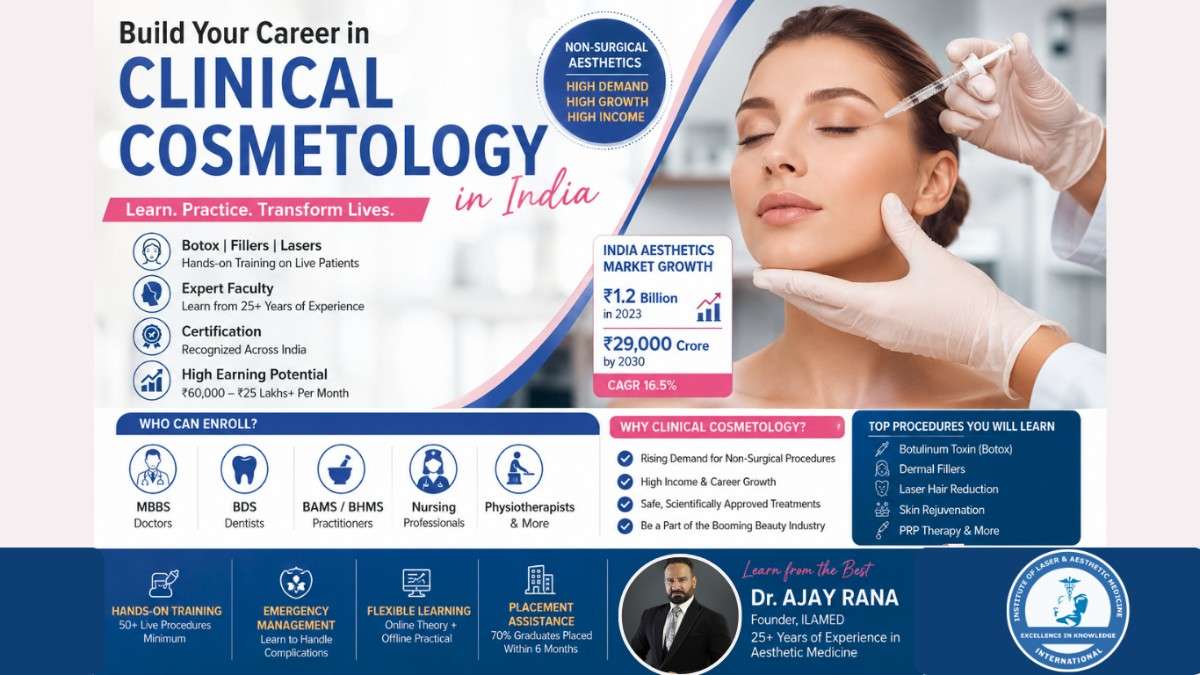
The beauty and aesthetic business in India is in a remarkable change. As per the report by the 2024, India has emerged as one of the top 10 countries worldwide for non-surgical cosmetic procedures. Indian practitioners reported more than 1.2 million botulinum toxin treatments and almost 800,000 hyaluronic acid filler treatments in the single year for which data is available. This is resulting in a tremendous demand for well-trained and qualified staff.

So, if you are a medical practitioner and looking for the top clinical cosmetology course in India, you are at the right place. This detailed resource offers objective and scientifically-based data on clinical cosmetology course requirements, coursework, skills, job prospects, and legal requirements. We will also discuss what some of the top institutes in the field such as ILAMED (Institute of Laser & Aesthetic Medicine) are sharing with us, along with experts like Dr. Ajay Rana, who has been in the business for more than 25 years.

If you are a doctor (MBBS), a dentist (BDS), a practitioner (BAMS/BHMS), or a nurse, this article is for you and will help you make an educated decision for your aesthetic medicine education.


What is a clinical Cosmetology Course?

A clinical cosmetology course is a special training course for medical and allied healthcare professionals. Clinical cosmetology is more of a medical approach to beauty cosmetics which uses medically approved, non-surgical cosmetic procedures conducted in clinical environments.

Common Procedures Covered in Clinical Cosmetology:

ProcedureDescription
Botulinum Toxin (Botox) InjectionsEliminates wrinkles and fine lines from face.
Dermal FillersRestores volume with Hyaluronic acid or Calcium hydroxylapatite
Laser Hair ReductionPermanent treatment for unwanted hair with the use of Class 4 laser technology
Skin RejuvenationPRP therapy, MNRF, HIFI for glowing skin
Chemical PeelsExfoliates and removes acne scars & pigmentation
Thread LiftsNon-surgical face lift technique using threads
Scar & Tattoo RemovalLaser removal of unwanted marks

These treatments involve specialized medical equipment, prescription-only drugs and careful assessment of the patient. So, a formal training is not a choice, it’s a necessity.

Expert Opinion: Dr. Ajay Rana, Founder of ILAMED says, “Clinical Cosmetology is not cosmetology, it is medical science applied to cosmetics, so if anyone is not trained, he can cause serious complications like bruising, infection, vascular occlusion and more.”


What makes Clinical Cosmetology so popular in India?

In 2023, the Indian medical aesthetics market had a total value of about ₹1.2 billion, and a compound annual growth rate (CAGR) of 16.5% is expected to drive the market to $3.5 billion (approximately ₹29,000 crore) by 2030 (Source: Market Research Future, 2024).

The current and future opportunities for growth are identified as:

  • Increasing disposable incomes – More and more Indians have money for aesthetic treatments.
  • Increased awareness and desire to enhance appearance through social media.
  • Patients value minimally invasive treatments, particularly those that have a brief recovery period.
  • India is a prime location for medical tourists seeking quality and budget-friendly aesthetic treatments from Bangladesh, Sri Lanka, Africa, and the Middle East.
  • Male esthetics: An estimated growth of 40% YOY is expected for male aesthetic procedures.

Thus, there is an ever-growing need for the best clinical cosmetology course in India.


Who can take a clinical Cosmetology Course? (Complete Eligibility Table)

This is a question that people ask a lot. The following eligibility matrix is applicable in the context of current medical laws and policies in India.

QualificationEligible for Clinical Cosmetology?Allowed to inject Botox/Fillers?Allowed to perform laser procedures?
MBBS (Doctor)✅ Yes✅ Yes (after certified training)✅ Yes
BDS (Dentist)✅ Yes (facial aesthetics only)✅ Yes (below eyes & lower face)⚠️ Limited (non-invasive only)
BAMS / BHMS (Ayurveda/Homeopathy)✅ Yes⚠️ Depends on state council✅ Yes (non-injectable devices)
GNM / B.Sc Nursing✅ Yes❌ Cannot inject; can assist✅ Yes (under supervision)
Physiotherapist✅ Yes (laser & machines only)❌ No✅ Yes (non-injectable devices)
Non-medical (B.Sc, diploma, beautician)❌ No❌ No❌ No

Addressing Your Question: Can a BDS Doctor Do a Clinical Cosmetology Course?

Yes. BDS (dental) graduates can opt for clinical cosmetology but only for the area below the eye line and the bottom portion of the face. A large number of dentists are able to effectively perform perioral aesthetics such as lip fillers and smile line corrections. ILAMED provides specialized modules for BDS professionals so that they are able to work within the boundaries of the law.

Is Clinical Cosmetology legal for non-doctors in India?

No. Non-medical professionals (beauticians, B.Sc non-medical, diploma holders) are not legally allowed to do clinical cosmetology procedures that use injections or prescription devices. Indictments may result when a drug is used in an off-label manner, or if the drug is prescribed to a patient who suffers injury (under IPC Section 337 – causing hurt by rash act), license may be revoked and civil liability for patient harm may be sought.

Dr. Ajay Rana states: “Patient safety is a paramount thing and only an expert medical practitioner who has been trained in the field of clinical cosmetology should perform such procedures.”


What is Best – Cosmetology or Aesthetic Medicine?

Aesthetic medicine provides more advanced surgical training for MBBS physicians, training them in managing complicated outcomes. A clinical cosmetology course may be more suitable and available for the following professionals: BDS, BAMS, BHMS and nursing. A good clinical cosmetology course in India will teach you all the necessary procedures without going beyond your scope of practice. Aesthetic medicine is better suited for individuals who have a particular focus on only injectable and advanced laser procedures.


Is it possible to make money after completing a Cosmetology Course?

Yes. There is a lot of money in it and it’s supported by data. A survey conducted by Indian Institute of Laser & Aesthetic Medicine and placement data from institutes such as ILAMED indicate that:

Level of ExperienceMonthly Salary (Clinic/Chain)Independent Practice Income
Fresher (0–1 year)₹60,000 – ₹90,000₹1.5 – ₹3 lakhs
Mid-level (2–4 years)₹1.2 – ₹2 lakhs₹4 – ₹8 lakhs
Senior (5+ years)₹2.5 – ₹4 lakhs₹10 – ₹25 lakhs

Actionable Tip: Get a head start with a senior aesthetic physician to maximize earnings for 6-12 months. Then consider opening your own clinic using rented equipment instead of purchasing expensive lasers. Keep emergency drugs (e.g., hyaluronidase for complications related to fillers) stored on-site.


What are the risks of clinical cosmetology treatments?

Although clinical cosmetology treatments are relatively non-invasive, there are some risks involved. A certified course will instruct you on how to avoid and control these complications.

ProcedurePotential RiskEmergency Management
BotoxPtosis (drooping eyelid), asymmetrySupportive care; resolves in 2-4 weeks
Hyaluronic acid FillersVascular occlusion (skin necrosis)Immediate hyaluronidase injection
LaserBurns, hyperpigmentationCooling, topical antibiotics
Chemical peelsScarring, infectionProper depth assessment, post-care
Thread LiftsInfection, thread extrusionAntibiotics, thread removal

Dr. Ajay Rana says: “It is a fact that every aesthetic practitioner should have an emergency protocol within reach at any point of time as soon as the case of fillers is discussed. Hyaluronidase, Adrenaline and emergency contact numbers must be within arm’s reach during any filler procedure.”


Do Cosmetology courses offer certification?

Yes. Good clinical cosmetology training courses offer certification at the end of the theory and clinical assessments.

Factors to consider when choosing a certificate:

  • Institute name and accreditation
  • Duration of training
  • Procedures covered
  • Number of hours of hands-on experience
  • Formal signatures of faculty members (preferably from well-known faculty such as Dr. Ajay Rana)
  • Certificate recognized by hospitals and clinics

Note: There is no medical doctorate degree in clinical cosmetology or aesthetic medicine in India yet. However, private institutes such as ILAMED offer diplomas and fellowships which are easily accepted by employers throughout India.


Are Cosmetology Courses that cover Laser Treatment Training available?

Yes. Laser training is an essential part of a solid clinical cosmetology course.

Topics usually covered in laser training:

  • Understanding of how laser light interacts with tissues and laser physics
  • Safety procedures (eye protection, patient selection)
  • Laser hair reduction (different skin types)
  • Laser tattoo removal with Q-switched and picosecond lasers
  • Fractional laser for scar removal and skin tone improvement
  • Laser for thread veins and redness in blood vessels

Hands-on requirement: Must practice on live patients under supervision to understand fluence, pulse duration and cooling. The best clinical cosmetology course in India provides at least 20-30 hours of laser hands-on training.


Can I learn Cosmetology Online with Practical Training?

A very important question. The answer is, in short, “partly, but not fully.”

What Can Be Learned Online:

  • Anatomy and physiology
  • Pharmacology of injectables
  • Laser physics
  • Patient consultation protocols
  • Complication recognition

What Can’t Be Learned Online:

  • Needle handling and injection technique
  • Laser handpiece positioning
  • Real-time complication management
  • Patient interaction skills

Recommended Approach: Blended Learning Model

Dr. Ajay Rana, ILAMED, says: “Online theory helps busy doctors but hands-on practical training on live patients is a must. No single online course can make a doctor a competent aesthetic practitioner.”

Select a program that provides:

  • Theory modules (flexible timing) online
  • Face-to-face hands-on training sessions (3-5 days intensive)
  • Mentorship or preceptorship (optional but recommended)

Curriculum of the Best Clinical Cosmetology Course in India

Any good clinical cosmetology course would include both theory and hands-on. The curriculum usually consists of the following:

Module 1: Foundations of Aesthetic Medicine

  • The structures of the face, neck and body
  • Skin biology and aging process
  • Patient consultation and psychological evaluation
  • Informed consent and documentation

Module 2: Botulinum Toxin (Botox) Training

  • Pharmacology and storage
  • Injection techniques for forehead, crow’s feet and glabellar lines
  • Complication management (ptosis, bruising, asymmetry)

Module 3: Dermal Fillers

  • Different types of fillers (hyaluronic acid, calcium hydroxylapatite)
  • Lip, cheek and nasolabial fold injection techniques
  • Treatment of vascular occlusion (hyaluronidase emergency procedure)

Module 4: Laser Aesthetics

  • Physics of light-based devices
  • Laser hair reduction
  • Laser tattoo removal and laser scar removal
  • Skin rejuvenation using fractional lasers

Module 5: Advanced Aesthetic Procedures

  • PRP for hair loss and skin regeneration
  • Micro-needling Radiofrequency (MNRF)
  • Different chemical peels (superficial, medium and deep)
  • Thread lifting technique (PDO threads)

Module 6: Safety, Ethics and Legal Compliance

  • Emergency management
  • Side effects and complication management
  • Medical indemnity insurance
  • Compliance with the Clinical Establishments Act

Module 7: Hands-on Clinical Training

  • No less than 50-100 procedures on actual patient(s)
  • Practice on anatomical models
  • Mentorship by experienced aesthetic physicians

Dr. Ajay Rana says: “Theoretical knowledge is no use in clinical cosmetology; it should be taught through practicals with a minimum of 60% of training being clinical on live patients.”


Hands-on skills that you will acquire

After finishing the best clinical cosmetology course in India, you’ll gain the following hands-on skills:

SkillProficiency Level
Botox injection techniquesIndependent practice
Dermal filler placementIndependent practice
Laser device operationIndependent practice
PRP preparation and injectionIndependent practice
Chemical peel applicationIndependent practice
Complication managementEmergency response capability
Patient consultationProfessional level

Step-by-Step Action Plan to Become a Clinical Cosmetology Practitioner

Use this checklist to get started in your career:

StepActionDuration
1Complete all documentation (MBBS/BDS/BAMS/BHMS/Nursing)5 days
2Contact 3-4 institutes for applications (ILAMED, ETC.)1 week
3Enroll in a registered Clinical Cosmetology course
4Complete theory and practical training (minimum 50 procedures)3-12 months
5Obtain certification
6Get medical malpractice insurance
7Start practicing under mentorship or in a reputed clinic
8Start your own aesthetic clinic (optional)After 6-12 months

Institutes offering Clinical Cosmetology Courses in India

There are a number of institutes, but here are some recognized ones for your research. ILAMED is one of the oldest.

Institute NameCommon CoursesLocations
ILAMED (Institute of Laser & Aesthetic Medicine)Clinical Aesthetics, Diploma in Aesthetic Medicine, Certified Botox & Filler TrainingDelhi, Mumbai, Bangalore, Hyderabad, Pune, Kolkata
American Academy of Aesthetic Medicine (AAAM) – India ChapterCertificate courses in Botox, Fillers, LasersMultiple cities
IADVL (Indian Association of Dermatologists)Workshops and Fellowships for dermatologistsAcross India
University affiliated programmesPG Diploma in Aesthetic Medicine (limited seats)Karnataka and other states

Note: Dr. Ajay Rana, a 25-year expert in aesthetic medicine, is the founder of ILAMED. According to his institute, they have trained more than 8,000 doctors from 15 countries. Aspirants are requested to cross-check these and compare institutes before enrolling.


Frequently Asked Questions (FAQ) – Additional Queries

Q1. What is the length of a typical clinical cosmetology class?
Course durations vary. Botox/fillers only certificate courses are 3-5 days long. Diploma programs range from 6 months to 1 year. Fellowships may last up to 12-18 months with mentorship.

Q2. Is there any age limit to enroll in a clinical cosmetology course?
No. There is no maximum age. As long as you have a valid medical or allied healthcare degree and are in good standing, you can enroll. Many doctors in their 40s and 50s seek this course as a career addition.

Q3. Will I be able to practice clinical cosmetology in several states after taking a single course?
Yes, but MBBS doctors must register with the medical council of the corresponding state. If you are working as a BDS, BAMS or nurse, your practice scope may vary by state. Be sure to check local regulations.

Q4. What is the refund policy if I am not satisfied with a course?
This varies by institute. Quality schools like ILAMED have written refund policies. Read the rules thoroughly. Request a demo or speak with alumni prior to paying fees.

Q5. Do clinical cosmetology course fees come with an EMI option?
Yes. Many institutes, including ILAMED, provide EMI facilities without cost through banks. Fees vary between ₹50,000 for short certificate courses to ₹3-5 lakhs for complete diplomas.

Q6. Are foreign medical graduates (FMGs) allowed to join clinical cosmetology courses in India?
Yes. FMGs who are medically registered in their home country can enroll. However, they must check whether their foreign degree is recognized by Indian authorities for independent practice. Dr. Ajay Rana advises FMGs to first take FMGE (Foreign Medical Graduate Examination) to practice in India.

Q7. What is the placement rate after completing a course at ILAMED?
The placement rate for ILAMED graduates is more than 70% within the first six months of graduation. Placement assistance includes resume building, interview preparation, and networking with partner clinics such as VLCC, Kaya, and independent aesthetic clinics.

Q8. Does a clinical cosmetology certification need to be renewed?
Certification does not expire, but it is highly recommended to earn continuing medical education (CME) credits every year. Aesthetic medicine is continually evolving, changing every 2-3 years. Dr. Ajay Rana suggests attending advanced workshops every 12-18 months.


Conclusion

A clinical cosmetology course is a valid and beneficial option for medical and allied healthcare professionals in India. The number of non-surgical aesthetic procedures being performed is growing exponentially, with superb career prospects. But, it all comes down to how well you train yourself.

The best clinical cosmetology course in India should focus on patient safety, have sufficient practical experience with live patients, be taught by experienced lecturers (like Dr. Ajay Rana at ILAMED), and provide a certificate recognized by employers.

Check eligibility, research several institutes, compare hands-on hours, and always ensure the program includes emergency management training before enrolling. With the right education, you can have a fulfilling and high-paying career in aesthetic medicine and help patients look and feel their best.


Note: This article is meant for informational purposes only. Any procedure undertaken by a medical practitioner must be done in consultation with the relevant State Medical Council to ensure eligibility and scope of practice.

cosmetic gynecology

The Truth About Vaginal Rejuvenation | Cosmetic Gynecology

Introduction: Beyond the Headlines

Walk into any wellness clinic today, and you will see posters promising to “rejuvenate” your vagina with a laser. Scroll through social media, and influencers talk about vaginal tightening like they discuss facials. But what is the actual truth?

Cosmetic Gynecology is one of the fastest-growing medical fields worldwide, yet it remains surrounded by confusion, myths, and aggressive marketing. For every woman who genuinely benefits from a procedure, there is another who was sold a treatment she never needed.

This guide separates fact from fiction. Whether you are a patient considering a procedure or a medical professional exploring training options, this informational page will give you the evidence-based, clear, and compassionate answers you deserve.


What Exactly Is Vaginal Rejuvenation? (And What It Is Not)

The term “vaginal rejuvenation” is not a medical diagnosis. It is a marketing umbrella. Unfortunately, the FDA has issued warnings about how loosely this term is used.

Here is the truth. Vaginal rejuvenation can mean three completely different things:

  1. Non-surgical laser or radiofrequency treatments – Designed to tighten tissue and improve lubrication.
  2. Surgical vaginoplasty – Tightening the vaginal canal by repairing stretched muscles.
  3. Labiaplasty and perineoplasty – Reshaping the external genitals or repairing the vaginal opening.

Many clinics bundle these together. But a responsible Cosmetic Gynecology practice will explain each one separately, because they have different risks, recovery times, and evidence behind them.

Key Takeaway: If a clinic calls everything “rejuvenation” without explaining the specific procedure, consider that a red flag.


Why Are Women Seeking These Procedures? The Real Reasons

The demand for Cosmetic Gynecology has exploded. But why?

The Physical Reasons (Genuine Medical Need)

  • Childbirth trauma: Women who have had multiple vaginal deliveries often experience vaginal laxity (looseness), reduced friction during intercourse, and stress urinary incontinence.
  • Menopausal changes: Declining estrogen leads to vaginal atrophy—thinning, dryness, and pain with penetration.
  • Congenital differences: Some women are born with elongated labia that cause chafing, infections, and discomfort during exercise or sex.

The Psychological and Social Reasons

  • Body image concerns: Many women have never seen a real vulva outside of pornography. They genuinely do not know what normal anatomy looks like.
  • Postpartum identity shift: After children, many women feel disconnected from their bodies. A procedure can help them feel “like themselves again.”

The Honest Truth About “Designer Vaginas”

Not every woman who walks into a Cosmetic Gynecology clinic needs surgery. Some need education. Some need pelvic floor physical therapy. And some need a therapist to help with body dysmorphic disorder.

A good practitioner knows the difference.


The Procedures: A Clear, Evidence-Based Breakdown

Let us look at each procedure individually. No marketing hype. Just medicine.

1. Non-Surgical Laser and Radiofrequency (RF) Rejuvenation

How it works: A probe is inserted into the vagina. Laser or RF energy heats the deep tissues, stimulating collagen production and tightening the vaginal wall.

What the evidence says: Studies show moderate improvement in vaginal dryness and mild stress incontinence for menopausal women. However, the American College of Obstetricians and Gynecologists (ACOG) states that more long-term data is needed. Results are temporary, lasting 6 to 12 months.

Best for: Menopausal women with mild symptoms who want to avoid hormones. Not a substitute for surgery in women with significant laxity.

Cost in India: ₹15,000 to ₹35,000 per session. Usually 3 sessions are recommended.

2. Vaginoplasty (Surgical Vaginal Tightening)

How it works: Under anesthesia, the surgeon tightens the stretched pelvic floor muscles and removes excess vaginal lining.

What the evidence says: Satisfaction rates range from 80-90% in published case series. Women report improved sexual satisfaction and reduced incontinence. However, there are no large, randomized controlled trials.

Recovery: 4 to 6 weeks. No intercourse, heavy lifting, or tampons during that time.

Risks: Bleeding, infection, scarring, painful intercourse (if over-tightened), and rarely, rectovaginal fistula.

Cost in India: ₹80,000 to ₹2,00,000 depending on the city and surgeon.

3. Labiaplasty (Reducing the Labia Minora)

How it works: The inner lips are trimmed or reshaped to reduce size and asymmetry.

What the evidence says: This is the most studied procedure in Cosmetic Gynecology. Patient satisfaction is very high (over 90%) when performed for functional reasons like pain or chafing.

Recovery: 1 to 2 weeks of swelling. Back to work in 3 to 5 days.

Risks: Over-resection (cutting too much), painful scarring, loss of sensation, and asymmetry.

Cost in India: ₹50,000 to ₹1,50,000.

4. Perineoplasty (Repairing the Vaginal Opening)

How it works: Scarred or irregular perineal tissue (the area between the vagina and anus) is excised, and the muscles are repaired.

What the evidence says: Excellent outcomes for women with perineal pain during intercourse or a “shelf” scar from an episiotomy. This is often the most underrated but most helpful procedure.

Cost in India: ₹40,000 to ₹1,20,000.


Who Is a Good Candidate? And Who Is Not?

A responsible Cosmetic Gynecology specialist will screen patients carefully.

Good Candidates (Likely to Benefit)

CriteriaExample
Physical symptomsPain, chafing, incontinence, dryness
Realistic expectationsUnderstands surgery won’t fix relationships or self-esteem issues
Stable mental healthNo active depression, anxiety, or body dysmorphic disorder
Completed childbearingFuture pregnancies can reverse surgical results

Poor Candidates (Proceed with Caution or Not at All)

CriteriaWhy
Seeking perfectionNormal anatomy but wants “porn star” appearance
Partner-driven“My husband wants me to do this” – major red flag
Body dysmorphic disorderWill never be satisfied, even with perfect results
Active pelvic infectionTreat infection first
Unrealistic expectationsThinks a labiaplasty will save a failing marriage

Expert Opinion: Dr. Ajay Rana, a leading figure in advanced medical training, emphasizes that ethical practice in Cosmetic Gynecology requires saying “no” more often than saying “yes.” The best surgeons are the ones who know when not to operate.


The Training Gap: Why Provider Qualifications Matter

Here is a hard truth. Because Cosmetic Gynecology is not a separate medical specialty in most countries, anyone with a medical degree and a weekend course can call themselves a “vaginal rejuvenation expert.”

That is dangerous.

What Proper Training Looks Like

A qualified provider should have:

  1. A primary specialty in Obstetrics & Gynecology, Urology, or Plastic Surgery.
  2. Additional supervised training in cosmetic genital procedures (minimum 1-year fellowship or multiple cadaver courses).
  3. Hundreds of hours of supervised cases before practicing independently.

For Medical Professionals: How to Enter This Field

If you are a doctor reading this and want to offer these services ethically, you need structured education.

Cosmetic Gynecology course should cover:

  • Anatomy of the vulva, vagina, and clitoral nerves (to avoid injury)
  • Patient selection and psychological screening
  • Surgical techniques (trim vs. wedge labiaplasty, vaginoplasty steps)
  • Non-surgical laser and RF protocols
  • Complication management

In India, a fellowship in Cosmetic Gynecology is the gold standard for post-residency training. These programs typically last 6 months to 1 year and include both theoretical modules and hands-on clinical exposure.

For practitioners based in North India, a fellowship in Cosmetic Gynecology in Delhi offers distinct advantages:

  • Access to high-volume clinical training in one of India’s medical hubs
  • Exposure to diverse patient populations (urban, rural, international)
  • Networking opportunities with established cosmetic gynecology practitioners
  • Convenient location for professionals from Delhi, NCR, and neighboring states

Programs like those offered by ILAMED under expert mentorship provide the structured curriculum needed to practice safely and confidently.

Red Flags When Choosing a Provider (For Patients)

Red FlagWhat It Means
No formal training in Cosmetic GynecologyThey learned from a weekend course or YouTube
Promises “painless, perfect results”No surgery is risk-free
Pressure to book immediatelyEthical doctors want you to think it over
No discussion of complicationsEvery procedure has risks
No before-and-after photos (real ones)They may lack experience

Risks and Complications: The Honest Conversation

No article titled “The Truth About Vaginal Rejuvenation” would be complete without discussing complications honestly.

Common Complications (2-5% of cases)

  • Bleeding or hematoma
  • Infection (rare if antibiotics are used)
  • Painful or keloid scarring
  • Temporary swelling or asymmetry

Rare but Serious Complications (Less than 1%)

  • Over-resection of the labia (amputation of normal tissue)
  • Rectovaginal fistula (an abnormal connection between rectum and vagina)
  • Permanent loss of clitoral sensation
  • Dyspareunia (new or worsened pain with intercourse)

How to Minimize Risk

  1. Choose a provider with formal training (ideally a fellowship in Cosmetic Gynecology).
  2. Follow all pre- and post-operative instructions.
  3. Do not smoke (impaired healing).
  4. Be honest about your medical history and medications.
  5. Wait until you have completed childbearing (pregnancy reverses many results).

Non-Surgical Alternatives: What to Try First

Before you go to the operating room, consider these evidence-based alternatives.

For Vaginal Laxity and Incontinence

AlternativeEvidenceCost (India)
Pelvic floor physical therapyStrong evidence$$-$$$/session
Vaginal cones or weightsModerate evidence$$-$$$
Biofeedback therapyModerate evidence$$-$$$/session

For Vaginal Dryness (Menopause)

AlternativeEvidenceNotes
Vaginal moisturizers (regular use)Strong evidenceOver-the-counter
Vaginal estrogen creamStrong evidencePrescription needed
Hyaluronic acid suppositoriesModerate evidenceAvailable in India
Vaginal DHEA (prasterone)Strong evidencePrescription

For Labial Discomfort

AlternativeEvidence
Changing to cotton, loose underwearAnecdotal but helpful
Using barrier creams for chafingLow evidence, low risk
Pelvic floor physical therapy (for tension)Moderate evidence

Many women find that these non-surgical options completely resolve their symptoms. Surgery should always be the last resort, not the first.


The Psychological Impact: What Patients Don’t Say Out Loud

In my years of observing Cosmetic Gynecology practice, the most important factor in surgical success is not the technique. It is the patient’s mind.

The Happy Patient Profile

  • Has specific, physical complaints (pain, chafing, incontinence)
  • Has realistic expectations (improvement, not perfection)
  • Has supportive partner or family
  • Has tried non-surgical options first

The Unhappy Patient Profile

  • Vague complaints (“I just feel loose”)
  • Brings in printed photos of someone else’s vulva
  • Has had multiple prior cosmetic procedures
  • Expresses disgust or shame about her genitals

For the unhappy profile, surgery will not help. It will only create a new reason to be unhappy (a scar, an asymmetry, a sensation change). These patients need psychological support, not a scalpel.

Important: Body dysmorphic disorder (BDD) affects approximately 1-2% of the general population but may be present in 10-15% of patients seeking cosmetic procedures. Screen for BDD before any surgery.


Cost Breakdown: India vs. Global

One reason India has become a destination for Cosmetic Gynecology is affordability.

ProcedureIndia (INR)India (USD approx)USA (USD)
Labiaplasty₹₹₹₹₹ – ₹₹₹₹₹$$ – $$$$$$$$- $$$$$
Vaginoplasty₹₹₹₹₹₹ – ₹₹₹₹₹₹₹$$$ – $$$$$$$$ – $$$$$
Perineoplasty₹₹₹₹ – ₹₹₹₹₹₹$$$ – $$$$$$$- $$$$$
Laser (3 sessions)₹₹₹₹₹- ₹₹₹₹₹₹₹$$$- $$$$$$$$ – $$$$$

Important: Most insurance plans do not cover purely cosmetic procedures. However, if you have functional symptoms (pain, incontinence, recurrent infections), some of the cost may be covered. Always check with your insurer.

For procedures done in Delhi, prices tend to be in the mid-to-upper range of the Indian spectrum due to higher overhead costs and demand. However, a fellowship in Cosmetic Gynecology in Delhi ensures that providers practicing in the region have received rigorous, structured training.


How to Choose a Provider: A Step-by-Step Guide

Whether you are a patient seeking treatment or a doctor seeking a Cosmetic Gynecology course, use this checklist.

For Patients

  • Is the doctor board-certified in OB/GYN, Urology, or Plastic Surgery?
  • Have they completed a fellowship in Cosmetic Gynecology or equivalent supervised training?
  • Can they show you at least 20 before-and-after photos (with consent)?
  • Do they spend at least 30 minutes on the initial consultation?
  • Do they discuss risks, recovery, and alternatives without rushing?
  • Do they ask about your mental health and relationship status?
  • Do they have hospital privileges for surgical procedures?
  • Are they transparent about pricing (no hidden fees)?

For Medical Professionals (Seeking Training)

  • Does the Cosmetic Gynecology course include hands-on cadaver or live surgery training?
  • Is there a mentorship or preceptorship component?
  • Are complications and their management taught explicitly?
  • Does the fellowship in Cosmetic Gynecology offer clinical case logs?
  • Is there support for setting up your practice after training?
  • If you are in North India, does the fellowship in Cosmetic Gynecology in Delhi offer clinical rotations in high-volume centers?

The Future of Cosmetic Gynecology

Where is this field heading?

Trend 1: Non-Surgical Will Get Better

Newer devices with better evidence are emerging. However, they will likely remain adjuncts to surgery, not replacements.

Trend 2: Insurance Coverage May Expand

As evidence grows for functional benefits (pain relief, incontinence improvement), more procedures will shift from “cosmetic” to “reconstructive” in the eyes of insurers.

Trend 3: Training Will Formalize

Expect more accredited fellowship in Cosmetic Gynecology programs worldwide. The wild west days are ending.

Trend 4: Ethical Practice Will Become a Competitive Advantage

Patients are becoming more educated. They can spot marketing hype. The clinics that thrive will be those with transparency, evidence, and genuine patient care.

Trend 5: Geographic Expansion

While metropolitan areas like Delhi, Mumbai, and Bangalore currently dominate Cosmetic Gynecology services in India, secondary cities are seeing rapid growth. A fellowship in Cosmetic Gynecology in Delhi prepares practitioners to serve both urban and semi-urban populations.


Frequently Asked Questions (Patient-Friendly)

Q1: Is vaginal rejuvenation painful?
Recovery involves discomfort, not severe pain. Most women manage with over-the-counter pain relievers.

Q2: How long does it last?
Surgical results (vaginoplasty, labiaplasty) are permanent unless you have another vaginal delivery. Non-surgical laser results last 6-12 months.

Q3: Will I lose sensation?
Risk is low (under 2%) with a qualified surgeon who has completed a fellowship in Cosmetic Gynecology. However, it is a real risk you must accept.

Q4: Can I have children after these procedures?
Yes, but a vaginal delivery may reverse surgical tightening. Most surgeons recommend completing childbearing before surgery.

Q5: Is it safe to travel to India for these procedures?
Yes, many international patients come to India. Choose a provider with formal training, such as a fellowship in Cosmetic Gynecology in Delhi, and plan to stay for at least 10-14 days for initial recovery.

Q6: How do I know if I need surgery or just physical therapy?
See a provider who offers both. If they only offer surgery, get a second opinion. Pelvic floor physical therapy resolves many cases of “looseness” without any procedure.


Conclusion: The Truth, Summarized

Here is the truth about vaginal rejuvenation and Cosmetic Gynecology.

The good: These procedures can genuinely change lives. Women with labial pain, postpartum laxity, or menopausal dryness find real relief. Satisfaction rates are high when patients are properly selected.

The bad: Marketing has outpaced evidence. Many clinics sell hope in a laser beam. Non-surgical results are modest and temporary. Complications, though rare, can be devastating.

The ugly: Unqualified practitioners are operating on women without proper training. Patients are being promised perfection that surgery cannot deliver. Some women are being harmed.

What You Should Do Now

If you are a patient:

  • Try non-surgical options first (pelvic floor therapy, vaginal moisturizers)
  • Get at least two consultations
  • Ask about the provider’s training. Have they completed a fellowship in Cosmetic Gynecology?
  • If something feels off, walk away

If you are a medical professional:

  • Do not perform procedures you are not trained to do
  • Seek a structured Cosmetic Gynecology course or fellowship in Cosmetic Gynecology
  • If you are based in North India, consider a fellowship in Cosmetic Gynecology in Delhi for high-quality clinical exposure
  • Learn to say no to inappropriate candidates
  • Put patient safety above profit

Cosmetic Gynecology is not a trend. It is a legitimate medical subspecialty. But like any powerful tool, it can heal or harm depending on who wields it.

Choose your provider wisely. Choose your training wisely. And always remember: the goal is not perfection. The goal is comfort, confidence, and quality of life.

Cosmetology Course

Top 5 Cosmetology Courses Institute in Chennai: An Elaborative Essence of Cosmetology Education at ILAMED

In this growing demand for professional aesthetic care around the world, it is now of considerable significance that education in cosmetology integrates scientific profundity with practical mastery. ILAMED carves a place among the top 5 institutes for cosmetology courses in Chennai because of its student-centric, research-oriented clinically enriched programs. This course is designed for licensed medical practitioners and budding cosmetologists, aiming at preparing the learners not only with detailed scientific understanding but also with advanced clinical skills to help them succeed in the field of aesthetic medicine.

The Scientific Foundation of Cosmetology at ILAMED

ILAMED explains that it’s the biomedical sciences foundation that makes them understand the physiology of the skin, hair, and soft tissue. These would include anatomy at the histological and molecular levels: how collagen, elastin, and extracellular matrix function to maintain the integrity and appearance of the skin. Courses explain aging due to oxidative damage, mediators of inflammation, and hormonal influences. The pharmacological courses take apart the action of key agents-neurotoxins like botulinum toxins block acetylcholine release, thus rendering targeted muscles paralyzed-whereas hyaluronic acid fillers stimulate fibroblast proliferation, thereby promoting collagenesis and volume restoration. It may be that such insights could enable a future Cosmetologist to undertake aesthetic procedures on an evidence-based and effective-yet-safe-basis.

Comprehensive Curriculum: Linking Research and Clinical Experience

The curriculum at ILAMED thus essentially represents the synergy between empirical research and applied clinical methodologies. While students master the physics of lasers, they also understand the action of photons on chromophores in intricate procedures such as fractional resurfacing and vascular lesions treatment. Practical knowledge also includes minimally invasive therapies related to microneedling, PRP, mesotherapy, and chemical peels-all their molecular healing cascades explained. Cosmetic Gynecology and Aesthetic Dentistry form part of emerging specialties and expanding scope of cosmetology. Medico-legal aspects form an intrinsic part of education, laying emphasis on informed consent, ethical practice, patient safety, and adherence to the law, with the idea of ultimately preparing the students to render responsible care within regulatory frameworks.

Fellowship in Medical Cosmetology: Excellence through Immersion

The FMC from ILAMED is the peak six-month program devised and conceptualized to assist physicians, dentists, and surgeons in subspecializing in aesthetic medicine. Combining strategic learning with high-intensity clinical hands-on training is done. In this course, participants learn advanced uses of botulinum toxin, injectables adapted for different anatomies of the face, and a variety of chemical peels fitted for different skin types, in addition to mastering laser and radiofrequency treatments. Live model demonstrations and case-based discussions develop clinical judgment to enable the fellows to predict, prevent, and manage procedural complications better. Thus, worldwide recognition advances the career and broadens clinical roles globally.

Hands-on Training: From Theory into Precise Practice

ILAMED incorporates unique immersion and experiential training in the education paradigm. Learners will go through mentorship and use state-of-the-art equipment comprising fractional CO2 lasers, IPL devices, microdermabrasion tools, and RF platforms in a controlled environment to achieve competency regarding facial tightening, pigment management, scar revision, and minimally invasive injectables. Interactive workshops and real-time patient care sessions ensure confidence, tactile precision, and communication with the patients-all factors going toward making a Cosmetology practice successful.

Diverse Course Offerings and Holistic Student Support

ILAMED has, till date, developed more than 25 special courses in trichology, cosmetic surgery adjuncts, Cosmetic Gynecology, and Aesthetic Dentistry. The faculties include internationally renowned clinicians and researchers who impart knowledge to the students through interactive lectures, case audits, and research discussions. Different flexible blended delivery modes facilitate the busy professional schedules of students through online-offline formats. Besides these, medico-legal and practice management courses enable students to build compliant and sustainable clinical practices. Special mentorship and career guidance assure that every graduate is successful and better prepared to realize their career vision.

Research Culture and Lifelong Learning Commitment

ILAMED participates actively in scientific research and education by taking part in clinical trials, journal clubs, and conferences the world over. Thus, it provides education in critical evaluation of scientific literature and scholarly communication to the learners, thereby turning them into contributors toward the advancement of knowledge in aesthetic medicine. Such a research-based approach fosters innovative thinking and adaptability necessary for continuous professional growth.

Global Career Scope and Recognition

The international credentials accorded by ILAMED are worthy additions that give momentum to the employability of graduates in dermatology clinics, wellness centers, aesthetic hospitals, and academia globally. Graduates are becoming leaders and entrepreneurs, developing specialized clinics, and contributing to academia and research fields. Thus, there is a related career pathway with continued professional development, while ILAMED stands as one of the Top 5 Cosmetology Course Institutes in Chennai.

Why ILAMED? Expanding on the benefits and exclusive advantages.

Much more than training, ILAMED is an investment in life-changing learning that uniquely synthesizes intense science with advanced technology and responsible clinical practice. Some of the advantages of ILAMED include:

  • Legacy of Excellence: ILAMED is the pioneering leader in aesthetic medicine education, commanding a prestigious global reputation with its global network across continents for 23+ years. A history of guaranteeing high-quality education with innovation has made it an internationally trusted institute.
  • World-class Faculty: More than 100 clinicians and academicians with specialized knowledge lead the students through mentorships full of real-world experiences. Learning strategies foster critical thinking, evidence-based decision-making, and professional self-confidence.
  • Advanced Infrastructure: The Institute has state-of-the-art laboratories and clinics, fitted with all modern laser devices, aesthetic technologies, and simulation tools that enable practical learning on equipment used in the best clinical environments.
  • Comprehensive Curriculum: ILAMED’s curriculum is reviewed for currency in the light of recent research and International guidelines. Recent development of new sub-specialties assures relevance and forward compatibility. The content is refreshed on a routine basis through corporate and industry partnerships to reflect technological and market developments.
  • Structured Practical Training: The extended live model experiences, workshops, and supervised patient care develop procedural mastery. The pragmatic approach gives the learner the skill in the controlled environment with abundant feedback.
  • Outstanding Research and Innovation Orientation: ILAMED aims to provide students with a research-project environment and conferences that will lead to motivating academic and scientific curiosity in the minds of students. An environment such as this gives rise to innovations for cosmetic problem-solving and continuous learning.
  • This flexibility in learning options means that many courses currently offer hybrid models whereby online didactics are combined with on-site practicum to accommodate the busy professional without sacrificing quality in education. Flexibility, in that sense, fosters greater accessibility and inclusivity.
  • Robust Industry Exposure and Placement Support: Regular interaction with the industry through various sessions, workshops, and internships links students to market dynamics and eventually to their employers. Coordinated placement support boosts outcomes in leading clinics and organizations.
  • Ethics and Medico-Legal Aspects of Training: Special attention ILAMED pays to the standards of medico-legal requirements, providing the student with training for responsible practice through risk avoidance and thus helping to build trust among the patients. This is in line with global policies on regulation and rights of patients.
  • Global Certification and Recognition: The different diplomas and fellowships are globally recognized, and this further adds to professional credibility and mobility. In fact, their international repute opens up several avenues for career options as well as diversified paths for research activities.
  • Lifelong Alumni Support and Networking: Graduates become part of an active global community where they continuously learn with other professionals, developing their careers via seminars, conferences, and refresher courses.

Conclusion: A Pathway to Global Competence and Innovation

ILAMED, Chennai, embodies excellence in cosmetology education, blending perfectly the scientific depth with proficient clinical skills and an integrated approach to ethical practice. The Fellowship in Medical Cosmetology, along with other Cosmetology Courses, gives a distinct edge to the aspiring practitioners who must succeed in the keen and ever-changing field of aesthetic medicine. Among the top 5, ILAMED is distinctly positioned as the Cosmetology Course Institute in Chennai, shaping professionals who will be equipped not only to render transformative patient care but also to drive advances that will define cosmetology’s future worldwide.

Top 5 Cosmetology Courses Institute in Delhi

Top 5 Cosmetology Courses To Learn: Building Next-Gen Skin Science

Medical cosmetology has grown from being a cosmetic, frivolous process to a very technical and science-oriented field of medicine. It is a mix of the esthetic requirements and the medical protective prudence and evidence-based conduct of medical science. The science is so specialized towards the objective of treating cosmetic requirements as well as skin-associated ailments that the professionals ought to be thoroughly familiar with human physiology, dermatology, pharmacy, and special clinical procedures.

Delhi, the capital city where lifestyle stress, international standards of beauty, and climate converge, is experiencing a huge need for qualified cosmetologists. ILAMED Institute, ranked as one of the Top 5 Cosmetology Courses Institute in Delhi, teaches its students best-of-breed Fellowship in Medical Cosmetology and complete Cosmetology Courses. ILAMED training includes clinical exposure, cutting-edge technology, and medical ethics—making practitioners eligible to thrive in a competitive, fast-changing market.

Medical Cosmetology Introduction

Together, cosmetic medicine and dermatology comprise medical cosmetology in the form of medially managed specialized skin and hair care. Both may be of general type like laser treatment of vascular and pigmentation lesions or technical such as regenerative like PRP-induced growth of hair, texturing smoothening with chemical peels, relaxing wrinkles with neuromodulators, and thread lifts in facial rejuvenation. All of them are linked with rigorous evaluation of the patient in consideration of potential contraindications and correct administration.

The Medicine Science Behind Such Treatments

Is remodeling of collagen, regeneration of cells, hydration control of tissue, and control of pigmentation. As a matter of law of immunology, molecular biology, and histology, medical cosmetologists not only restore healthy-looking skin but encounter harmony as well—smiling at their patients with curative as well as aesthetically appealing results.

Why Become a Fellow in Medical Cosmetology?

A Fellowship in Medical Cosmetology is not just about learning cosmetic procedure techniques, it is institutionalized expertise in applying science, technology, and art with utmost regard for patient safety. The fellowship sharpens the ability to diagnose skin disease, interpret patient expectation, choose appropriate treatment modalities, and manage the outcome accordingly.

In Delhi, the synergistic effect of prolonged sun exposure, free-radical oxidative stress due to pollution, and city stress have created a mass market for skin whitening, rejuvenation of hair, and anti-aging therapy. They look for certified therapists who deliver clinically established treatment. Fellowship membership is an added advantage, which makes them safe, secure, and result-oriented therapists in a growing market.

To all of this, other students are taught to study trends—such as hybrid fractional lasers or exosome therapy—prior to utilizing them. That sensitive discrimination is utilized so treatments can be harmonized with safety reports as well as global best practice.

Scientifically-Based Cosmetology Courses

ILAMED school cosmetology students receive rigorous scientific education so they will be aware of the science behind each clinical procedure. They study:

  • Skin Biology: Epidermis, dermis, and hypodermis structure and function; synthesis of collagen and elastin; wound healing cycle.
  • Pathophysiology: Pathophysiologic responses of acne, melasma, dermatitis, and alopecia, and how these may be modified by extrinsic insults like UV radiation or pollution to the aging skin.
  • Molecular Mechanisms: Why chemical peeling induces controlled exfoliation, or why laser light is absorbed by chromophores to achieve selective photothermolysis.
  • Pharmacodynamics & Pharmacokinetics: Planning timing for when drug action occurs in the instance of injectables, actives on the skin, and regenerative products.
  • Combination Therapy Science: Synergistic combination of different modality—such as application of microneedling + PRP to optimize collagen stimulation.

Protocols can then be tailored, complications reduced, and maximum patient satisfaction guaranteed on the basis of the same.

ILAMED Institute: A Pioneer in Cosmetology Education

Of Top 5 Cosmetology Courses Institute in Delhi, ILAMED is the best with incorporation of higher education and clinical excellence. ILAMED Fellowship in Medical Cosmetology course trained faculty members with specialization in dermatology, laser medicine, and aesthetic surgery as faculty.

ILAMED’s “Learning by Doing” curriculum provides each student the chance to practice the newest technology—Q-switched and diode lasers, cutting-edge RF microneedling equipment—and all under direct guidance of a seasoned practitioner. The experiential nature has the promise of graduates delivering quality results on the first day of training.

Modules of Cosmetology Courses are regularly refreshed to address the latest in region advances and global trends. This informs trainees of the constantly evolving needs of cosmetic medicine

ILAMED Fellowship and Cosmetology Education Consists of a Comprehensive Sequence of Modules:

  • Laser Physics & Safety: Fundamental knowledge regarding wavelength, fluence, pulse duration, and spot size selection; compliance with global safety standards.
  • Chemical Peeling Science: Alpha-hydroxy acid, beta-hydroxy acid, TCA, and phenol peels selected according to the patient’s skin type and desired outcome.
  • Botulinum Toxin Procedures: Anatomic correction of frown lines, crow’s feet, and masseter hypertrophy with accommodation for approved natural motions.
  • Dermal Fillers: Cheek, lip, and chin augmentation; contour procedures; prevention and treatment of side effects such as nodules or vascular compromise.
  • Trichology & Hair Therapies: How the preparation methods of PRP, growth factor concentrate, meso cocktails, and low-level light therapy are utilized.
  • Non-surgical Lifting: How PDO thread lifting and PLLA thread lifting are utilized for sagging of facial tissues; patient choice and maintenance therapy planning.
  • Rejuvenation Therapies: How antioxidant meso, hydrafacial technology, and LED-based therapy are mixed for facial rejuvenation.

Clinical Training and Skill Development

ILAMED is practicum-only with the entire experiential curriculum. ILAMED fellows watch, copy, and then apply treatments, working day and night diligently under strict supervision. The curriculum consists of:

  1. Patient consultation, medical photography, and facial mapping for treatment planning.
  2. Redemonstration of the technique on live patients to learn the skill.
  3. Early identification of side effects resulting from treatments and corrective measures.
  4. Treating sophisticated equipment such as fraction CO₂ lasers for revision of scars and Er:YAG lasers for resurfacing.
  5. Gradual addition of treatments—such as RF microneedling one month after a peel to cause more rigorous stimulation of collagen.

The graduates are guaranteed to handle broad-spectrum cases on their own and alone.

Career Development and Eligibility

Admission to Fellowship in Medical Cosmetology is typically awarded to MBBS, MD, MS, and MDS physicians. Allied health graduates with a bit of additional clinical experience are also eligible.

Career Opportunities are:

  1. Establishing own medical cosmetology clinic.
  2. Establishing a career as an aesthetic doctor at high-end dermatology or multi-specialty hospitals.
  3. With high-end wellness or medi-spa corporations, as a medical director.
  4. Academic seats in cosmetology and aesthetic medicine training.
  5. Venturing into research consulting or device training for cosmetic technology firms.

ILAMED alumni—Top 5 Cosmetology Courses Institute in Delhi—are always on the go in the local or global market.

The Future of Medical Cosmetology in Delhi

Delhi is also to become a beauty innovation hub. Cutting-edge technologies like regenerative medicine, predictive genomics for the skin, and facial diagnosis with the assistance of AI are soon to become the standard for the future of cosmetology. Most probable trends to rule the upcoming decade are:

  • Stem Cell & Exosome Therapies: For enhanced tissue regeneration and anti-aging.
  • Personalized Skin Formulations: With biome and genetic profiling for customized interventions.
  • Increased Reality in Consults: Patients looking at ahead of time what they are going to be having done.
  • Holistic Aesthetics: Confluences of dermatology, nutrition, and psychology in maximizing procedural results.

While the market becomes increasingly matured, to infinity more technically skilled practitioners with science background and technical ability will be required. ILAMED fellowship-trained practitioners will continue to be in demand as they have been trained so much more comprehensively and have increased manual dexterity.


Course Duration & Structure

ParameterDetails
Course NameFellowship in Medical Cosmetology
Total Duration6 Months
Theory Component3-4 Months (Online / Weekend)
Hands-on Training10-15 Days (On-Campus)
Study ModeBlended (Online + Offline)
Batch Size15-20 Participants
Class Frequency2-3 Sessions per Week

Eligibility Criteria (Clear Format)

Who Can Apply?

  • MBBS (Bachelor of Medicine, Bachelor of Surgery)
  • BDS (Bachelor of Dental Surgery)
  • MD / MS (Doctor of Medicine / Master of Surgery)
  • MDS (Master of Dental Surgery)
  • BHMS / BAMS (with additional clinical experience – check institute policy)
  • Allied Health Sciences Graduates (with relevant experience – institute dependent)

Experience Required: Freshers may apply. Prior clinical experience is beneficial but not mandatory.


Course Fees Structure (Detailed)

Fee ComponentAmount (Approx.)
Registration Fee₹10,000 – ₹15,000
Tuition Fee₹1.2 Lakhs – ₹2 Lakhs
Hands-on Training Fee₹20,000 – ₹40,000
Examination Fee₹5,000 – ₹10,000
Certification Fee₹5,000 – ₹8,000
GST (18%)As applicable
Total Approx.₹1.5 Lakhs – ₹3 Lakhs

Payment Options:

  • Full payment (5-10% discount)
  • Installments (2-3 installments)
  • EMI (0% interest for up to 12 months)

What’s Included vs What’s Not Included

Included in the Fee:

  • Online theory modules access
  • Live interactive sessions with faculty
  • Recorded lectures (lifetime access)
  • Study materials (PDF, presentations)
  • 10-15 days campus hands-on training
  • Live patient demonstrations
  • Supervised practice sessions
  • Course completion certificate
  • Alumni network access

Not Included (Extra Cost):

  • Travel to campus city
  • Accommodation during hands-on training
  • Food / meals
  • Optional advanced workshops
  • International certification (if separate)
  • Medical council registration fees

Detailed Syllabus / Curriculum (Module Wise)

Module 1: Basics of Medical Cosmetology

  • Introduction to aesthetic medicine
  • Skin anatomy, physiology, and histology
  • Facial aging: chronological vs photoaging
  • Patient consultation and assessment
  • Medical photography standards

Module 2: Chemical Peels

  • Science of chemical peeling
  • Superficial, medium, and deep peels
  • Glycolic, salicylic, lactic, mandelic, TCA, phenol peels
  • Pre-peel and post-peel care
  • Complication management

Module 3: Laser & Light-Based Therapies

  • Laser physics and tissue interaction
  • Laser safety protocols
  • Hair reduction lasers (diode, alexandrite, Nd:YAG)
  • Pigment lasers (Q-switched, pico)
  • Vascular lasers
  • Fractional lasers for resurfacing
  • Intense Pulsed Light (IPL)

Module 4: Advanced Facial Rejuvenation

  • Microdermabrasion and hydradermabrasion
  • Microneedling and dermarollers
  • Platelet Rich Plasma (PRP) therapy
  • Growth Factor Concentrate (GFC)
  • Mesotherapy techniques

Module 5: Acne & Scar Management

  • Acne pathophysiology and treatment
  • Post-acne pigmentation
  • Atrophic scar management (subcision, microneedling, lasers)
  • Keloid and hypertrophic scar treatments

Module 6: Pigmentation Disorders

  • Melasma causes and treatment
  • Post-inflammatory hyperpigmentation (PIH)
  • Freckles, solar lentigines
  • Periorbital hyperpigmentation (dark circles)

Module 7: Anti-Aging & Skin Tightening

  • High-Intensity Focused Ultrasound (HiFu)
  • Radiofrequency skin tightening
  • Combination therapies

Module 8: Hair Disorders & Trichology

  • Hair anatomy and growth cycle
  • Androgenetic alopecia (male and female)
  • Telogen effluvium
  • Alopecia areata
  • PRP and GFC for hair
  • Low-level laser therapy

Module 9: Body Contouring

  • Cryolipolysis (fat freezing)
  • Radiofrequency for body contouring
  • Laser lipolysis
  • Cellulite reduction

Module 10: Practice Management

  • Setting up a cosmetology clinic
  • Legal and regulatory requirements
  • Pricing strategies
  • Digital marketing for aesthetic practice
  • Patient communication and informed consent

Missing Element 6: Hands-On Training Details

What You Will Practice:

ProcedurePractice ModeSupervision
Chemical peelsLive patientsDirect supervision
Laser hair reductionLive patientsDirect supervision
PRP preparation & injectionLive patientsDirect supervision
MicroneedlingLive patients / ModelsDirect supervision
HydrafacialModelsSupervised
Skin analysis & consultationLive patientsSupervised
Pigmentation treatment planningCase studiesDiscussion

Training Schedule (10-15 Days):

DayFocusActivities
Day 1-2Introduction & Skin AnalysisPatient assessment, photography
Day 3-4Chemical PeelsLive demonstrations, supervised practice
Day 5-6Laser ApplicationsMachine operation, parameter selection
Day 7-8PRP & MicroneedlingPreparation, injection techniques
Day 9-10Hair & PigmentationPRP for hair, pigmentation protocols
Day 11-12Body TreatmentsBody contouring devices
Day 13-14Case StudiesTreatment planning presentations
Day 15Assessment & CertificationExam, certificate distribution


Missing Element 7: Career Opportunities (Detailed)

Career PathWork SettingMonthly Income Range
Independent Aesthetic Clinic OwnerOwn clinic₹1 Lakh – ₹5 Lakhs+
Aesthetic ConsultantMulti-specialty hospital₹80,000 – ₹2 Lakhs
Medi-Spa Medical DirectorMedi-spa / Wellness center₹1 Lakh – ₹3 Lakhs
Trainer / EducatorTraining institute₹60,000 – ₹1.5 Lakhs
Device TrainerLaser / Aesthetic device company₹80,000 – ₹2 Lakhs + travel
Franchise Clinic PartnerEstablished clinic chain₹1.5 Lakhs – ₹3 Lakhs
International PractitionerGCC countries (Dubai, Saudi)5,0005,000–15,000
Freelance ConsultantMultiple clinics₹1 Lakh – ₹4 Lakhs

Admission Process (Step by Step)

Step 1: Visit institute website and download prospectus
Step 2: Fill online application form
Step 3: Upload required documents (degrees, ID proof, photo)
Step 4: Pay registration fee
Step 5: Receive confirmation and batch allotment
Step 6: Complete online theory modules (3-4 months)
Step 7: Schedule campus hands-on training (10-15 days)
Step 8: Complete assessments and exam
Step 9: Receive certification


Documents Required for Admission

  • MBBS / BDS / MD / MS / MDS degree certificate
  • Internship completion certificate (if applicable)
  • Medical council registration certificate (if applicable)
  • 10th and 12th mark sheets
  • Identity proof (Aadhar card / Passport / Voter ID)
  • Passport size photographs (4-6 copies)
  • Updated CV / Resume
  • Experience certificate (if any)

Frequently Asked Questions (Generic – For Doctors)

Q: Can I do this course while working full-time?
A: Yes. Most programs offer weekend or evening online theory classes. The hands-on training requires 10-15 days of full-time attendance, which can be planned as leave.

Q: Will I get placement assistance after the course?
A: Many institutes offer placement assistance or interview support. However, self-starter doctors also successfully open their own clinics.

Q: Is there any exam at the end of the course?
A: Yes. Most programs have online theory exams and a practical assessment during hands-on training.

Q: What is the passing percentage?
A: Typically 50% in theory and satisfactory completion of practical training.

Q: Can I retake the exam if I fail?
A: Yes, most institutes allow one or two re-exam attempts with a nominal fee.

Q: Is the certificate valid for life?
A: Yes, but many doctors take refresher courses every 2-3 years due to rapid technology advancements.

Q: Will I learn Botox and fillers in this course?
A: Most fellowships cover theory and anatomy of injectables. Practical training on Botox and fillers may require separate certification due to regulatory guidelines.

Q: Can non-medical students join this course?
A: No. Medical Cosmetology fellowship is only for medical graduates (MBBS, BDS, MD, MS, MDS).


Comparison Table – Fellowship vs Diploma vs Certificate

ParameterFellowshipDiplomaCertificate
Duration6-12 months3-6 months1-3 months
Depth of TrainingAdvancedModerateBasic
Hands-on PracticeExtensive (10-15 days)Moderate (5-7 days)Minimal (1-3 days)
Clinical ConfidenceHighModerateLow
Best ForIndependent practiceAdding to existing practiceBasic awareness
Cost₹1.5-3 Lakhs₹80k-1.5 Lakhs₹30k-80k
Career ImpactHighModerateLow-Moderate

Missing Element 13: Tips for Choosing the Right Institute

Do’s:

  • Check faculty credentials (are they practicing?)
  • Ask about batch size (smaller is better)
  • Verify hands-on training on live patients
  • Read alumni reviews on multiple platforms
  • Visit the campus before enrolling (if possible)
  • Ask about equipment brands (latest is better)
  • Confirm what is included in the fee

Don’ts:

  • Don’t fall for “100% job guarantee” promises
  • Avoid 100% online courses (no hands-on)
  • Don’t choose based only on low fees
  • Avoid institutes with no live patient demonstration
  • Don’t skip reading the refund policy

Return on Investment (ROI) Calculation

InvestmentAmount
Course Fee₹2,00,000
Returns (After 6 months)Amount
Average earnings per month₹80,000 – ₹1,50,000
Months to recover fee2-3 months
Annual earnings post-course₹8-15 Lakhs

Typical Procedure Fees (For independent practice):

ProcedureAvg. Fee (₹)Duration
Chemical peel2,000-5,00030 min
Laser hair reduction (full face)3,000-6,00030 min
PRP for hair5,000-10,00045 min
Microneedling4,000-8,00045 min
Hydrafacial4,000-7,00045 min
Skin tightening (HiFu)10,000-20,00060 min

Conclusion

A Fellowship in Medical Cosmetology is a professionally qualifying award for physicians who want to enter or remain in the specialty of aesthetic medicine. It additionally enriches sets of skills in a wide range of treatments, cultivates competence in the sciences of the skin and hair, and enables clinicians to deliver safe, personalized, effective treatments for patients.

With its well-rounded course curriculum, clinic hands-on training, and emphasis on ethical practice, ILAMED, a Top 5 Cosmetology Course Institution in Delhi, is leading the way. Its Cosmetology Courses educate practitioners not just to stay up-to-date on the latest trends, but to revolutionize the profession with innovation, accuracy, and patient care dedication.

Best Cosmetology Courses in Dubai

Find Your Way with ILAMED’s Cosmetology Courses: Best Cosmetology Courses in Dubai for Students

Are you passionate about beauty, skin care, and wellness? Do you aspire for a profession that combines science, art, and technology? If so, then cosmetology is the ideal profession for you. And when it is a matter of picking the Best Cosmetology Courses in Dubai, ILAMED stands as the best institute providing top-class education suitable for students like you. In this article, we will guide you through ILAMED’s dedicated Cosmetology Courses, their scientific foundation, and why they are the Best Cosmetology Courses in Dubai. If you want cosmetology classes that will really mold your destiny, read further to find out why ILAMED is your best bet.

What Sets ILAMED’s Cosmetology Classes Apart?

ILAMED (Institute of Laser & Aesthetic Medicine) has been successful in creating its revolutionary cosmetology programs in Dubai which try to provide students with scientific as well as practical knowledge. ILAMED programs differ from other beauty courses because they incorporate medical cosmetology—a combination of beauty treatment and clinic science. This kind of revolutionary practice enables students to learn not only new beauty treatments but also the science behind each treatment.

ILAMED’s courses in cosmetology are designed to address broad subjects such as skin biology, hair anatomy, cosmetic dermatology, and advanced aesthetic treatments such as Botox, fillers, and chemical peels. The combination of scientific theory and practice ensures that students can provide safe, effective, and tailored treatments to clients. It is this emphasis on science that distinguishes ILAMED’s Courses for Cosmetology and makes them the Best Cosmetology Courses in Dubai.

Discover ILAMED’s Cosmetology Course Offerings

ILAMED provides a range of Cosmetology Courses designed to suit all levels of experience and professional objectives. If you are just starting out and wish to be part of the beauty industry or if you are an established career professional seeking to add to your skills, ILAMED has something for everyone:

  • International Fellowship in Medical Cosmetology (IFMC): This full diploma is ideal for those looking to become experts at advanced medical cosmetology treatments. The IFMC course teaches students how to do it all from skin rejuvenation and anti-aging treatment, to laser treatment, microneedling, and more. Students learn extensively how to work medical devices and the most up-to-date technology on hand.
  • Postgraduate Diploma in Clinical Cosmetology (PGDCC): Three months extensive course with online interactive sessions and practical experience for one week at the campus. It is the most appropriate course for medical graduates and beauty professionals to become specialized in clinical cosmetology. PGDCC provides education on cosmetic dermatology, trichology, and cosmetic gynecology, so it’s one of the Top Cosmetology Courses in Dubai for candidates looking for advanced expertise.
  • Short-Term Certificate Programs: ILAMED also provides specialized programs that specialize in personal skills like face, hair, makeup, and cosmetic gynecology treatments. These cosmetology short-term certificate courses enable students to become experts in their area of interest on short notice and are ideal for professionals who want to diversify their services.

All these Cosmetology Courses are carefully designed to deliver hands-on training, hence enabling the students to graduate with the ability to work best in the beauty and wellness sector. The practical training aspect enables the students to practice working on real clients under the guidance of expert practitioners, and this helps to enhance their confidence and skill to deliver quality treatments.

Scientific Foundations Behind ILAMED’s Courses for Cosmetology

There is a sound scientific basis for cosmetology training at ILAMED. The students learn about the anatomy and physiology of the nail, hair, and skin, as well as how to diagnose and treat common dermatological problems like pigmentation, acne, and hair loss. This knowledge is necessary in order to provide effective and safe treatments, and hence ILAMED’s cosmetology programs are better compared to normal beauty courses.

The classes also include cosmetic chemistry where the students study how to choose and use products that suit various skin types and conditions. The students understand the chemical formula of the skincare products and their impact on the skin and can make informed decisions and recommend products that are individually suited to meet the client. Hygiene practices, allergy assessment, and consultation skills are all integrated into the studies, which equip students with skills to offer professional and personalized service.

ILAMED’s commitment to scientific prowess means that its Cosmetology Courses are always current with the most recent research and cutting-edge technology. New tools and techniques are mastered by students, including AI-based skin analysis and virtual reality training modules, which are quickly becoming the standard in the international beauty industry.

How ILAMED is Bringing the Best Cosmetology Courses to Dubai?

Dubai is a global hub for luxury, wellness, and innovation, making it the perfect location for ILAMED to launch its Cosmetology Courses. ILAMED combines its expertise in medical aesthetics with Dubai’s vibrant beauty industry to offer courses that are unmatched in quality and relevance. The institute’s curriculum aligns with international standards and incorporates the latest technologies, such as AI-powered skin analysis and virtual training tools.

Through the opening of its cosmetology schools in Dubai, ILAMED establishes a new standard for beauty education that surpasses what can be found in the region. Students are exposed to a multiculturally diverse clientele and able to gain knowledge within a world cosmopolitan culture. ILAMED also advances cruelty-free and environmentally friendly approaches to beauty as well as the principles of the contemporary beauty industry and the vision of today’s clients.

ILAMED being situated in Dubai makes it convenient for students to get access to the Best Cosmetology Courses in Dubai without traveling abroad. The institute’s modern infrastructure, qualified teaching staff, and industry partnership give confidence that the graduates possess the skills necessary to cope with the dynamic beauty sector.

Benefits of Studying Cosmetology at ILAMED

Choosing ILAMED’s Cosmetology Courses in Dubai offers several advantages:

  • Master Instructors: Study under seasoned professionals who specialize in medical cosmetology and aesthetic medicine. ILAMED teaches with the most experienced clinical and industry experts to educate the students, with the correct guidance and insights.
  • Hands-On Training: Provide hands-on training on the latest equipment and technologies. ILAMED training centers are equipped with the latest gadgets utilized in the most advanced clinics and salons, advancing the competitive advantage of the students.
  • In-Depth Training: From the basics of skin to high-end clinical procedures, everything gets taught in ILAMED’s Cosmetology Courses. Training is planned to make sure that students leave with an entire skill set.
  • Worldwide Accepted Certification: Boost your career prospects in the world with employer and client certifications. ILAMED qualifications provide opportunities in Dubai and abroad.
  • Career Guidance: Receive support for job placement, business establishment, and opening your own practice. ILAMED’s career advice makes a seamless transfer from college to employment.
  • Networking: Become part of an alumni network of beauty and medical aesthetic professionals. ILAMED’s alumni network provides ongoing support, collaboration, and learning opportunities.

Career Prospects After Graduating from ILAMED Cosmetology Courses

ILAMED cosmetologists are highly sought after in Dubai’s vibrant beauty industry. You may be a medical cosmetologist, aesthetic consultant, skin specialist, or even a salon or clinic owner. Your training will enable you to perform specialized treatments with ease and confidence, making you stand out from the rest of the beauty industry.

As Dubai continues to build its demand for professional cosmetologists with medical aesthetic education, Courses for Cosmetology at ILAMED create an easy path to a profitable and lucrative career. ILAMED’s extensive training and global certification prepare you to succeed in any environment, from a high-end spa to a clinic or even a practice of your own.

Conclusion

If you want to have a career in cosmetology that involves science, technology, and art, ILAMED has the Best Cosmetology Courses in Dubai specifically tailored for you. Their cutting-edge programs provide you with the perfect combination of theoretical knowledge and practical training to make you an expert and successful cosmetologist. Start your dream career journey by joining ILAMED’s Cosmetology Courses today and unleash limitless possibilities in the field of health and beauty.

Cosmetology Courses in Dubai

Learn the Art and Science of Beauty: Complete Guide to Cosmetology Courses in Dubai

In this beauty-crazed age and time, the demand of Courses for Cosmetology is a sheer necessity for anyone who wishes to succeed in making a good career in the beauty and wellness sector. With the best combination of scientific concepts, the newest technology, and experience, Cosmetology Courses equip students with the confidence to excel in any type of beauty treatments and medical aesthetics. This article discusses the importance of Cosmetology Courses, the newest technology, medical advantages, best candidates, and spotlights the Best Cosmetology Courses in Dubai, such as the recent introduction of ILAMED’s innovative programs.

What are Cosmetology Courses?

Cosmetology studies are higher courses of study with the objective of introducing students to the fundamentals and advanced methods of beauty therapy. The studies entail a variety of subjects such as hair dressing, skin care, makeup art design, and clinical cosmetology. The studies apply scientific concepts of anatomy, physiology, and dermatology to enable students to comprehend the anatomy and physiology of skin and hair, which is critical in effective treatment.

Students who study Courses for Cosmetology are taught both theoretical principles and practical techniques. The training includes:

  • Cutting, coloring, and styling hair
  • Skin analysis and facial care
  • Makeup techniques for different occasions
  • Advanced applications of beauty technology
  • Basic salon management and client communication

The courses range from short-term certificate courses to full-length postgraduate and diploma courses, for both novices and experts.

Scientific Foundations of Cosmetology Courses

There is scientific study of skin and hair biology as the basis of cosmetology education. Knowledge of skin types, pH balance, and dermatological conditions like acne, eczema, and pigment disorders is important. Scientific understanding allows cosmetologists to suggest and perform safe and effective treatments.

Current cosmetology schools place great emphasis on the physiology of the skin, namely the epidermis, dermis, and subcutaneous tissues, and how any treatment will impact them. By following this scientific process, students are not only adept artists but educated professionals who can customize treatments for specific client needs.

Technological Development in Cosmetology Training

The cosmetic field has seen tremendous technological growth, and cosmetology programs now include these technologies to further the educational process and treatment results. Some of the new equipment and methods taught in these programs are:

  • Laser treatments for hair removal, skin rejuvenation, and elimination of skin pigmentation
  • Ultrasound and radiofrequency equipment for tightening and rejuvenating the skin
  • Electrosurgery and cryosurgery for small cosmetic surgical operations

High-frequency and LED light therapy for acne and aging treatments

These technologies have revolutionized cosmetology from cosmetic procedures alone to medically advantageous treatments, providing graduates of cosmetology schools with professional opportunities.

Medical Benefits of Cosmetology Courses

Besides beautification, cosmetology has various medical benefits. Up-to-date Cosmetology Courses educate the students in clinical procedures that fix skin problems and enhance general health of the skin. Chemical peels, microdermabrasion, botulinum toxin injections, and dermal fillers are now the standard in cosmetology education.

These medically grade procedures treat such issues as:

  • Acne and acne scars
  • Hyperpigmentation and melasma
  • Fine lines and wrinkles
  • Excessive sweating (hyperhidrosis)
  • Scarring and skin texture irregularities

With an integration of cosmetology and therapy techniques, course graduates are well-placed to make a significant difference in clients’ well-being and self-esteem.

Who Takes Cosmetology Courses?

Cosmetology Courses are appropriate for a wide range of individuals, including:

  • A high school graduate with an interest in beauty and wellness
  • A seasoned professional wanting to enhance or add to skill
  • Medical professionals interested in practicing clinical cosmetology
  • Entrepreneurs looking to start salons or beauty centers
  • Artistic qualified people who like doing things with hands and interacting with people

Top Cosmetology Courses demand a minimum of high school pass (10+2), whereas higher diplomas usually demand advance certification or experience.

The Best Cosmetology Courses in Dubai

Dubai is a world center for beauty, and it has some of the finest Cosmetology Courses in Dubai that are integrated with global standards and the latest technology. The most recent and promising among these is ILAMED, which introduced its full range of Cosmetology Courses in Dubai recently.

ILAMED’s finest Cosmetology Courses in Dubai aim to provide students with a good understanding of conventional beauty methods as well as clinical cosmetology. Their courses encompass:

  • Central to premium hair treatment and styling
  • Medical aesthetic and advanced skin care
  • Permanent and semi permanent Make-up
  • Installation of latest beauty technology and equipment

ILAMED provides a variety of courses from one-month certificates to two-year postgraduate diplomas, which is suitable for students irrespective of where they are in their professional career. The emphasis on merging scientific education with practical training in the college makes it the first choice to acquire the Best Cosmetology Courses in Dubai.

Why ILAMED Courses for Cosmetology ?

  • Internationally accepted certifications
  • Practical exposure with the latest beauty technologies
  • Industry- and clinic-experienced expert trainers
  • Comprehensive curriculum integrating beauty and medical aesthetics
  • Reasonable industry connections for internships and placements

ILAMED’s opening in Dubai is a major milestone in cosmetology education, increasing standards of quality and innovation in the region.

Career Prospects After Finishing Cosmetology Courses

The graduates of Cosmetology Courses have a secure career prospect with an excellent range of industries to pursue.

  • Career as professional permanent make-up artists, skincare experts.
  • Getting hired at medical aesthetic clinics for advanced skin therapy
  • Working or owning salons and spas
  • Working as product specialists or brand representatives of beauty cosmeceutical companies
  • Working as freelancers as beauty specialists for parties and media

There is very high demand for certified cosmetologists, particularly those certified on the latest equipment and clinical techniques trained in the Best Cosmetology Courses in Dubai.

Future Directions and Trends in Cosmetology

As the world of beauty continues to evolve, Cosmetology Courses continue to incorporate future directions and trends in health and beauty definitions. One of the most remarkable trends that are gaining more prominence is green, environmentally conscious philosophies of beauty. Emerging Cosmetology Courses are increasingly incorporating training in natural ingredient treatments, cruelty-free innovation, and green products. This reflects international trends towards going green. Additionally, technology is more vital than ever before. Virtual and augmented reality technologies are employed in cosmetology training to enable actual salon simulations, allowing students to rehearse skills in a safe, engaging environment. Technology utilization enhances better learning outcomes and prepares students for the digital beauty revolution.

The sixth key trend is the rise of AI-driven beauty treatments with personalized skin diagnostics and analysis. The leading Dubai schools of cosmetology also teach how to apply these advanced diagnostics to customize treatment for every individual skin type or condition, achieving optimal effectiveness and customer satisfaction. Further, the integration of wellness and holistic therapies, including aromatherapy and stress-reduction treatments, is expanding the scope of cosmetology beyond mere appearance to a greater sense of well-being. These trends mirror the ever-changing nature of cosmetology education and the necessity of choosing courses that remain at the forefront of industry trends, such as offered by ILAMED in Dubai.

Conclusion

Selecting the proper Cosmetology Courses is critical for everyone who wants to succeed in the beauty and wellness industry. The courses provide a perfect blend of science, technology, and art and therefore allow the students to provide safe and effective treatments that improve appearance and health.

For aspiring applicants seeking the finest Cosmetology Courses in Dubai, ILAMED’s new programs offer an unprecedented chance to experience top-quality education and a golden chance to gain hands-on experience. Be it a new entrant to the profession or a seasoned professional looking to specialize, enrolling in courses on cosmetology at ILAMED can be the key to success for realizing a rewarding and prosperous career in this high-paced sector.

Cosmetology Courses in Dubai

Unlocking the Future: Best Cosmetology Courses in Dubai

Dubai is today a cosmopolitan beauty and wellness learning hub with students from far and wide from all over the world learning in it. With a combination of traditional learning together with state-of-the-art technology, the Best Cosmetology Courses in Dubai have been established to train students with the skills necessary to succeed in a constantly evolving industry. This article addresses the emergence of cosmetology education, discusses ILAMED’s cosmetic gynecology training programs, and discusses the significance of events like CosCon Dubai 2025.

The Emergence of Cosmetology Courses in Dubai

The beauty industry of Dubai is booming because of its status as a luxury hub and cultural melting pot. Therefore, there is growing demand for trained professionals who can cater to the varied needs of clients for beauty services. Courses for Cosmetology have emerged in high demand by people seeking to join this interesting vocation. The courses deal with all aspects of beauty, such as skincare, makeup, hairdressing, and advanced medical aesthetics.

Key Developments in Cosmetology Education

  • Technology Integration: Contemporary cosmetology education integrates the latest technologies like virtual reality (VR) and augmented reality (AR) for simulation training. This enables students to hone skills in a simulated environment prior to using them on real clients.
  • Medical Aesthetics Focus: As non-surgical treatments like Botox and dermal fillers gain popularity, most education now focuses on medical aesthetics in addition to conventional beauty treatments.
  • Personalized Learning Experience: Colleges are increasingly providing cosmetic, customized programs to meet the needs, fit, and objectives of each student, with students being trained based on their career aspirations.

ILAMED’s New Cosmetology Courses

ILAMED (Institute of Laser & Aesthetic Medicine) is revolutionizing the cosmetology training industry of Dubai with its far-reaching Cosmetology Courses. Its latest course is designed on the enrichment of knowledge of the students in newer areas of cosmetology by the advanced education and clinical exposure.

Course Highlights

  • Intensive Training: The students are provided with extensive training in sophisticated procedures like laser skin rejuvenation, microneedling, chemical peel, and hair replacement therapy.
  • Practical Training: The students are provided with pratical training by experienced professionals keeping in view both the theory and practical aspects of cosmetology.
  • International Certification: The students are awarded internationally accredited diplomas that will provide them with international job opportunities.
  • Client-Centric Approach: Client-centric training emphasizes client comfort and safety in a way that enables students to acquire the competences to offer quality service to individual needs.

ILAMED programs are intended for future beauticians who want to specialize in medical aesthetics or other higher fields of the beauty sector.

Cosmetology Trends That Will Shape the Beauty Industry in Dubai

The beauty industry continues to develop and, with it, a number of essential trends is modeling the future of cosmetology education in Dubai:

  • Aesthetic Minimalism: The quest for natural beauty has focused on the application of treatments that do not significantly change facial structures but rather enhance them in a subtle manner. Blurred skin finishes and cushion foundations are becoming increasingly popular among clients who prefer subtlety.
  • Skin Care Procedures: With increasing awareness among more and more people regarding the need for skin care, procedures like fractional laser and custom skin procedures are becoming in demand. Not only do they enhance skin texture but are also highly adept at curing issues like pigmentation and acne scars.
  • Hair Health Innovations: PRP therapy-based and fractional laser hair restoration therapies are transforming baldness and thinning hair treatments. Knife-free treatments are providing safe solutions for clients seeking long-term solutions without going out and breaking out the knife.
  • AI-Powered Personalization: Artificial intelligence is increasingly being used to personalize beauty treatments. Virtual try-ons to bespoke skincare advice based on a specific client’s profile, technology is enriching client experiences while achieving maximum results.

These trends highlight Dubai’s commitment to staying ahead in the global beauty landscape by embracing innovation and prioritizing client satisfaction.

ILAMED International: The Cosmetology Education Pioneer

ILAMED International is a cosmetology education leader now based in Dubai’s competitive arena. ILAMED offers various courses for prospective beauticians who wish to be the best in every single field of cosmetology.

ILAMED’s Courses for Cosmetology : Salient Features

  • Detailed Curriculum: ILAMED teaches students different branches of cosmetology such as aesthetic medicine, trichology (hair science), skin treatment therapy, make-up artistry, etc.
  • Faculty Members as Professionals: The college is manned by more than 100 highly qualified gurus who have extensive several decades of experience and expertise in the domains of aesthetic medicine and cosmetology.
  • Interactive Learning Environment: ILAMED stresses interactive learning via live demonstrations, practice on models, group discussions, and case studies that enhance critical thinking among students.
  • International Acceptance: ILAMED diplomas are highly accepted worldwide; graduates are available for professional opportunities not just in Dubai but even abroad in other nations around the globe.

ILAMED’s flagship programs include diplomas like the International Fellowship in Medical Cosmetology (IFMC), which trains students with in-depth training in medical cosmetology treatments.

Cosmetology in Treating Medical Conditions

Cosmetology is not cosmetic alone; it is a vital component used in the treatment of the majority of medical conditions that impact the quality of people’s lives. Medical aesthetics is incorporated in the majority of ILAMED courses to provide students with the qualifications that enhance patients’ overall well-being.

Medical Applications of Cosmetology at ILAMED

  • Treatment of Skin Disorders: Students are trained with effective treatments like chemical peels, laser treatments, microneedling—treatments especially designed for the treatment of skin disorders like acne scars or hyperpigmentation efficiently while enhancing the overall skin.
  • Hair Restoration Techniques: Advanced techniques like PRP therapy (Platelet-Rich Plasma) are imparted by ILAMED to treat baldness in an integrated way—providing clients scientifically established methods for hair growth in a safe, surgery-free way.
  • Body Image Issues Management: Minimally invasive procedures like body contouring enable people to gain desired looks with confidence—showing how cosmetic surgery can enhance mental well-being as well as how looks can be enhanced.

Through the integration of medical skills and aesthetics with its progressive curriculum opportunities at ILAMED International—graduates are not only effective cosmetologists but empathetic healers who can touch human lives through quality treatments according to the specific needs of the patient.

Why Choose ILAMED for Cosmetology Education?

Selecting where to gain cosmetology education is an extremely important decision for aspiring beauticians who would like to establish profitable businesses within this ever-evolving sector. It is due to this reason that ILAMED must be one of those places students consider when searching for cosmetology schools in Dubai

  • Global Acceptability: ILAMED diplomas are accepted all over the world—graduates become acceptable candidates not only in the country but also around the world—since they are eligible to work in other nations anywhere in the world.
  • Diverse Curriculum Opportunities: There are diverse class opportunities ranging from core beauty skills like hairstyling or makeup artistry to advance medical aesthetics so that students are exposed to extensive training targeted towards versatile career opportunities in the modern dynamic beauty industry.
  • Career Opportunities Abound: Graduates can work confidently knowing they have received quality education preparing them effectively for high-end salons or even starting their own practices due directly from Dubai’s thriving luxury market attracting clientele seeking premium services regularly!

Moreover—ILAMED offers specialized courses preparing students specifically targeting niche fields such as Cosmetic Gynecology—a testament showcasing Dubai’s commitment toward innovation within its ever-growing beauty sector!

Conclusion

And with Dubai becoming a beauty education center—students never had more choices than they did to discover the ultimate cosmetology education offered by institutions such as ILAMED International! With revolutionary education such as cosmetic gynecology training being offered over standard diplomas—the future is brighter than ever!

Functions like CosCon Dubai 2025 only add further to this colourful backdrop by bringing people together and making them familiar with advancements on this interesting course! For all such future professionals who are eager to make their mark in such a field—ILAMED introduces wonderful gateways inviting the journey to success!

Cosmetology Courses

Embracing Elegance and Expertise: A Journey Through Cosmetology Courses

Cosmetology is an attractive field for people who want to use creativity and science to help people look and feel their best Cosmetology Courses are a great first step, preparing students to use their hands and minds to help others look and feel their best. In this article, we’ll take a look at the field of cosmetology and the Cosmetology Courses that can be taken to train in the art and science of enhancing beauty.

The Expansive Scope of Cosmetology Education

Cosmetology Courses cover everything related to beauty from the most basic techniques to more advanced procedures. Cosmetology programs are available at all levels of education, from undergraduate degrees to graduate specializations to specialized diploma and certification programs. From hair styling to skin care, there are many areas of specialization within these programs to meet students’ interests and career goals. Clinical cosmetology is a new field that has developed as modern medicine and aesthetic beauty treatments have combined.

Key Components of Cosmetology Courses

  • Academic Levels: Bachelor’s, Master’s, Diploma, and Certificate Programs
  • Core Skills: Hair styling, makeup artistry, skin care, nail care, salon management
  • Aromatherapy, Nail Art, Hair Styling, Skin Care Treatments and Herbal Beauty Care Specialization
  • Career Opportunities: Beauty consultants, hair stylists, manicurists, spa therapists.

Admission Pathways and Eligibility Criteria

Entry into Cosmetology Courses is merit-based, with eligibility criteria varying according to the level of study. A Bachelor of Science degree in Cosmetic Science, for instance, typically requires a grounding in the sciences, typically via a Class 12 qualification with emphasis on Physics, Chemistry, and Biology. Diploma courses may be more accessible, with some programmes admitting candidates after completing Class 10 or 12, thus opening up access to this vibrant field.

The Convergence of Advanced Techniques and Medical Applications

Today, cosmetology is more than just a cosmetic procedure. Advances in cosmetology have become so advanced that they have merged with medicine. These advances provide targeted solutions for a variety of hair and skin issues, including acne, scars, and anti-aging.

  • Precision Laser Technology – Lasers for targeted hair reduction, skin resurfacing and treatment of pigmented and vascular lesions.
  • Retexturing Chemical Peels – Formulated chemical peels that gently exfoliate and dramatically improve the skin’s texture and appearance.
  • Microdermabrasion – Gentle skin polishing exfoliates the skin promoting a fresh and revitalized complexion.
  • Anti-Aging Treatments: High-intensity focused ultrasound (HIFU), radiofrequency (RF) micro-needling, and Thermage tighten skin and restore youthful glow.
  • Acne: Specialized treatments for active acne as well as post acne scarring including platelet rich plasma (PRP) therapy and mesotherapy to promote healing and rejuvenation.

These techniques require specific training, which is often provided by good medical Cosmetology Institutes in India, so that practitioners have the know-how to offer treatments with the maximum safety and effectiveness. Clinical cosmetology advances represent an important step forward in the development of medical sciences. Great technological advances have already occurred in this field, and many more will follow. In parallel, there is growing interest from both the medical and the patients’ point of view, who are looking for personalized aesthetic solutions.

Cosmetology Courses at ILAMED

The best cosmetology course in India is provided by ILAMED (Institute of Laser & Aesthetic Medicine). Cosmetology Course in India at ILAMED imparts in-depth clinical and theoretical knowledge along with hands-on training in cosmetology procedures like skin and hair treatments, chemical peels, micro-needling, Botox, dermal fillers, etc. Cosmetology Course in India at ILAMED is globally recognized and provides certifications on completion of the course. Trainees get an opportunity to learn from expert faculty to get the best practical experience. They also provide training with the latest techniques and advancements in the department of cosmetology and aesthetic medicine.

ILAMED courses are aimed at professionals who wish to undergo training in the field of clinical cosmetology. Clinical Cosmetology Courses at ILAMED are accredited and supported by some of the most renowned Indian and International Universities. ILAMED follows world-class curricula and emphasizes international guidelines to train students in the latest trends and make them highly competent medical professionals.

ILAMED Offers a Range of Courses

  • Fellowship in Medical Cosmetology (FMC)
  • PG Diploma in Clinical Cosmetology (PGDCC)

The Ascending Demand for Cosmetology Professionals

Cosmetology is a very popular and growing field. The demand for cosmetologists will continue to grow as more and more people utilize cosmetic treatments to look and feel their best. As a result, Cosmetology Courses is a great career choice for those who are seeking a stable and rewarding career.

Lucrative Job Prospects and Competitive Salary Expectations

Cosmetology Courses graduates can work in salons, spas, cosmetic companies, and wellness centers. Some job titles include beauty consultants, brand managers, hair stylists, manicurists, and spa therapists. Practical training lets doctors perform actual procedures on live patients under the guidance and supervision of an expert.

Identifying the Best Cosmetology Courses in India

 The Best Cosmetology Courses in India is very much a personal choice, depending on what interests you, what your goals are and how you like to learn. Some of the Best Courses include:

  • Cosmetology Diploma: Course provides training in all the basic beauty treatments and techniques.
  • Advanced Diploma in Aesthetics – Specialist skin care and advanced aesthetic procedures are studied in depth and practiced.
  • Bachelor of Cosmetic Technology – teaches the science and technology of cosmetics and prepares graduates for careers in research, development and formulation.
  • Integrated Medical Cosmetology Courses: Medical knowledge combined with cosmetic procedures so practitioners can provide safe and effective treatments under medical supervision.

Conclusion A Cosmetology Career Commits You to Beauty and Innovation

Cosmetology Courses can lead to a dynamic and rewarding career in the ever-evolving beauty and wellness industry. As techniques continue to advance and the demand for qualified professionals continues to grow, a well-rounded cosmetology education can set you up for a future filled with opportunities, creativity, and professional fulfillment. ILAMED emphasizes on international guidelines in order to give the latest training to the students and make them highly competent medical professionals.

Cosmetology Courses

World of Medical Cosmetology

Medical cosmetology is the union of medical science with cosmetic treatments to beautify appearance and resolve diverse skin and hair problems. While traditional cosmetology has mostly been used as a method for beauty treatments, medical cosmetology is an art that demands much more understanding about dermatology and other medical fields. Its ultimate goal is to offer an efficient solution for the various cosmetic issues such as skin diseases, baldness, and the aging process. This discipline is based on advanced procedures not only to enhance beauty but also to address medical concerns. As the demand for professionals in this space grows, a career in medical cosmetology is both challenging and promising.

Important Specialties in Medical Cosmetology

Some of the Best Cosmetology Courses in India include treatments like –

Skin Treatments

  • Medical cosmetology involves several treatments of the skin focused on issues.
  • Acne Treatment: Personalized treatment plans reduce breakouts and risk of scars.
  • Scar Revision: Techniques are utilized to reduce the visibility of scars from injuries or surgeries.
  • Skin Rejuvenation: Chemical peels and microdermabrasion are treatments for restoring the smoothness of youth.
  • Pigmentation Correction: Procedures are made to correct dark spots and an uneven skin tone.

Hair Treatments

Medical cosmetology also encompasses specialized hair treatments:

  • Hair Restoration: PRP (Platelet-Rich Plasma) therapy helps stimulate hair growth.
  • Scalp Treatments: Treating conditions such as alopecia, promoting overall health of the scalp.

Anti-Aging Treatments

To counteract the manifestations of aging, medical cosmetologists provide a variety of treatments:

  • Botox Injections: These relax facial muscles to reduce the appearance of wrinkles.
  • Dermal Fillers: Used to restore volume in areas like the cheeks and lips.
  • Chemical Peels: Exfoliate the skin to diminish fine lines and improve texture.
  • Laser Treatments: Non-invasive procedures that target wrinkles, pigmentation, and other skin concerns.

ILAMED Cosmetology Courses

ILAMED or Institute of Laser & Aesthetic Medicine is among the leading Cosmetology Institute in India offering focused courses in the field of medical cosmetology. Their educational programs are very well structured with the intention to provide the relevant skills and know-how to deal with this arena.

Best Cosmetology Courses in India Presented at ILAMED

Fellowship in Medical Cosmetology (FMC)

  • Duration: Six months
  • Specialization: Contains all the mainstream topics such as lasers, chemical peels, trichology, PRP therapy, injectables, and more.
  • It includes live, interactive sessions along with hands-on training.

International Fellowship in Medical Cosmetology (IFMC)

  • Duration: One year
  • Focus: International Fellowship in Medical Cosmetology (IFMC) is an advanced training program exclusively for medical professionals. The training covers the latest procedures.
  • Benefits: Students learn about international standards of practice.

Short-term Workshops

  • ILAMED conducts workshops specially on particular topics related to medical cosmetology, which may add advanced benefits to a professional’s skills.

The field of medical cosmetology is very dynamic, where new technologies and techniques emerge as a result of the demand placed by clients looking for effective aesthetic solutions. For that reason, these professionals must know what is going on in the trend. Here are some of the most recent trends to shape the future of medical cosmetology:

  • Minimally Invasive Procedures

Minimally invasive treatments have become extremely popular since they prove to be effective and have decreased recuperation times. The given procedures of Botox, dermal fillers, and laser treatments have helped several patients achieve significant results without needing extensive surgery. Additionally, such treatments are usually performed at outpatient settings, thereby providing doctors’ services to clients busy with other pursuits.

  • Personalized Treatments

Personalization is becoming the future of Medical Cosmetology. Practitioners are tailoring treatments to specific client needs by skin type, concerns, and desired outcomes. Advanced technologies like skin analysis tools enable professionals to create customized treatment plans that enhance results and improve client satisfaction.

  • Integration of Technology

The integration of technology into medical cosmetology is changing the way treatments are delivered. Virtual consultations, telemedicine, and AI-driven skin analysis are making it easier for practitioners to connect with clients and provide personalized care. Advanced equipment for laser treatments and skin rejuvenation continues to evolve, offering improved safety and effectiveness.

Career Building in Medical Cosmetology institute in India

A good medical cosmetology career involves technical skills, professional reputation building, and creating networking relations in terms of rapport with customers. The following tips may help upcoming cosmetologists thrive successfully in the field:

  • Networking and professional development

Networking is vital for establishing connections within the industry. Attend workshops, seminars, and conferences to meet other professionals and learn about new advancements in medical cosmetology. Joining professional organizations can also provide access to resources, mentorship opportunities, and job listings.

  • Building a Strong Portfolio

You must create a portfolio of your work to attract clients and employers. Document all the successful treatments by taking pictures of before and after, obtaining client testimonials, and writing in detail about procedures carried out. An organized portfolio demonstrates your expertise and skills to a potential client to make him more confident to seek your service.

  • Focusing on Client Relationships

Building a close relationship with your clients is the ultimate way to go for long-term success in the medical cosmetology field. Take time and understand their needs and concerns, provide them with thorough consultations, and follow up with them after undergoing treatments to satisfy them. They are more likely to return and refer others for future services for your practice.

Conclusion

Medical cosmetology is indeed an exciting choice for those with passion for both aesthetics and healthcare. You could therefore join ILAMED, the Cosmetology Institute in India, as part of your professional advancement, which could be through one of the Best Cosmetology Courses in India. You are ready to make it in this challenging field, regardless of whether your ambition is to carry out advanced skin treatments or advanced cosmetic procedures. A career in medical cosmetology is going to allow you to positively touch peoples’ lives by embracing creativity with scientific knowledge. Start your journey into the world of medical cosmetology today!