Laser Aesthetics Course

What is a Laser Aesthetics Course? About Scope and Eligibility & Career in India

Introduction

Visit any modern dermatology clinic or any aesthetic clinic in India today — you will see at least one Laser Aesthetics Course or device. Laser technology is the backbone of contemporary aesthetic practice, ranging from hair removal to skin resurfacing, pigmentation correction to tattoo removal.

The demand for laser treatments has been on the rise in all cities and towns of India and there is an increasing demand for trained and certified laser aesthetics professionals in India. A laser aesthetics training course is one of the most cost-effective and convenient trainings for doctors, dermatologists and health professionals aiming at pursuing a career or their practice in the field of aesthetic medicine.

This detailed guide covers the topic information about laser aesthetics and what are the career opportunities in laser after completion, who can take up laser course and how to look for the best institute for laser training in India.


So, what is a Laser Aesthetics Course?

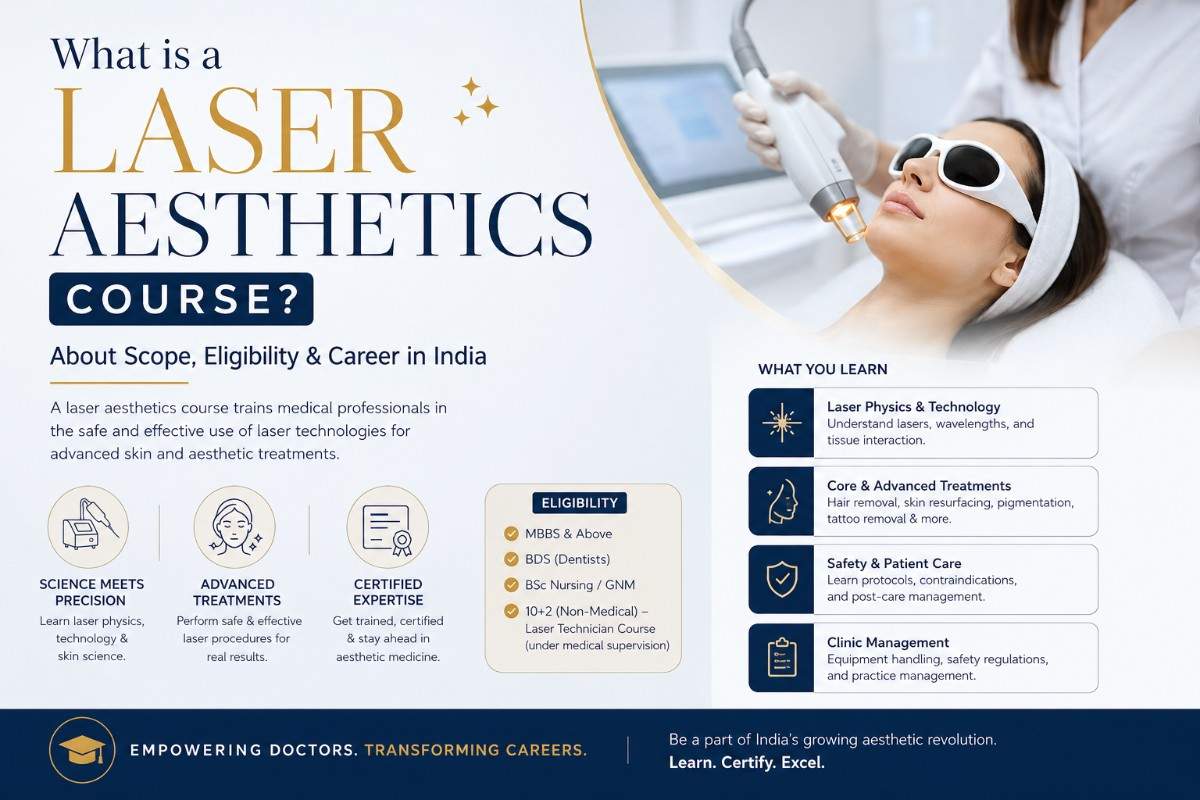
Laser aesthetics courses are specialized training programs designed to educate medical and healthcare practitioners about the science and clinical use of lasers in the field of cosmetics and skin care. From the basic physics of laser operation, to the practical use of various laser systems on patients.

A laser aesthetics course isn’t a beauty or cosmetology course, but rather a medically based course. It has a mixture of theoretical study (laser physics, skin anatomy, tissue interaction) and hands on learning working with actual patients. The aim is to educate professionals to use laser equipment safely and effectively for the purpose of achieving measurable and reproducible results.

All of these courses are offered at various levels—certificate programs, diplomas (Diploma in Aesthetic Laser Medicine or DALM) and full-fledged fellowship programs, which combine laser training with the broader educational field of aesthetic medicine.


What is included in a Laser Aesthetics Course? Syllabus Breakdown

A well-structured Laser Aesthetics Course in India is designed to delve into the following main aspects:

1. Laser Physics and Technology

  • History and evolution of Laser technology in medicine.
  • Characteristics of laser light such as wavelength, pulse duration, fluence and spot size.
  • The process of destruction caused by laser action: the selective destruction of tissues.
  • Types of lasers used in aesthetics (Nd:YAG, Diode, CO2, Erbium, Q-switched, Fractional)
  • Understanding of laser safety standards and protocols for the practitioner, patient and clinic.

2. Student assessment and skin science

  • The skin is divided into three basic layers: epidermis, dermis and subcutaneous layer.
  • Fitzpatrick skin type classification is important for laser treatment.
  • Assessment for contraindications and pre-treatment.
  • Proper procedures for patient counselling and consent.
  • Managing patient expectations

3. Core Laser Treatments

  • Laser hair removal – procedures, fluence values, session-planning.
  • Skin resurfacing – fractional CO2 and Erbium laser scars, wrinkles and textural issues.
  • Melasma, freckles, and hyperpigmentation are treated with a Q-switched laser.
  • Laser treatments for vascular lesions — Nd:YAG for telangiectasia, spider veins and rosacea
  • The removal of tattoos are classified as Q-switched Nd:YAG and multi-wavelength systems.
  • Laser toning – to lighten skin and perfect complexion.
  • Acne and acne scar treatment – fractional / non-ablative
  • Radiofrequency (RF) and laser-based skin laxity correction; tightening the skin.

4. Advanced Procedures

  • Laser combined with PRP, Mesotherapy or Chemical peel treatments.
  • The body shaping surgery that uses the energy-based devices.
  • Post-procedure care and treatment of side effects.
  • The setting of lasers for Indian skin tones (Fitzpatrick IV-VI)

5. Clinic Management

  • The selection, maintenance and calibration of equipment
  • Optical Radiation Safety Regulations in India
  • Patient flow management and pricing of treatment.
  • Keep records and medical notes for laser treatments.

Anyone can enroll in a Laser Aesthetics Course in India. Eligibility

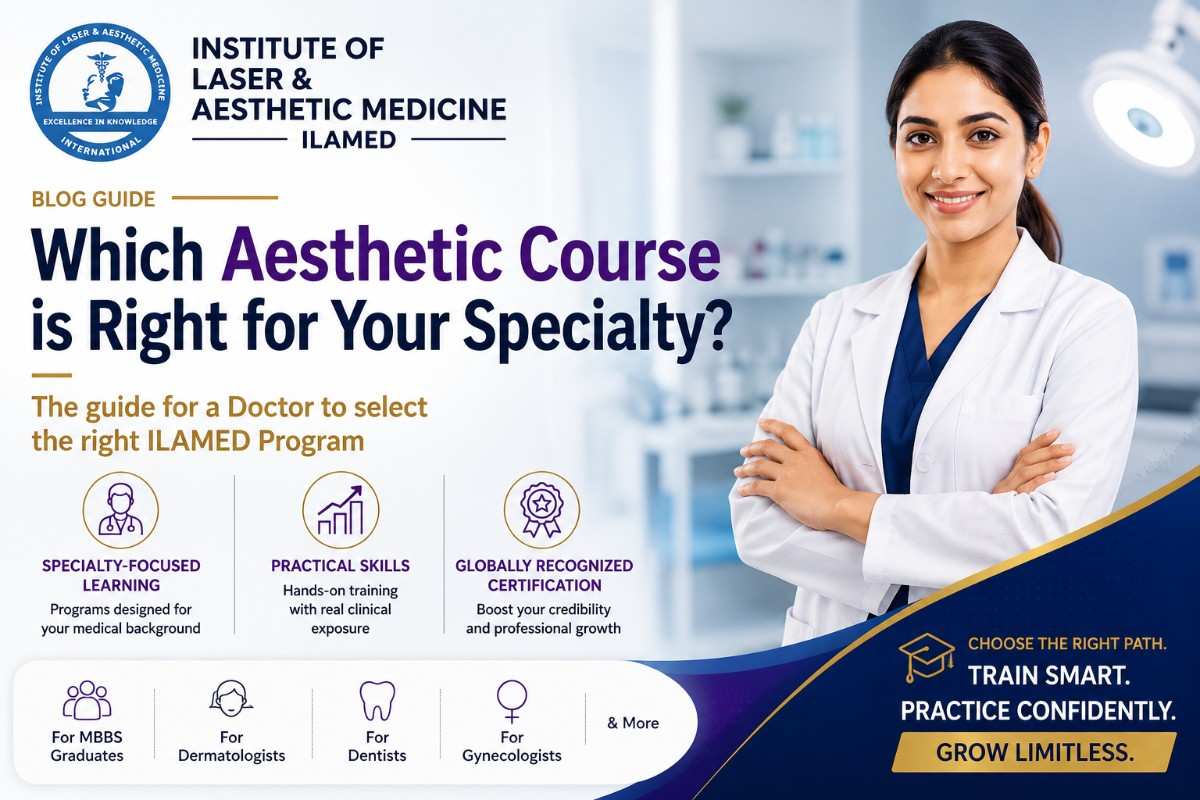
Laser aesthetics training in India is available to a variety of medical and healthcare professionals depending on the level of the training:

All the programs are laser technician courses, except advanced programs, which are implemented under medical supervision, and certain certificate programs (as per state regulations), and courses for BDS (Dentists), BSc Nursing / GNLM, 10+2 (non-medical), and Laser technician courses under medical supervision.

Note: A valid Medical Degree (MBBS & above) is strongly recommended for doing laser procedures on patients independently in India. Non-medical Laser Technicians should work directly with a qualified medical physician.


Laser Aesthetics Courses in India come in a variety of forms.

Course No. 1: Certificate Course in Laser Aesthetics

Short duration programs that include the fundamentals of laser treatments (usually 2–5 days). Perfect for MBBS doctors who want to get a basic exposure.

Diploma in Aesthetic Laser Medicine (DALM)

A longer program of 6 months – 1 year. Covers laser physics, more than one treatment modality and clinical practice. Very popular and popular with esthetic practitioners.

Fellowship in Aesthetic Medicine (with Laser Component)

Advanced, well-rounded programs including laser training in a full aesthetic medicine course. The program of Fellowship in Aesthetic Medicine (FAM) from ILAMED offers a complete path to injectables, lasers, skin treatments, and regenerative medicine.

4. MSc in Facial Aesthetics & Regenerative Medicine

The most comprehensive 2-year academic and clinical training for doctors aiming to qualify to the highest level in aesthetic medicine. The MSc course within ILAMED is internationally accredited and is offered together with world leading institutions.


Career Scope After a Laser Aesthetics Course in India

Laser aesthetics course are able to offer a vast array of career opportunities, lucrative wages, and rapid expansion.

Where Can You Work?

Skin Care Centers and Dermatology Clinics:
The most direct job placement for a laser trained individual. Dermatology clinics are growing their laser service offerings, and recruiting trained aesthetic practitioners in India.

Medical Spas (MedSpas):
MedSpas combine clinical treatments with a wellness experience. These centers provide laser services as one of their major sources of income and trained experts are constantly needed.

Multi-Specialty Aesthetic Clinics:
It is important for premium clinics to hire professionals who are skilled in multiple modalities such as Botox, fillers, laser, PRP, and more. These are some of the many places where laser certification can really help you land a job.

Independent Practice:
After experiencing the challenges and successes of working in a laser clinic, many trained professionals choose to start their own laser clinic. Today’s relatively small size of laser equipment and increasing patients awareness makes it a feasible option even in Tier 2 cities.

Medical Tourism:
International patients are becoming more numerous in India as the country offers them top-notch and budget-friendly laser procedures. In this category, laser-treated professionals with good command of English language can make their inroads by making tie-ups with hospitals and aesthetic centers which cater to foreign patients.


After completing a Laser Aesthetics course in India, the salary scale of the person improves.

  • Laser Technician / Therapist (entry level): INR 2.5–5 lakhs per annum
  • Aesthetic Practitioner (MBBS + Laser Certified): INR 5-12 lakh per annum
  • Senior Aesthetic Doctor (3-5 years experience): INR 12-25 Lacs per annum
  • Independent Practice Revenue: Highly variable—there is a wide range of prices for laser hair removal procedures and a single session can cost between INR 2000 and INR 15,000 depending on the area being treated and the city. Skin resurfacing sessions cost INR 10,000 to over INR 50,000 per sitting.

Laser Aesthetics is the best skill to develop at this time.

Laser Aesthetics Training is especially pertinent for Indian medical practitioners in 2025 and the future for several reasons:

1. The growing need of the Middle Class

Laser treatments are now available outside of the metro areas. The growing disposable incomes and the awareness of beauty are catalysing growth in Tier 2 and Tier 3 towns — and that’s happening outside of Delhi, Mumbai and Bangalore.

2. Indian Skin requires specialist knowledge

The majority of Indians have Fitzpatrick skin types IV to VI which calls for fine-tuned laser parameters to prevent possible complications such as post-inflammatory hyperpigmentation. A clinical and commercial benefit lies with professionals who are trained specifically for Indian skin types.

3. Expanding Treatment Portfolio

Laser technology is constantly advancing, with fractional, picosecond and combination energy-based devices appearing on the market regularly. Early education educates people for the future.

4. High Patient Retention

Patients need to see the same trusted practitioner several times to get laser treatment done. Built-in patient loyalty and predictable revenue is a benefit for a well run laser practice.


Why to opt for ILAMED Laser Aesthetics Training in India?

ILAMED — Institute of Laser & Aesthetic Medicine is a pioneer in the field of laser and aesthetic medicine education in India for more than 25 years. With a stellar faculty and academic program led by Dr. Ajay Rana, a global expert in aesthetic medicine and former President of the International Society of Aesthetic Medicine (ISAM), ILAMED is the pinnacle in aesthetic medicine education.

The unique features of ILAMED’s laser training:

  • With a comprehensive laser course, you will be able to treat a range of patients in the field, including patients with hair removal, skin resurfacing, pigmentation, vascular lesions, tattoo removal and more.
  • Real clinical exposure on hands-on training on live patients.
  • Internationally accredited programs, in line with International Union of Aesthetic Medicine, affiliated with New York Medical College (USA) and University of Camerino (Italy)
  • Expert faculty such as internationally acclaimed laser experts and dermatologists
  • Training for Indian skin tone is of key importance, necessary for safe and effective results.
  • Integrated training pathway — laser training can be completed within ILAMED’s Fellowship in Aesthetic Medicine (FAM) course or as a single course.

Q1. What is the Laser Aesthetics Course?

Medical professionals can attend a laser aesthetics course for a specialized training in the science and clinical application of laser technology used to treat cosmetic applications, such as hair removal, skin resurfacing, pigmentation correction, and more.

Q2. Does one need to do an MBBS to be able to do a laser aesthetics course in India?

In case of certificate and diploma courses, it is recommended that the minimum qualification is “MBBS”. There are programs that teach non-medical laser technicans, but they can only be practiced under the supervision of a licensed medical doctor.

Q3. How long is a laser aesthetics course in India?

The duration of courses varies from 2-5 days for basic certificate courses to 6-12 months for diploma courses. Integrated fellowship programs with laser training can last for 1-2 years.

Q4. After laser aesthetics course in India what are the career options?

Graduates have the option of providing services in the dermatology clinic, multi-specialty medical beauty center, medical spa, or in their own practice. Laser trained professionals are in demand and the need is continuously increasing all over India and in the medical tourism market as well.

Q5. What is Diploma in Aesthetic Laser Medicine (DALM)?

The specialized post-graduate diploma program of DALM involves learning about laser physics, skin anatomy and clinical laser applications. It is one of the most known laser qualifications in India by aesthetic practitioners.

Q6. Is it possible to do a laser aesthetics course in India?

Yes. Those who are dentists (BDS) can participate in a laser aesthetics certificate course, especially laser treatment for facial esthetics. Eligibility for academic programs is different at each institute.

Q7. Is there training in laser aesthetics at ILAMED?

Yes. As part of its Fellowship in Aesthetic Medicine (FAM) and more, ILAMED provides complete laser training. Training is provided on live patients and is highly experienced with hands on clinical exposure by expert faculty.

Conclusion

Laser aesthetics has become more than just a specialty — it’s a fundamental skill that every practitioner striving to practice modern aesthetics should master. As India’s market expands rapidly, Indian skin demands special expertise, and patients are on the hunt for treatment beyond the metropolitan areas, the time to do laser aesthetics training is the right now.

For every new MBBS graduate looking into aesthetic medicine, or for a dermatologist, seeking to expand their skillset, or for any experienced practitioner considering how to create a high-quality clinic — a laser aesthetics course that is structured and hands-on is a necessity that will reward you in your career.

The laser training programs at ILAMED provide the depth, expertise from a faculty and international recognition you need to build that career with confidence.

Aesthetic Course

Which Aesthetic Course Is Best for Doctors in 2026?

The Indian Healthcare industry is undergoing a major re-structuring. The scope of traditional clinical practice has been extended for practicing physicians, surgeons and dental professionals. With a changing healthcare landscape, physicians today are seeking to expand their practice beyond medicine to create highly lucrative independent practices and build more sustainable work-life balance. This professional development has catapulted medical aesthetics to a prominent position in post-graduate medical education.

For physicians looking into career transition opportunities, the number one question is: Which aesthetic course is best for doctors in 2026?

Healthcare professionals need to consider key factors such as the depth of the curriculum, international accreditation, scope of practice, and actual patient clinical experience when making a decision. Choosing the right program from the best aesthetic courses in India demands an in-depth study on how specialized training equates to clinical competence and market authority.


Growth of Medical Aesthetics in India 

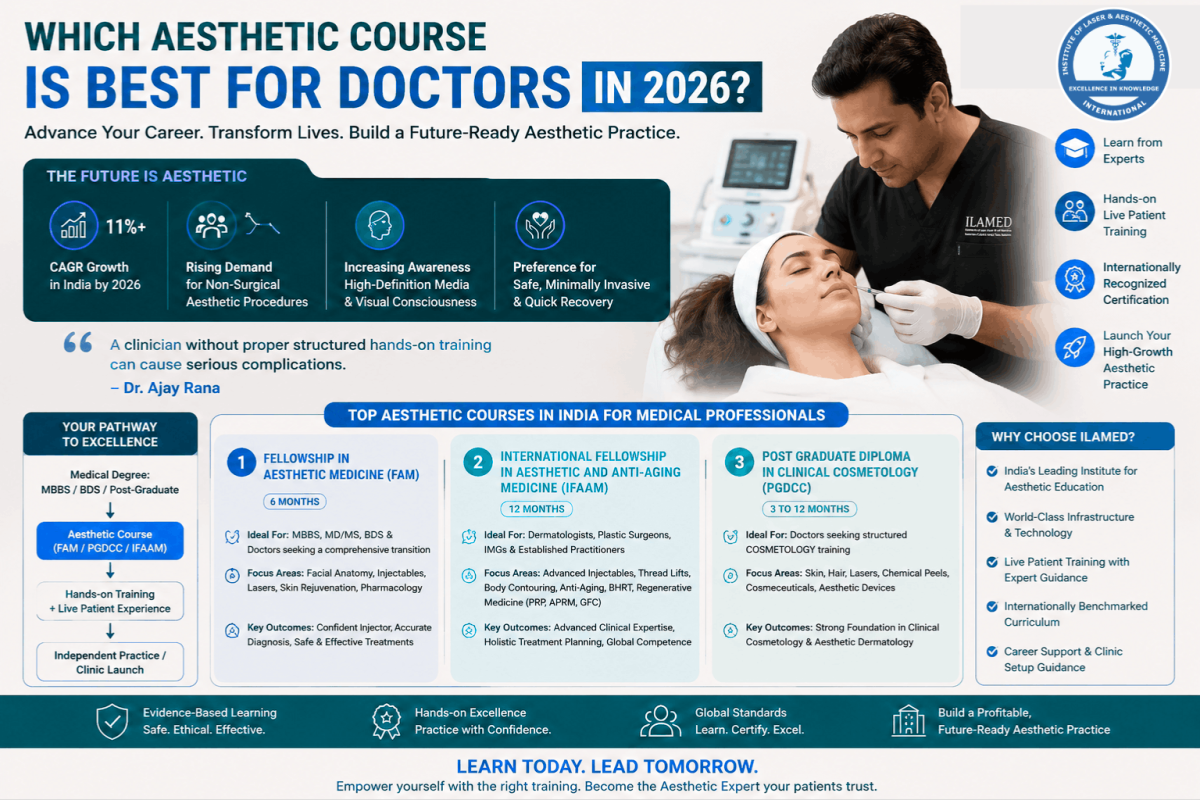
It has become a norm today that non-surgical cosmetics are expected to be a part of the wellness regime of regular people, not a luxury for the elite. Data which shows the industry’s growth pattern up to 2026, the medical aesthetics industry in India is growing at a rate of more than 11% CAGR. This spike is a result of a mix of factors:

  • An increasingly aging population that wants to avoid getting old.
  • Increasing disposable income of the urban middle and upper class.
  • The omnipresence of high-definition digital media, which boosts visual consciousness.
  • A general preference of the patient to the use of procedures that are less invasive, have minimal recovery times and less risk of surgery.

It is a new clinical challenge for a medical practitioner. But, one should train rigorously to enter this field. The anatomy of the face and neck is delicate, which is why specialized education is essential with aesthetic procedures. As Dr. Ajay Rana, a globally famous dermatologist and Founder and Director of Institute of Laser & Aesthetic Medicine (ILAMED) has said:

A clinical cosmetic veterinarian without proper structured hands-on training and under the supervision of an experienced professional, has a high risk of causing serious clinical problems, such as bruising, infection, necrosis of the skin and devastating vascular occlusion.

Thus, the first requirement for safe and legal practice is to choose a top-notch, scientifically sound training program.


Top Aesthetic Courses in India for Medical Professionals Evaluation

There is no “one-size-fits-all” model for aesthetic education. Programs are structured systematically to match the doctor’s previous medical background, future career plan, and training time. An analytical list of the best clinical courses available for doctors interested in pursuing aesthetic courses in India is presented below.

text

         Medicines Degree: MBBS / BDS / Post-Graduate

                                 │

                ┌────────────────┴────────────────┐

                ▼                                 ▼

       All materials in this publication are subject to copyright protection.

       – FAM (6 Months)                  – PGDCC (3-12 Months)

       Programme CERTIFICATIONS: – IFAAM (1 Year Masterclass) – Specialized Masters (Trichology/Gynec)

                │                                 │

                └────────────────┬────────────────┘

                                 ▼

             This is a model that combines theory and hands-on activities.

                                 │

                                 ▼

            Independent Practice / Clinic Launch


1. Fellowship in Aesthetic Medicine (FAM)

It is believed that the Fellowship in Aesthetic Medicine (FAM) is the benchmark for all physicians that enter the field of medical aesthetics. The course is designed to take a traditional medical school graduate and turn him/her into a self-assured aesthetic injector and laser clinician, and the course lasts for 6 months.

Target Audience: It is an ideal book for all those practicing in core clinical fields, like MBBS graduates, MD/MS specialists and those who need a fast and yet comprehensive transition plan.

Core Curriculum Focus: The program provides core competency in facial anatomy, skin pharmacology, the physics of light-based devices, and non-surgical skin rejuvenation.

Key Educational Outcomes: Delegates work clinically with mapping injection points, calculation of accurate dosages, product rheology (the flow and thickness of dermal fillers) and diagnostic skin evaluations.


2. International Scientific Communication Skills (ISC) Program / International Fellowship in Aesthetic and Anti-Aging Medicine (IFAAM)

The International Fellowship in Aesthetic and Anti-Aging Medicine (IFAAM) is the most prestigious master level course for medical professionals looking to make a name at the pinnacle of the market. This 12-month accelerated programme combines both surface and internal metabolic healing.

Target Audience: Any already established medical practitioner, dermatologist, plastic surgeon or international medical graduate (IMGs) looking to qualify for the best possible qualification in the world.

Core Curriculum Focus: Advanced injectables, multi-vector thread lifting, body contouring systems, preventive anti-aging medicine, bio-identical hormone replacement therapies (BHRT), and cellular regeneration techniques (APRM, advanced platelet-rich plasma and growth factor concentrates) are all deeply covered in the Core Curriculum Focus.

Key Educational Outcomes: Learners develop multi-layered, complex facial transformations and the ability to design in depth, holistic, internal-to-external wellness routines for an elite clientele.


3. PG Diploma in Clinical Cosmetology (PGDCC)

It is a very structured course and the Postgraduate Diploma in Clinical Cosmetology (PGDCC) places a strong emphasis on high level dermatology treatments and non-surgical medical skin care technologies.

Target Audience: The candidates who want to pursue their career as clinical skin specialists and in advanced chemical peeling and medical device operations are eligible for this course.

Core Curriculum Focus: Intensive study of chemical resurfacing (superficial to deep peels), micro-needling radiofrequency (MNRF), high-intensity focused ultrasound (HIFU), laser scar management and tattoo removal.

Key Educational Outcomes: Knowledge of epidermal and dermal rejuvenation protocols, accurate calibration of the devices for different Fitzpatrick skin types and long term management of chronic pigmentation disorders.


Comparative Matrix of Leading Educational Pathways

The table below is a comparison of the main parameters of the structures of the top aesthetic courses in India for 2026 in order to guide your planning for the future.

Course NameDurationPrimary Clinical FocusHands-On Training ModelEligibility Requirements
Fellowship in Aesthetic Medicine (FAM)6 MonthsThe basic peel, lasers, dermal fillers and botulinum toxins are the most common treatments.Theory and practical sessions are delivered in a blended format (online and intensive on campus)MBBS, MD, MS, BDS (Limited Scope)
International Fellowship in Aesthetic & Anti-Aging Medicine (IFAAM)1 YearAdvanced Structural Injectables, Thread Lifts, BHRT, Cellular Anti-AgingExtended On-Campus Residency + Live Patient Injection MentorshipRegistered Medical Graduates (MBBS/MD/MS)
Postgraduate Diploma in Clinical Cosmetology (PGDCC)3 to 12 MonthsMedical Trichology, Chemical Resurfacing, Light Based Device TherapyOn-site Clinical Rotations & Live Case DemonstrationsStudents who have passed out from MBBS, BDS, BAMS, BHMS and Nursing graduate courses are also eligible to apply.
Fellowship in Aesthetic Dentistry (FAD)3 MonthsThe smile design, veneers, perioral botox, nasolabial fillers are all done by this solution.Specialized Clinical Practical Labs in Focused Maxillofacial & Dental Clinical Practical LabsThe courses are BDS/MDS (Registered Dental Practitioners).

What is expected of a Medical Aesthetic Program

Any high quality aesthetic program is based on a strong, science-based curriculum. It should far exceed product demonstrations to provide core medical training. The basic requirements of any quality course are:

Identify the various parts of the face and how they change with age.

So it’s important to have a deep, three-dimensional knowledge of facial architecture when practicing aesthetic medicine. The training should include a complete plan for:

  • The Significance of Facial Fat Compartments: Superficial and deep fat compartments, and the understanding of how loss of volume in these areas contributes to the facial “sagging” and “aging” effect.
  • Muscular Mechanics: Understanding the exact origins, insertions and deep vs superficial profiles of the muscles of the face, including the frontalis, orbicularis oculi, and procerus, to achieve a truly natural appearance when injected with botulinum toxin.
  • Vascular Highways: Creating a very accurate mental map of the important arterial flow (facial, angular and supratrochlear) so that there is no accidental intra-arterial product placement.

The Facial Layering System for Safe Injection Placement

A technique for placement that ensures safety for the face and neck.

text

┌────────────────────────────────────────────────────────┐

│ Layer 1: Skin (Epidermis & Dermis)                     │

├────────────────────────────────────────────────────────┤

│ LAYER 2: Superficial Fat Pads (Subcutaneous Space)     │

├────────────────────────────────────────────────────────┤

│ The SMAS (Superficial Muscular Aponeurotic System)     │

│ is at the third layer.                                 │

├────────────────────────────────────────────────────────┤

│ Structural Volume: Layer 4 Deep Fat Pads               │

├────────────────────────────────────────────────────────┤

│ Safe Depot Zone: Periosteum (Bone Surface)             │

└────────────────────────────────────────────────────────┘


Advanced Injectables Pharmacology and Rheology

Physicians need to take a prescription drug course to learn how to manage injectables with great skill; they need to be able to accurately evaluate:

  • Botulinum Toxin Dynamics: The exact science of how to reconstitute Botulinum Toxin, calculate the units, how it travels through the body and where to inject it in order to treat dynamic rhytids (wrinkles).
  • Dermal Filler Chemistry: Understanding the precise molecular cross-linking structures of HA fillers. Practitioners need to be aware of the difference between using high G-Prime filler for structural jawline contouring and low G-Prime filler for perioral or tear trough hydration.

The Physics of Energy Based Devices

Laser technologies are the mechanical pillars of today’s aesthetic clinic. Comprehensive programs shall be designed to teach:

  • Laser-Tissue Interactions: The basics of wavelength selection, pulse width, spot size and energy fluence.
  • Hands-on training with a variety of Class 4 medical lasers, including Q-Switched Nd:YAG laser for pigment and tattoo removal, Fractional 
  • CO2
  • CO
  • 2
  •  for deep acne scar remodeling and Diode laser for long-term laser hair reduction.

Legal Scope and Professional Eligibility in India

Safeguarding your medical license amidst the legal structure is absolutely crucial to maintaining the best ethical standards. The scope of practice in India depends on the recognition of your primary medical qualification and the guidelines issued by the national councils (e.g., Dental Council of India, National Medical Commission).

MBBS, MD and MS Practitioners

Physicians who possess an NMC registered MBBS degree and/or a higher post-graduate medical qualification/degree have full legal authority to practice the full range of medical aesthetics. This involves the use of medical grade topical formulations, the use of advanced Class 4 energy based devices, multi-layer thread lifts and the injection of deep dermal fillers and botulinum toxins in all facial and body anatomical zones.

Dentist in the field of Dentistry, BDS and MDS Dental Surgeons

Dentists are fully qualified to pursue advanced specialties such as the Fellowship in Aesthetic Dentistry (FAD) or Fellowship in Advanced Aesthetic Dentistry (FAAD) at a place like ILAMED.

The scope of practice of a dental surgeon as per the law is very limited and has a primary emphasis on the maxillofacial, perioral and oral area. In this context, dentists can truly excel in managing gummy smiles, addressing jaw muscle enlargement (masseter hypertrophy) associated with bruxism (teeth grinding), refining nasolabial folds, and creating holistic smile transformations that integrate dental aesthetics with facial harmony.

AYUSH and Nursing Professionals

Students from AYUSH pathways (BAMS, BHMS) and B.Individuals with Nursing background are encouraged to take up Clinical Cosmetology and Trichology courses to enhance their knowledge immensely.

From a legal perspective, their practice is mostly concerned with treatments in the surface layers of the skin. These are advanced medical facials, superficial chemical peels, micro-needling, and assistance in or operating certain light and/or radiofrequency devices under direct medical supervision. Most of them are not allowed to do deep facial injections, such as dermal fillers, or botulinum toxins.


Absolute necessity for live-patient training

It is impossible to gain all the clinical skills one needs through a computer screen, from a textbook or from watching a video demonstration. High-quality schools such as ILAMED focus on practical, experiential learning with supervision. Dr. Ajay Rana and other senior faculty and industry experts provide mentorship to the delegates which carry out procedures on a live patient. This direct clinical environment helps doctors learn to measure skin resistance precisely, deal with the feedback from patients in real time, understand the skin responses immediately and master the physical contact needed for precision injection.

A detailed strategy for minimizing complications

The truly skilled aesthetic physician is not only adept at creating beautiful outcomes he is also fast and proficient at what he does when things go wrong. Good training sessions invest significant time in imparting correct rescue procedure so that doctors can confidently deal with:

  • Vascular Occlusion Interventions: An immediate arterial blockage may be detected by observing the change in color of the skin, and if there is significant localized pain, the procedure can be carried out immediately, using high doses of hyaluronidase to dissolve the blockage and restore healthy blood flow.
  • Adverse Soft-Tissue Management: Prevention and treatment of delayed-onset nodules, localized infections, post-inflammatory hyperpigmentation (PIH) and transient edema (swelling) or erythema (redness).

Career Pathways and Financial Projections After Certification

Upon completion of a premier certification, a variety of promising and lucrative career opportunities can be found throughout the healthcare sector.

1. Corporate Medical Aesthetics & High Quality Clinic Chains

Well-trained aesthetic physicians are in demand on the institutional market. Graduates can typically find jobs as consultant aesthetic doctors or clinical directors at top-tier, nationwide anti-aging wellness chains and luxury medical spas.

2. Independent Practice and Private Clinic Ownership

For clinicians who want to be entrepreneurs, the fellowship program is just what they need to build that clinical confidence and technical expertise needed to start their own private practice. This route provides full professional freedom, the opportunity to design your own patient experience, and great control of your own work-life balance.

3. Financial Trajectory and Return on Investment (ROI)

The monetary returns in medical aesthetics are tied to the amount of clinical experience you have and how your hands-on skills have been refined, as well as your overall market positioning. The table below provides a realistic estimation of incomes for certified aesthetic doctors in the Indian market in 2026, based on data.

IPMIX: Independent Practice Monthly Income Trajectory by Experience Level

text

Senior (5+ Years)   │ ▓▓▓▓▓▓▓▓▓▓▓▓▓▓▓▓▓▓▓▓▓▓▓▓▓▓▓▓▓▓▓▓▓▓▓▓▓▓▓▓ ₹10 – ₹25 Lakhs

                    │

Mid-Level (2-4 Yrs) │ ▓▓▓▓▓▓▓▓▓▓▓▓▓▓▓▓ ₹4 – ₹8 Lakhs

                    │

Fresher (0-1 Year)  │ ▓▓▓▓ ₹1.5 – ₹3 Lakhs

                    └─────────────────────────────────────────────────────────

                      ₹0   ₹2L  ₹4L  ₹6L  ₹8L  ₹10L  ₹15L  ₹20L  ₹25L (INR)

Professional Tier & Experience LevelAverage Monthly Salary (Corporate/Chain Clinics)Estimated Monthly Income (Self-Employment)
Entry-Level Practitioner (0-1 Year Post-Certification)₹~60,000 to ₹~90,000₹~1,50,000 to ₹~3,00,000
Mid-Level Consultant (2-4 years of active clinical practice)₹~1,20,000 to ₹~2,00,000₹~4,00,000 to ₹~8,00,000
Senior Specialist / Practice Owner (5+ Years of Dedicated Industry Authority)₹~2,50,000 to ₹4,00,000+₹~10,00,000 to ₹~25,00,000

To choose an Ideal Aesthetic Training Institute, you need to complete the following checklist

This handy 5-point checklist can be used to comprehensively assess any training institute before joining the best aesthetic courses in India:

  • Check the longevity of the institution and its industry representation: If it’s an institution that’s been around for more than two decades, like the ILAMED, it’s likely that it has a solid track record that ensures you are learning from a stable program.
  • Audit Faculty Training and Leadership: Ensure that the program is taught and led by a leader and/or expert in the field of medicine, with medical qualifications, who is actively practicing Medicine in the world, not a person with no medical qualifications.
  • Confirm the Practical Training Model: Make the Practical Training Model explicit. Be sure you will be performing and treating live patients and not just watching dummy models or watching videos.
  • Verify Accreditation: Ensure that your end qualifications are officially recognized by reputed international bodies like the Indo-German Board of Aesthetic Medicine and Surgery (IGBAMS) or those affiliated with the International Union of Aesthetic Medicine (UIME).
  • Assess Post-Training Support Systems: Ensure that the institute offers post-training support such as continued mentoring, continuous medical education (CME) training, and practical advice on clinic setup, equipment purchase, and patient retention.

Taking Your Next Step: Conclusion

For modern doctors in 2026, the decision to pursue a career in medical aesthetics is an incredibly promising and future-proof trajectory to take. You will protect your professional reputation and ensure long-term financial success by selecting a comprehensive program that has just the right mix of strong scientific theory and real-world, live-patient application.

For those seeking to make a leap in their professional journey, ILAMED’s world-class, internationally accredited fellowship opportunities are available under the leadership of visionary Dr. Ajay Rana. Take your medical practice to new heights, cater to the growing demand of today’s patients and stay at the very top of the medical aesthetic industry in India.

Frequently Asked Questions (FAQ)

Is it legal to get Botox and dermal fillers from an ordinary MBBS doctor in India?

Yes. An MBBS doctor registered with the National Medical Commission (NMC) or the medical council of the state is legally allowed to do injectables such as fillers and botulinum toxins. But these are the high-tech procedures which are not taught as part of the regular MBBS course; so it is highly recommended for patients’ safety and to gain the real competency to perform these procedures through a thorough and structured clinical training.

Is a cosmetology certificate different from a medical fellowship?

The typical cosmetology certificate is geared more towards cosmetology that can be performed by non-medical professionals and are mostly superficial, skin-focused treatments delivered in a salon setting. A medical fellowship is an advanced, science-based clinical training program that is specifically geared toward the registered healthcare professional and typically granted to physicians or other healthcare professionals. It includes the in-depth anatomy and facial regions, prescription level pharmacology, advanced injectable procedures and medical management of complications.

On average how long does it take to become an independent aesthetic practitioner?

Intensive hands-on courses can last anywhere from 3 months to a year; after a doctor has been actively practicing, he should be a confident, independent practitioner within 6 months after his formal certification. The process will be further expedited with continued mentorship and attendance at advanced masterclasses.

Do aesthetic training courses on a computer alone adequately prepare one to begin a private practice?

Yes. For learning important and basic theoretical background, understanding of laser physics, and learning structural anatomy, online modules are highly efficient and excellent. But there is no substitute for learning the skills which rely on the hands-on experience of a classroom or lab. Before you can risk working on patients safely in your own clinic, it is absolutely essential that you have hands-on experience with real patients, while working directly under the supervision of an expert.

Aesthetic Medicine Courses in India

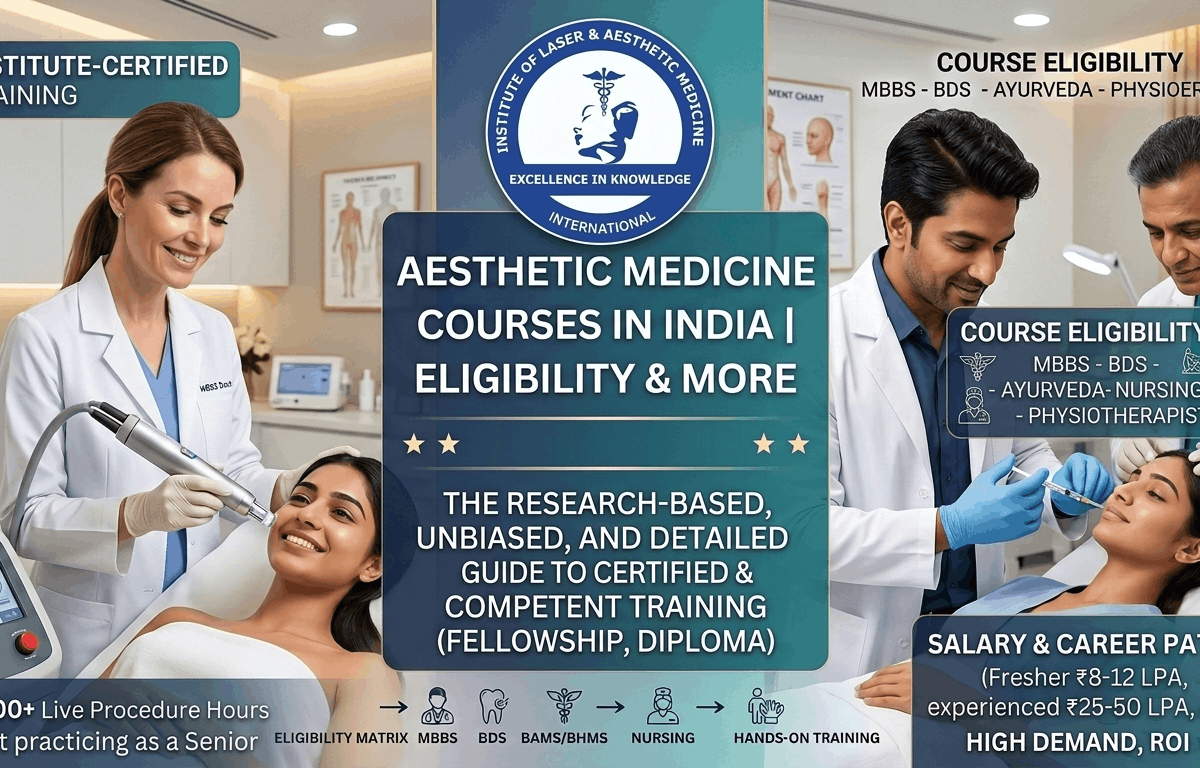
Aesthetic Medicine Courses in India | Eligibility & More

Introduction

The medical aesthetics business worldwide is expanding at a fast rate. In India, non-surgical cosmetic procedures are gaining more demand than in the last five years. Procedures like Botox injections, dermal fillers, laser hair removal, and skin rejuvenation are no longer limited to the metropolitan cities- they are also being demanded even in the small towns.

This increasing demand has resulted in a subsequent demand of trained and certified and competent professionals in the field of aesthetic medicine. Whether you are an MBBS doctor, a dentist, an Ayurvedic practitioner, or a nurse, you may be wondering: What are the best Aesthetic Medicine Courses in India? And more to the point, who has the right to enroll in them?

The article is a research-based, unbiased, and detailed guide to aesthetic medicine training in India. It provides the answer to such common questions, explains the criteria of eligibility, discusses career opportunities, and lists well-known training providers, such as ILAMED (Institute of Laser and Aesthetic Medicine) and the thoughts of practitioners, including Dr. Ajay Rana, as examples, rather than recommendations.

What is Aesthetic Medicine?

Aesthetic medicine is a healthcare branch aimed at enhancing the appearance of a patient by using minimally or non-invasive medical procedures. Aesthetic medicine is not associated with extensive surgical cuts as in the case of plastic surgery. Common procedures include:

  • Injections of botulinum toxin (Botox).
  • Dermal fillers (hyaluronic acid, calcium hydroxylapatite)
  • Laser hair reduction
  • Skin rejuvenation (MNRF, HIFI, PRP therapy)
  • Dermabrasion and chemical peels.
  • Thread lifts
  • Removal of scars and tattoos.

Since these procedures demand use of medical equipment, prescription-only medications, and other possible complications (bruising, infection, vascular occlusion), formal training is necessary. In India, no medical practitioner ought to carry out aesthetic operations without having gone through a recognized certification course.

Why Aesthetic Medicine? Demand in the Indian Market.

A 2023 report by the International Society of Aesthetic Plastic Surgery (ISAPS) suggests that India is one of the top 10 countries to have non-surgical aesthetic procedures. In the last reported year, more than 1.2 million botulinum toxin procedures and almost 800,000 hyaluronic acid filler procedures were performed in India.

The Indian medical aesthetics market is estimated to have a value of approximately ₹1.2 billion in 2023 and is projected to reach $3.5 billion by 2030, with a compound annual growth rate (CAGR) of 16.5% (Source: Market Research Future, 2024).

The reasons behind this growth are:

  • Greater knowledge of aesthetic treatments.
  • Rising disposable incomes
  • Social media influence
  • Access to non-surgical and affordable alternatives.

On the part of medical practitioners, incorporation of aesthetic medicine into practice can go a long way in boosting earning potential. This however needs to be guided by the well-known institutes.

Best Reasons to study Aesthetic Medicine Courses in India.

ReasonDetails
Good earning potentialEntry-level aesthetic doctors have an earning potential of ₹8-12 LPA; experienced practitioners have an earning potential of ₹25-50 LPA.
Work-life balanceThe majority are outpatient-based with no night shifts or emergency responsibilities.
Increasing patients populationBoth men and women aged 25-60 years old are seeking aesthetic treatments.
Addition of aesthetics can be offered by dermatologists, gynecologists and general physicians.
International visibilityIndian trained professionals are also sought in the Gulf, UK and the south east of Asia.

What to do to become an Aesthetic Doctor in India? (Step-by-Step)

StepActionDuration
1MBBS (or equivalent)4-5 years
2Get a permanent registration with MCI/NMC or state medical council12 months -6 months
3Take a certified course of aesthetic medicine (e.g., fellowship or diploma)3 months to 1 year
4Full practical training on live patients (at least 50-100 procedures)Varies
5Obtain certification and start practicing independently or under a senior
6Engage in lifelong learning (CME) and postgraduate courses

Critical point: India has not yet a separate, independently recognized, and authorized degree medical doctorate, degree in aesthetic medicine or similar title. But the diploma and fellowship programs of the private institutes are readily acceptable by hospitals and clinics to be employed.

Who is Eligible to Aesthetic Medicine? (Complete Eligibility Table)

This is one of the most commonly addressed questions: Who is a candidate of aesthetic medicine? The following is a factual, objective eligibility matrix as per the present Indian medical laws and policies of the institute.

QualificationIs eligible to Aesthetic Medicine Course?Allowed to Inject Botox/Fillers?Is able to perform Laser Procedures?
MBBS (registered by MCI/NMC)YesYes (after certified training)Yes
BDS (Dentist)Yes (facial aesthetics only)Yes (below the eyes and lower part of the face)
BAMS / BHMS (Ayurveda/Homeopathy)Yes(only non-invasive lasers)
GNM / B.Sc NursingYes(cannot inject; can assist)Yes (under supervision)
PhysiotherapistYes (only laser and machines)NoYes (non-injectable devices)
Non-medical (B.Sc, diploma, beautician)NoNo (except non-medical cosmetology courses)

Expert opinion (to reference): Dr. Ajay Rana, founder of ILAMED has claimed in the public interviews that MBBS doctors have the broadest scope, dentists can do there perioral aesthetics, and Ayurvedic doctors should consult the state medical council guidelines before injecting Botox. These views are in line with various training institutions in India.

Is it possible to have MBBS Doctors Practice Aesthetic Medicine?

Yes. The major practicing aesthetic medicine in India are MBBS doctors. After completing an MBBS degree and obtaining registration with the National Medical Commission (NMC), an MBBS doctor can legally:

  • Perform injectables (Botox, fillers)
  • Operate Class 4 laser devices
  • Establish a freestanding aesthetic clinic.
  • Prescribe topical anesthetics and medications for pre/post-procedure care

But there is one very important thing about this: The mere fact that you have an MBBS degree does not mean that you can inject Botox. You will have to undergo a recognized, practical training program by an established institute.

Some of the examples of reputable types of courses that MBBS doctors can do include:

  • Clinical Aesthetics (6 to 12 months) fellowship.
  • Aesthetic medicine Diploma (1 year)
  • Certified Botox/Filler Training (3-5 days intensive)

Such programs are offered in many institutes in India. A famous case is ILAMED (Institute of Laser & Aesthetic Medicine) founded by the doctor Ajay Rana and has trained thousands of doctors. Nevertheless, a number of other institutes (e.g., AAAM, IADVL workshops, and programs at universities) also provide similar training. It is recommended to the readers to research various options.

Is it possible to open an Aesthetic Clinic with an MBBS Doctor?

Yes. The MBBS doctor may legally establish an aesthetic clinic in India, on the condition that:

  • The clinic is incorporated in the Clinical Establishments Act (which applies in most states).
  • The physician has undertaken an approved aesthetic medicine program in an approved institution.
  • The clinic has adequate informed consent forms, emergency plan and adverse event management plans.
  • The physician has medical indemnity insurance on aesthetic surgeries.

Neutral advice: Ideally, before setting up a clinic, have a minimum of 6-12 months of experience working under a senior aesthetic physician. Begin with leased equipment instead of buying the costly lasers. Always have emergency medication (e.g., hyaluronidase in the case of fillers) on-site.

Am I Eligible s a BDS in India to Practices in Aesthetic Medicine

Yes—as a BDS (Bachelor of Dental Surgery) graduate in India, you can practice certain aspects of aesthetic medicine, but with clear regulatory and scope limitations.


1. Legal & Regulatory Position (India)

  • BDS practitioners are registered under the Dental Council of India
  • Your primary legal scope is oral and maxillofacial region (face, jaw, oral cavity)

What this means:

  • You are allowed to perform facial aesthetic procedures
  • You are NOT fully authorized for whole-body aesthetic medicine like MBBS doctors

2. Procedures You Can Practice (Commonly Accepted Scope)

As a BDS, you can safely and commonly perform:

Facial Aesthetic Procedures

  • Botox (upper face, masseter, gummy smile)
  • Dermal fillers (lips, nasolabial folds, jawline, chin)
  • Chemical peels (face)
  • Microneedling (facial skin)
  • PRP (face, hair)

These are aligned with your facial anatomy expertise.

Would I Be Able to Inject Botox When I am not a Nurse? (Legal Clarity)

This is a high intent legal question. The simple answer: No, unless you are a qualified medical doctor (MBBS) or a dentist (BDS) with certified training in injectables.

  • Nurses (GNM, B.Sc Nursing) – Not an independent injector of botox or fillers in India. They can assist a registered doctor.
  • Physiotherapists – Not allowed to inject.
  • Beauticians or cosmetologists – Legally not permitted to inject any substance in the skin.

Violations may cause:

  • Indictment (causing hurt by rash act -IPC Section 337)
  • Cancellation of medical/nursing license
  • Patient injury civil liability.

Thus, to do injections, you have to complete MBBS or BDS first and then undertake a certified course in aesthetic medicine which covers injection training.

What is the Salary of an Aesthetic Doctor in India? (Data-Backed)

According to a survey of the Indian Association of Aesthetic Medicine (IAAM) and placement data of several private institutes (including ILAMED):

Level of experienceMonthly wages (Clinic/Chain)Independent Practice Income
Fresher (0–1 year)₹60,000 – ₹90,000₹1.5 – ₹3 lakhs
Mid-level (2–4 years)₹1.2 – ₹2 lakhs₹4 – ₹8 lakhs
Senior (5+ years)₹2.5 – ₹4 lakhs₹10 – ₹25 lakhs

Laser technicians (non-medical) earn ₹25,000–₹45,000 per month. The rewards of aesthetic physicians (MBBS + certification) are much higher.

Note: These numbers are different according to the city, reputation of the clinic and personal competence. In large cities (Mumbai, Delhi, Bangalore) salaries are higher compared to small towns.

Future of Aesthetic medicine in India?

The future of aesthetic medicine in India seems to be bright. Key trends include:

  • Market Growth – Projected to reach $3.5 billion by 2030 (CAGR 16.5%).
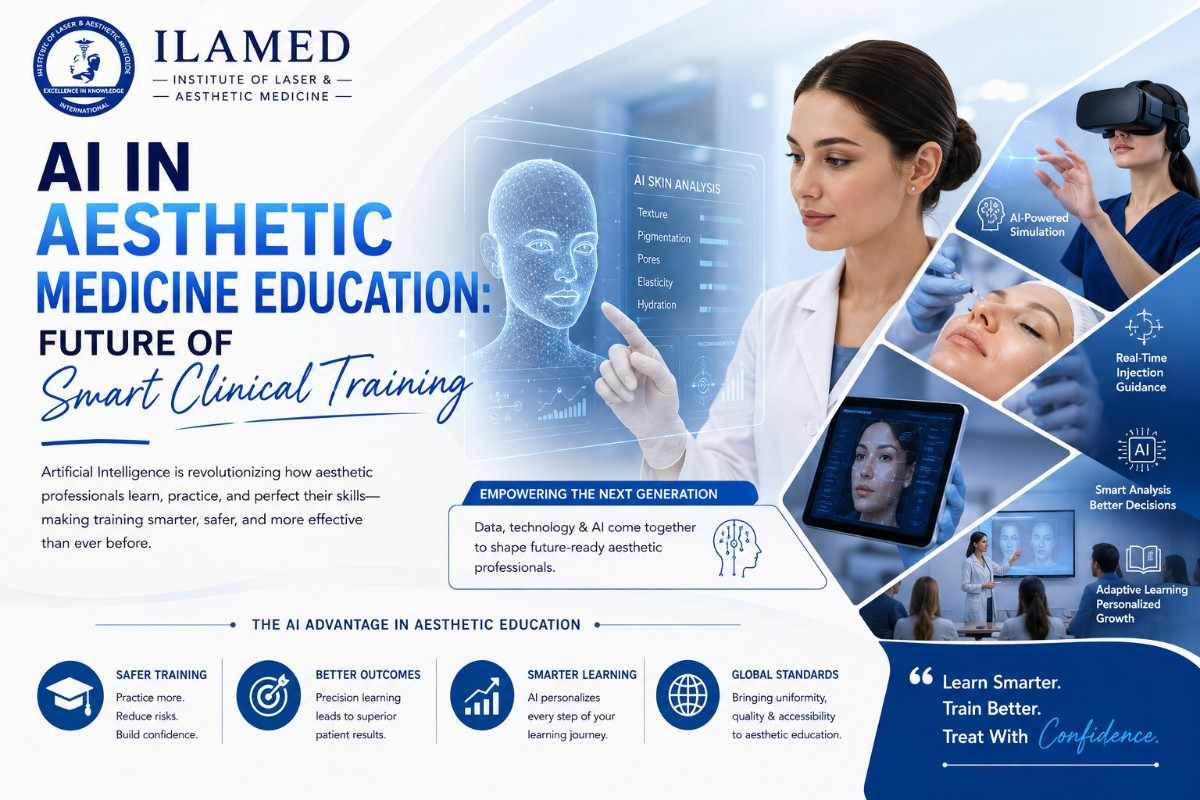
  • Technology Integration – AI-assisted face recognition, robotics in hair transplants, and ultrasound-guided filler injections.
  • Male Aesthetic Medicine – A 40 percent year on year growth is being estimated in male Aesthetic Medicine.
  • Regulatory Evolution – NMC is exploring another super-specialty in the field of Aesthetic Medicine. This may be of benefit to early trained professionals.
  • Medical Tourism – India is turning into a destination of affordable and high quality aesthetic solutions, attracting patients of Bangladesh, Sri Lanka, Africa and the Middle East.

Practical suggestion: You can now have a certified course and be in a better position when the formal recognition comes.

How to become Aesthetic Practitioner? (Step-by-Step Checklist)

  • Step 1: Have a valid medical/dental/nursing degree (as per eligibility above).
  • Step 2: Select a known institute. Some of the research factors include hands-on hours, faculty credentials and the acceptance of certification.
  • Step 3: Join a full-course education that includes anatomy, pharmacology, patient selection, complication management, and hands-on training.
  • Step 4: Accomplish at least 50 supervised procedures (Botox, fillers, lasers).
  • Step 5: Be certified by your institute.
  • Step 6: Become a member of a professional organization (e.g., IAAM or AAM).
  • Step 7: Obtaining a medical malpractice insurance.
  • Step 8: Start practicing under mentorship or in a reputed clinic.

Where are the aesthetic medicine courses from ILAMED held?

The Institute of Laser & Aesthetic Medicine (ILAMED) conducts certified aesthetic medicine courses in various cities of India. The list of availability given below is for medical professionals who wish to get practical training in the medical field.

Aesthetic Medicine Courses in Delhi

ILAMED has regular aesthetic medicine courses at its centre, which is in Delhi. Programmes offered are fellowship training, diploma training and certified training of Botox & Filler with real patients. Eligible candidates are MBBS, BDS, BAMS, BHMS and nursing graduates.

Aesthetic Medicine Courses in Mumbai

The Mumbai center of ILAMED provides a complete aesthetic medicine training program. The courses include laser procedures, injectables and skin rejuvenation. Hands on sessions are held under qualified faculty. There are no restricted admissions cycles.

Aesthetic Medicine Courses in Kolkata

ILAMED’s certified courses are available in Kolkata for medical practitioners in the eastern part of India. The learning program consists of theory, simulation and real patient training. The eligibility criteria are: MBBS, BDS, BAMS, BHMS and nursing graduates are eligible for him.

Aesthetic Medicine Courses in Chennai

ILAMED’s Chennai centre offers structured Aesthetic medicine education for the doctors of the South Indian region. The classes are held on Botox, fillers, lasers and threadlifts. Limited batch sizes for personalized attention.

Aesthetic Medicine Courses in Bangalore

ILAMED has fellowship and Diploma programs in Bangalore. Training is oriented towards non-surgical aesthetic procedures, with a large practical component. It is advisable for candidates to check their admission dates from the institute.

Aesthetic Medicine Courses in Kochi

The Kochi centre of ILAMED caters to the medical professionals of Kerala and neighbouring states. All the main aesthetic procedures are taught in courses. This course includes a required live patient training.

Aesthetic Medicine Courses in Lucknow

ILAMED provides aesthetic medicine courses for doctors in Uttar Pradesh and nearby areas in Lucknow. The programs contain certified injectable training and laser safety procedures. Eligibility criteria is in line with the medical council guidelines.

Aesthetic Medicine Courses in Chandigarh

Medical professionals from Punjab, Haryana and Himachal Pradesh are trained at the Chandigarh center of ILAMED. Courses are hands on and focus on contemporary aesthetic devices. Details of batches are on request.

The courses provided in other cities are all Aesthetic Medicine Courses.

ILAMED also offers Pune, Hyderabad, Ahmedabad and Jaipur courses. All centers use the same nationally recognised curriculum. The candidates are advised to check the admission schedule as it is different for different locations.

Frequently Asked Questions (FAQ) – Neutral, Simple Answers.

1. What can we do to be aesthetic doctors in India?
Full MBBS to Register with MCI/NMC to Complete certified aesthetic medicine course to Get practical training to start practicing.

2. Do MBBS doctors practice aesthetic medicine?
Yes. Doctors of MBBS are legally permitted to practice aesthetic medicine once they have completed a certified course in Botox, fillers and lasers.

3. Who is entitled to aesthetic medicine?
MBBS, BD, BAMS, BHMS, and Nursing graduates (with limitations on injections). The injectable training is not applicable to non-medical professionals.

4. What to do in order to be an aesthetic practitioner?
Finish a recognized training program, conduct supervised operations, be certified and have CME credits.

5. Am I able to inject Botox when I am not a nurse?
No. Botox injection in India can only be carried out by MBBS and BDS doctors who have been certified to undertake Botox injection in India. Nurses are able to help but not to inject independent.

6. What is the salary of an aesthetic doctor in India?
Freshers earn ₹60,000–₹90,000 per month. Experienced doctors earn ₹2–4 lakhs per month or ₹10–25 lakhs per month in independent practice.

7. What does aesthetic medicine hold in store?
The market is increasing with 16% CAGR. Demand is being driven by new technologies and male aesthetics.

8. Is it possible to have an MBBS doctor establish an aesthetic clinic?
Yes. An MBBS doctor is allowed by law to establish an aesthetic clinic.

Action Plan – Final for Aspiring Aesthetic Medicine Professionals.

Provided that you are thinking of a career in aesthetic medicine, the following action plan is a neutral step-by-step plan:

  1. Self-verify – Check your eligibility (MBBS/BDS/BAMS/BHMS/Nursing).
  2. Research programs – Compare several institutes based on such parameters as hands-on hours, faculty experience, certifications validity and cost.
  3. Shortlist 3-4 institutes – Include name such as ILAMED,ETC and any other program in your state that is affiliated with a university.
  4. Complete counseling/information sessions – Talk to alumni where possible.
  5. Training – Complete training- Spend 3-12 months undergoing intense training.
  6. Start practicing – Fill an independent practice after experience or join a chain clinic (e.g., Dermalyn,Ilamed).

Conclusion

Aesthetic medicine is a valid and emerging medical specialty in India. It gives the health care professionals the chance to enhance their clinical acumen, enhance patient outcomes, and develop a fulfilling career. But the achievement in this area all depends on the quality and legitimacy of your training.

The ideal Aesthetic Medicine Courses in India are those that give priority to the safety of the patient, offer comprehensive practical training, are delivered by a team of highly experienced professors and the courses are also awarded certification that is recognized by employers. Whichever of ILAMED and any other provider you choose, do make sure that they are credentialed, and that they do not have live patient training hours only on weekends, which lack depth.

This guide has provided all the significant questions such as eligibility, remuneration, scope of work and future opportunities. It can be used as a good yardstick to make a judgment with regard to your aesthetic medicine education.

Aesthetic Medicine

Mastering the Science of Aesthetic Medicine: A Comprehensive, Student-Oriented Guide to the ILAMED Fellowship Programs in Chennai

Aesthetic medicine is a continuously developing branch right in the forefront of medical science, wherein deep biomedical knowledge was combined with leading-edge technologies for the improvement of look and skin vitality of a patient and cosmetic wellness in general, but with the use of minimal invasive techniques. The Aesthetic Medicine courses institute in Chennai is one of the leading education centers for providing scientifically sound and clinically immersive aesthetic medicine courses and Fellowship in Aesthetic Medicine to the students, early career clinicians, and healthcare professionals who seek expertise. This article outlines in detail the curriculum and training style at ILAMED and the career enhancement benefits of such a scientific and student-friendly approach in order to cultivate comprehensive aesthetic medicine proficiency.

Foundational Scientific Knowledge: Integration of Dermatological Science and Therapeutics

The curriculum at ILAMED, therefore, draws upon in-depth study into skin biology, its histology, physiology, and biochemistry. Detailed study in skin science encompasses epidermal and dermal architecture, skin barrier dynamics, and pathophysiological changes during aging, such as collagen degradation, elastin fiber breakdown, and alterations in melanocyte activity. Such commonly used aesthetic agents as botulinum toxin and biodegradable dermal fillers are studied in detail regarding their pharmacokinetics and pharmacodynamics. A strong scientific framework thus enables the student to individualize the interventions based on skin types, underlying biological responses, and considerations for safety while building precision in aesthetic medicine.

Expertise in Advanced Technological Modalities

Training at ILAMED covers the latest aesthetic technologies, including fractional ablative and non-ablative lasers, intense pulsed light, radiofrequency, and ultrasound-based devices. Students further enhance their knowledge of the physics of light-tissue interaction through the analysis of wavelength specificity, pulse duration, fluence, and spot size for maximum clinical efficacy and safety. Disorders treated with the use of these modalities include those related to skin pigmentation disorders, vascular abnormalities, photoaging, scar revision, and hair restoration. By theoretical learning and hands-on simulation, residents become proficient in fine-tuning machines, selecting protocols for treatment, and identification of contraindications and adverse effects in order to be able to provide state-of-the-art therapies in a personalized way.

Advanced Training in Injectable Procedures: Botulinum Toxin and Dermal Fillers

Core competencies of Fellowship in Aesthetic Medicine that would be imparted through ILAMED include neurotoxin and filler administration for wrinkle modulation and restoration of volume. This shall include the pharmacology of the neuromuscular junction, vascular mapping to avoid vascular occlusion and other complications, and anatomy of facial muscles. Preparation of the agents, dilution, planes of injection, volume, and techniques of layering shall be elaborated in minute detail. The procedures to be trained on shall include botulinum toxin for dynamic rhytids, dermal fillers for periocular rejuvenation, cheek volumization, and lip contouring. Side effects and the management of emergencies shall also be stressed to ensure safety and optimal aesthetic outcomes.

Integrate Evidence-Based Trichology and Hair Rejuvenation

ILAMED recognizes hair health as being important in aesthetics; hence, it delivers advanced trichology modules on the biology of hair follicles, regulation of hair cycles, androgenetic alopecia, and clinical diagnosis by dermoscopy. Various therapeutic modalities from PRP therapy, mesotherapy, microneedling, and laser therapies have all been clinically studied. This helps students learn various multidisciplinary scientific modalities to tackle scalp conditions and broaden the spectra of aesthetic practice.

Clinical Immersion and Consolidation of Skills HANDS-ON

In fact, what makes the ILAMED courses different from other Aesthetic Medicine Courses Institute in Chennai is the intense practical exposure attained in roughly 30 days of live procedural training during the Fellowship, with comprehensive supervised treatments for lasers, chemical peels, injectables, microdermabrasion, and advanced face rejuvenation on a diverse population of patients. To that end, detailed case-based learning, treatment planning, patient selection, consent, and after-care form part of reinforcing clinical acumen and preparation for independent practice. This builds up the confidence, technical dexterity, and critical thinking necessary to excel in aesthetic medicine.

Flexible Eligibility Criteria and Multidisciplinary Student Base

Programs at ILAMED target licensed medical practitioners-MBBS, BDS, and BAMS-and other allied health professionals, thereby making the learning environment truly interdisciplinary. Thus, the programs are designed to be flexible: modular coursework combines weekly online interactive sessions with concentrated hands-on sessions in Chennai, thereby enabling students to manage ongoing clinical responsibilities while receiving advanced training.

Full Curriculum and Progressive Learning Modules

The curriculum covers progressively:

Anatomy and physiology of the skin, mechanisms of aging

  • Laser and light-based therapy physics and safety
  • Injectables: botulinum toxin and dermal filler techniques
  • Chemical peeling and skin resurfacing chemistry

Thread lifts are a minimally invasive lifting technique.

Hair biology and trichology-based therapies

Body contouring, fat reduction technologies

  • Clinical photography, record keeping, and follow-up on patients
  • Regulatory, ethical, and medico-legal guidelines in aesthetic practice

The wide-ranging syllabus will ensure that the students get a multi-dimensional understanding that shall help in the safe, efficient, and ethical application of aesthetic medicine.

Professional Development and Practice Management

Besides clinical expertise, the ILAMED Aesthetic Medicine Courses program covers entrepreneurial skills related to practice setup, patient communication, marketing, digital presence, and legal documentation. Ethical patient care practices and upkeep of medical standards are continuously emphasized and prepare the students for sustained careers in aesthetic medicine.

International Faculty and Global Learning Perspective

ILAMED empanels internationally renowned experts in dermatology, plastic surgery, and aesthetic medicine who add to the educational experience by providing exposure to best practices and global standards. This international dimension not only increases the quality of training but also widens professional networks and opportunities for students.

Expanding Career Horizons in Aesthetic medicine

Aesthetic medicine is a fast-growing specialty around the world and is gathering momentum in India, too, with an increasing demand by patients for minimally invasive aesthetic procedures and keener awareness about healthy skin and anti-aging. Graduates from these aesthetic medicine courses institutes in Chennai will be suitably positioned for various career opportunities as aesthetic practitioners in dermatology and plastic surgery clinics, medical spas, as laser technicians, and injectable specialists. Other avenues of entrepreneurship are open to those so inclined towards setting up independent aesthetic clinics or wellness centers. Further, one could engage in education, training, or consulting activities in aesthetic medicine, too, with continued enhancement of skills. This would enable the field of aesthetic medicine to grow further.

Continuing Education: Future-Proofing Professional Skills

The philosophy of ILAMED is to encourage lifelong learning in tune with new technologies and treatment modalities. Since aesthetic medicine keeps changing because of new research, device innovations, and changes in regulations, ILAMED offers advanced workshops and refresher courses to the students/alumni for maintaining clinical excellence and following all the regulatory needs, along with access to updated scientific literature. A commitment to ongoing education of this nature will enable graduates to future-proof their careers and stay competitively advantageously positioned, offering state-of-the-art care to their patients in conformance with global standards.

Conclusion

Indeed, Fellowship in Aesthetic Medicine and all courses related to it from ILAMED, Chennai, have become synonymous with scientific robustness, clinical vibrancy, and student-centric pedagogy. This course will prepare students to confidently, competently, and ethically practice aesthetic medicine by integrating basic biomedical knowledge with expert hands-on training, combined with advanced technological skills. ILAMED is the right educational partner to master the art and science of aesthetic medicine for those aspirants who strive for excellence in this field.

Aesthetic Medicine Fellowship Courses in Delhi

Aesthetic Medicine Fellowship Courses in Delhi: A Comprehensive Review of ILAMED’s Top Training Courses

Aesthetic medicine is the fastest-growing, most popular specialty in modern medical practice. Aesthetic medicine is the union of scientific expertise and up-to-date medical technology to enhance cosmetic and also health status of patients in a secure manner. Postgraduate training in aesthetic medicine is the answer for Indian physicians, and particularly for Delhi physicians, to satisfy rising demands from patients in a secure and ethical cosmetic treatment.

Institute of Laser & Aesthetic Medicine (ILAMED) is one of the Best Aesthetic Medicine Courses Institute in Delhi, offering scientific and descriptive courses of Fellowship in Aesthetic Medicine. ILAMED navigates the veteran trainees with a flawless combination of theory, clinic practice, and workshop practical. The present article is more explicit regarding the highlights and advantages of ILAMED packages, which are ideally best suited to the next-generation aesthetic medicine professionals.

Research in Aesthetic Medicine and Growing Relevance

Aesthetic medicine is an interdisciplinary branch of dermatology, cosmetic science, and plastic surgery. It is applied for the improvement of most appearance disorders such as wrinkles, fine lines, acne scars, pigmentation, baldness, and fatty deposition. Most aesthetic medicine procedures are different from traditional surgery as they are less surgical or nonsurgical — they allow people to heal faster, less dangerously, and more naturally.

The cultural desire for health and self-indulgence driven by the pace of progress in medical technology and media frenzy has generated demand for aesthetic medicine on a mass platform. Doctors who wish to offer these procedures have to be properly trained themselves in order to offer safe, science-backed, and individually customized procedures. Graduation success with a Fellowship in Aesthetic Medicine equips highly qualified professionals with sophisticated anatomy, pharmacology, technique, and patient management skills the tools to deal with this rapidly changing situation.

Why is ILAMED the Most Favorite Aesthetic Medicine Courses Institute in Delhi?

ILAMED has been pioneering Aesthetic Medicine training since 2003 and is the topmost Aesthetic Medicine Courses Institute in Delhi today. ILAMED is famous worldwide for having the latest technology with an internationally trained faculty, dermatologists, and aesthetic physicians. ILAMED remains up to date by updating its syllabus at regular intervals to include the latest trends, equipment, and safety protocols.

ILAMED course participants are privileged to receive the value-for-money education with the state-of-the-art technology in aesthetic medicine, including lasers, energy-based devices, injectables, and high-end skin care products. This will give the graduates the utmost possible chance to practice evidence-based aesthetic treatment in clinical practice.

Fellowship in Aesthetic Medicine (FAM) Comprehensive Curriculum

ILAMED’s six-month Fellowship in Aesthetic Medicine is science-oriented intensive training along with clinical training. Fellowship to MBBS postgraduates (MD, MS, MDS) and MBBS graduates is an invitation into the science as well as the art of aesthetic medicine within.

The course covers but is not restricted to:

  • Scientific Foundations: In-depth study of skin biology, facial muscular and vascular anatomy, and molecular mechanisms of aging and of dermatological diseases.
  • Injectables Masterclass: Practical training in the use of botulinum toxin (Botox) and dermal fillers, including product selection, dosing, mixing, planes of injection, and management of complications.
  • Skin Rejuvenation procedures: Chemical peeling, microneedling, PRP (Platelet-Rich Plasma) treatments, and mesotherapy for tightening, toning, and improving the smoothness of skin.
  • Energy-Based Devices: Practical training on procedure of lasers, IPL (Intense Pulsed Light), radiofrequency, and ultrasound devices for treatments to the face for pigmentation, vascular lesions, hair removal, and skin tightening.
  • High Technology Advanced Techniques: Thread lifting without surgery, cryolipolysis and other fat reduction methods.
  • Patient Consultation & Counseling: Clinical experience of facial analysis, treatment planning, patient expectation management, and ethical counseling.
  • Medicolegal & Ethical Education: Familiarization with laws governing aesthetic practice, consent practice, maintenance of records, and professional ethics.
  • Complication Management: Familiarization with awareness, prevention, and management of side effects, patient safety and trust in clinics.

All the above are integrated into an effective curriculum with live patient demonstration and guided, supervised hands-on training to create skills more than theory.

Special Strengths of Pursuing the Aesthetic Medicine Fellowship in ILAMED

Benefits of Admission in ILAMED Fellowship of Aesthetic Medicine are:

  1. Evidence-Based & Up-to-Date Curriculum: ILAMED course educates evidence-based medicine and continues to update to offer hands-on training.
  2. Hands-On Clinical Practice: Practical practice is then followed by supervised clinical practice on live cases to make the fellows autonomous in clinical practice.
  3. Global Acceptance & Accreditation: ILAMED certification remains locally accredited and internationally accepted with enhanced career prospects in geographies.
  4. Thorough Professional Varied Training: Fellowship provides insurance for varied professional status physicians like surgery, dermatology, dental, and general medicine for inter-professional education.
  5. Focus on Ethical Patient Care: Enhanced understanding of medico-legal and ethical principles ensures sharper practice of international standards.
  6. Construction of Professional Image: Graduates build respect from the attitude of patients and peers and therefore enhance patient trust and better professional opportunities.
  7. R&D Orientation: ILAMED offers scholarships by which physicians can be contributors to scientific advancement in aesthetic medicine.

Advanced and Advanced Specialized Training at ILAMED

ILAMED supplements its basic Fellowship in Aesthetic Medicine with the inclusion of a chain of specialization courses on various domains of aesthetic medical treatment. These highly structured courses are:

  • Master’s in Medical Cosmetology for dermatological disease treatment and high-end dermatology treatments.
  • Fellowship in Aesthetic Dentistry with aesthetic dental care supplemented by facial aesthetic care.
  • Fellowship in Aesthetic & Anti-Aging Medicine with aesthetic treatments supplemented by holistic anti-aging treatments.
  • Fellowship of Sexual Medicine and Cosmetic Gynecology with emphasis on sexual beauty and health of women.
  • Postgraduate Master’s and Diplomas in Clinical Cosmetology and Aesthetic Surgery for committed professional specialist postgraduate education.

The courses offer independent development based on personal professional interests without ever being at the cost of scientific competence.

Eligibility and Admission Process in ILAMED

ILAMED Aesthetic Medicine Courses application forms must contain guaranteed medical qualifications such as MBBS, MD, MS, or MDS. Counselling is the medium of admission as an introduction in course curriculum mapping, timetables, tuition fees, and career goals.

ILAMED provides trainee-centered counseling to provide scholarly and mentorship guidance, and therefore a befitting platform for professional development.

Pedagogical Strength and Clinical Infrastructure of ILAMED

ILAMED pedagogy is trainee-centered by means of interaction sessions, discussion groups, and case problem-solving. These are guided by instructors having deep clinical experience and academic background.

World-class infrastructure in the way of state-of-the-art hi-tech specialist labs, simulation training centers, and full access to the latest available therapy and diagnostic equipment leave space for the top hands-on education. Theoretical and practical teaching, side by side with each other, maintain meticulous control over aesthetic medical techniques.

Strategic Implications of Choosing ILAMED in Delhi as an Institute of Aesthetic Medicine Education

  • Unparalleled Credibility: As India’s first and globally known institution, ILAMED provides unparalleled credibility.
  • Periodically Updated Curriculum: Curriculum gets enriched from time to time to include updates to stay in sync.
  • State-of-the-Art Equipment & Facilities: Simulative along with clinical state-of-the-art facilities provide superior learning grounds.
  • Global Network & Alumni: Students are included in a robust network for continuous learning and professional networking across the globe.
  • Patient-Focused & Ethical Training: ILAMED’s emphasis on ethics sets the bar high for patient care needed to achieve long-term success.

Conclusion: Drive Your Career to New Heights through ILAMED’s Fellowship in Aesthetic Medicine

Aesthetic medicine is demanding but rewarding as a specialization with immense scientific expertise and practical experience requirements. ILAMED, being one of top Aesthetic Medicine Courses Institute in Delhi, offers an unparalleled Fellowship in Aesthetic Medicine course that offers the ideal combination of such requirements to create effective, capable, and ethical professionals.

Through the ILAMED method, doctors are investing in career-proofing and are learning to grow so as to accommodate more marketplace needs while all along keeping a focus on patient outcomes as well as safety. Through its master’s program, advanced-level educator program, and clinics, the fellows end up as master practitioners who are very well qualified to create a huge value for the practice of aesthetic medicine—locally as well as internationally.

Aesthetic Medicine for Doctors

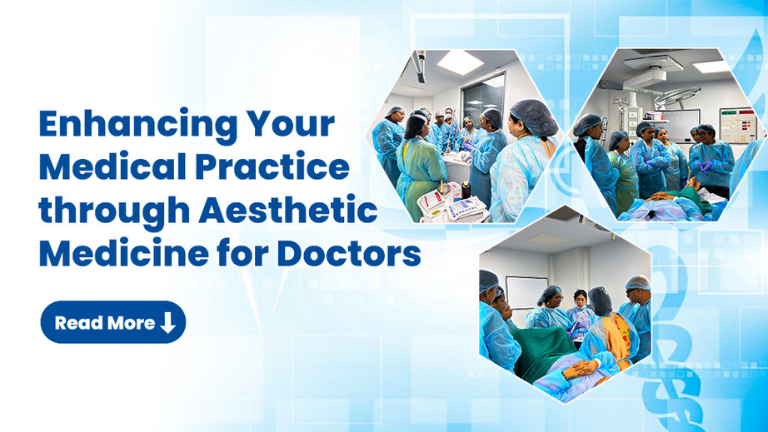
Enhancing Your Medical Practice through Aesthetic Medicine for Doctors

In the fast-changing healthcare environment, physicians are constantly viewing specialist areas that do not only broaden their area of profession but also provide them with highly rewarding and satisfying career prospects. Such a possible area of interest could be aesthetic medicine—a specialty medicine dealing with enhancing outward physical appearance using minimally invasive therapies. For doctors who seek to widen their knowledge, Aesthetic Medicine Courses are the ideal access to learning this science and art. In this article, we will discuss how much it is necessary for doctors to join Aesthetic Medicine Courses, why these treatments are useful, the eligibility criteria, and how learning Courses in Aesthetic Medicine can make a doctor’s career more glamorous. We will also find out why ILAMED is the ideal place to learn this life-altering specialty.

What is Aesthetic Medicine?

Aesthetic Medicine involves a range of non-surgical beauty procedures to enhance skin, body shape, and facial beauty. Aesthetic procedures like Botox injections, dermal fillers, chemical peels, laser therapy, and skin revivals qualify under this. Compared to plastic surgery, they are less painful, have short recovery periods, and have become favorites with patients opting for subtle yet effective beauty improvements.

The Increasing Need for Aesthetic Medicine Classes

With growing awareness and acceptance of cosmetic treatments across the globe, demand for aesthetic medicine practitioners has also grown. This has resulted in a surge in Courses in Aesthetic Medicine that have been designed with doctors in mind who want to develop their clinical practice. These courses provide physicians with training and education that allows them to perform aesthetically related procedures safely and with efficiency.

Why Should Doctors Take Aesthetic Medicine Courses?

1. Diversify Your Medical Practice

Doctors can diversify their practice from traditional medicine through doctor Aesthetic Medicine Courses. Diversification brings new sources of income and enables doctors to serve more customers who need cosmetic enhancement.

2. Meet Patient Demand

Presently, patients are more aware of their appearance and want treatments that will make them feel more confident and self-assured. Physicians are poised to fulfill the increasing demand with successful and safe treatments as they are well-versed in aesthetic medicine.

3. Minimum Invasiveness for Maximum Impact

Aesthetic procedures are made to be minimally invasive, thus lowering risk and downtime for patients. Doctors who have received training in these procedures can provide treatments that lead to stunning aesthetic enhancements without the risks of surgery.

4. Career Development

Finishing Courses in Aesthetic Medicine gives a doctor an extra qualification on their credentials. It speaks volumes about commitment to ongoing learning and specialization, advancing professional standing and presenting higher career prospects.

Eligibility Criteria for Aesthetic Medicine Courses

All Courses in Aesthetic Medicine for doctors need the applicants to have a valid medical degree (MBBS or equivalent) and registration with the concerned medical council. Some advanced courses might necessitate prior clinical experience or postgraduation in allied areas like dermatology, plastic surgery, or general medicine.

ILAMED, being a top-class learning institution for Aesthetic Medicine Courses programs, provides training programs that are benefiting recent graduates and seasoned practitioners equally. Its training programs are formulated to equip the students with fundamental knowledge as well as advanced-level clinical competencies, therefore becoming suitable and useful for varied medical practitioners.

Advantage of Aesthetic Medicine Procedures

1. Non-Surgical and Safe

Aesthetic procedures are generally non-surgical, comprising injections or surface treatments. These minimize the risks of surgery and anesthesia and thus become more secure procedures for the patients.

2. Fast Recovery

Aesthetic patients require very little downtime, enabling them to get back to their regular activities very quickly.

3. Customized Treatments

Every procedure can be tailored according to the individual patient’s requirements, enabling them to have natural-looking outcomes that enhance their own features.

4. Increases Patient Confidence

Better appearance through aesthetic treatments also lead to better self-confidence and psychological health.

How Aesthetic Medicine Courses Enhance the Career of a Doctor?

Enrolling in Aesthetic Medicine Courses for Doctors is not all about learning new things; it’s about enhancing your medical career. This is how these courses are an adornment to your medical profession:

  • Talent Enriched: Physicians become masters at advanced cosmetic procedures, thus becoming jack-of-all-trades experts.
  • Increased Patient Base: Aesthetic procedures bring in new patients requiring cosmetic procedures.
  • Credibility of Professionals: Certification from a well-known organization like ILAMED gives it legitimacy and authenticity.
  • Financial Boost: Aesthetic procedures have greater profit margins than traditional procedures.
  • Networking: Training sessions offer a community of peers and industry professionals.

Why Prefer ILAMED for Courses in Aesthetic Medicine?

ILAMED is the ideal institution to learn Aesthetic Medicine Courses because of its complete course curriculum, qualified tutors, and practical training method. The following are the reasons doctors prefer ILAMED:

  • Expert Faculty: Trainers at ILAMED are trained professionals with extensive clinical as well as teaching experience.
  • Full Curriculum: Courses cover theory, practice, patient handling, as well as ethical issues.
  • State-of-the-Art Facilities: Students enjoy the latest equipment and live demonstrations.
  • Flexible Learning: ILAMED provides online and offline modules, so it is convenient for working professionals.
  • Certification: Doctors on graduation are awarded accepted certification, boosting their professional image.

Overview of Typical Aesthetic Medicine Procedures Covered by the Course

  • Botox and Dermal Fillers: Reduces wrinkles, fine lines, and restores facial shape.
  • Chemical Peels: Enhances skin texture and color by eliminating damaged superficial layers.
  • Laser Treatments: Eliminates pigmentation, scars, and excess hair.
  • Microneedling and PRP Therapy: Induce collagen production to rejuvenate skin.
  • Non-Surgical Body Contouring: Procedures such as cryolipolysis to sculpt localized fat.

These procedures constitute the curriculum of Aesthetic Medicine Courses and are taught with focus on safety, patient selection, and optimization of outcome.

Future Trends in Aesthetic Medicine: Keeping Current with the Times in a Changing Field

Aesthetic medicine is a dynamic industry, and it’s fueled by advancing technology, changing patient needs, and innovative breakthroughs in skin science and regenerative therapies. Staying current with these trends is essential to physicians if they are to remain competitive and provide the best possible patient outcomes. Among the top trends is the integration of digital imaging and artificial intelligence (AI) in treatment planning to deliver customized and precise aesthetic results. Well-rounded and preventive care, in which wellness, nutrition, and non-surgical modalities are integrated to deliver natural and permanent results, are also receiving greater focus.

The second significant trend is the emergence of regenerative therapies such as platelet-rich plasma (PRP) therapy, stem cell therapy, and advanced microneedling that trigger cellular renewal. Patients are also requesting combination therapies—individualized protocols that address several concerns at once in a single visit, optimizing convenience and efficiency. As social media continues to influence beauty trends and patient education, practitioners need to be adept at patient communication and ethical marketing as well.

Through the observation of extensive aesthetic medicine programs, doctors aren’t just learning the technical aspects but are also brought to knowledge of such emerging trends, and therefore are well-positioned to be the innovators and prosper in an industry that’s going to keep growing and expanding.

Conclusion

Adding doctors’ Aesthetic Medicine Courses to your professional growth is a strategic step that unlocks great possibilities in the healthcare sector. These courses do not just prepare you for the high-demanding cosmetic procedures, but also provide tremendous value to your medical practice by increasing your domain and patient pool. In an era where minimally invasive aesthetic treatments are in greater demand than ever before, becoming proficient in the domain puts you at the forefront of contemporary medical practice.

Selecting ILAMED as your Aesthetic Medicine Courses guarantees you the best-in-class education from professionals, real exposure, and validated certification that will make you stand out in the medical industry’s competitive market. Regardless of whether you are a graduate or an old doctor, these courses provide an experience that can transform your life by advancing your career and satisfying the changing needs of your patients.

Join this fulfilling journey with ILAMED and become a master practitioner in the science and art of aesthetic medicine.

Aesthetic Medicine Courses

Aesthetic Medicine Courses: Upgrade Your Skills in Modern Cosmetic Healthcare

The field of aesthetic medicine has seen exponential growth in the past decade with enhancements in technology, increased patient demand, and improved knowledge of facial anatomy and skin biology. To address this increasing demand, Aesthetic Medicine Courses have become the need of the hour for medical professionals who wish to enhance their clinical skills and treat their patients with the most advanced treatments. These courses offer in-depth training in minimally invasive interventions that improve appearance with utmost concern for patient safety and satisfaction.

In particular, Aesthetic Medicine Courses for Doctors hope to offer talented medical professionals the scientific foundations and practical experience they require in order to be successful in this intensely specialized practice. Since aesthetic medicine training has grown worldwide—e.g., popular centers such as ILAMED opening new classes in Dubai—never has the time been so promising to acquire education in this continuously changing field in an official capacity.

What are Aesthetic Medicine Courses?

Aesthetic Medicine Courses are certified training courses designed to train health practitioners how to perform cosmetic treatments such as botulinum toxin injection, dermal fillers, laser treatment, chemical peeling, and other skin rejuvenation methods. These courses consist of theoretical education and practical training to prepare learners to gain a solid set of knowledge related to facial anatomy, skin anatomy, pharmacology, and advanced aesthetic technology.

Aesthetic Medicine Courses Normally Comprise:

  • In-depth facial and skin anatomy
  • Mechanisms of aging and skin changes
  • Pharmacology of fillers and neuromodulators
  • Laser physics and safety guidelines
  • Treatment planning and patient assessment
  • Side effect and complication management

The purpose of these courses is to provide practitioners with the capability to deliver safe, effective, and customized treatments that address their clients’ aesthetic requirements.

Advanced Training Aesthetic Medicine Courses for Doctors

Even though training in aesthetic medicine is valuable for the majority of medical doctors, Aesthetic Medicine Courses for Doctors are designed specifically for doctors with a strong medical foundation. Such training is more clinically focused, advanced injection techniques, and complex procedural methods.

Doctors Who Receive Such Training Develop the Ability to:

  • Perform advanced facial contouring and volumizing
  • Resurface and correct skin color with lasers
  • Manage medical conditions with aesthetic procedures (e.g., hyperhidrosis, migraines)
  • Identify the connection between welfare and aesthetics

Through studying aesthetic medicine education for physicians, physicians can widen practice, increase patient satisfaction, and stay competitive with a changing environment.

Scientific Principles and Technological Advancement

Aesthetic medicine training relies on the scientific principles in dermatology, anatomy, and pharmacology. Facial musculature, fat compartments, and vascular anatomy are learned to be able to inject and use the laser safely.

Advances in technology have revolutionized aesthetic medicine, and aesthetic medicine training now includes training in:

  • Fractional and ablative lasers for rejuvenation of the skin
  • Intense Pulsed Light (IPL) machines for vascular and pigmentation lesions
  • Radiofrequency and ultrasound devices for non-surgical tightening of the skin
  • Microcannula techniques for more accurate and safer filler injections
  • Digital imaging and 3D simulation for pre-treatment planning

These advances enhance treatment results and reduce downtime, thus making aesthetic treatments more attractive and accessible to more people.

Medical and Cosmetic Benefits

While cosmetic enhancement remains the main goal of aesthetic courses, medical advantages are also accentuated. Aesthetic treatments could improve patients’ quality of life by treating ailments like:

  • Acne and post-acne scarring
  • Excessive sweating (hyperhidrosis)
  • Chronic migraines (using botulinum toxin treatment)
  • Rosacea and vascular lesions
  • Scarring and pigment disorders

With comprehensive training, professionals acquire the art of tailoring treatments to suit individuals’ special needs, balancing aesthetic goals against medical considerations.

Best Candidates for Aesthetic Medicine Courses

Best candidates for Aesthetic Medicine Courses are:

  • Authorized doctors (plastic surgeons, dermatologists, general practitioners)
  • Dentists with facial beauty interests
  • Nurses and nurse practitioners with medical backgrounds
  • Dermatologic or cosmetic practice physician assistants

For physicians, there are particularly useful Aesthetic Medicine Courses that help physicians who wish to expand their practice area and conduct minimally invasive cosmetic treatments. There are some basic Courses in Aesthetic Medicine for allied healthcare professionals who would rather gain simple knowledge.

Structure and Levels of the Course

Courses in Aesthetic Medicine are available on various levels so as to cater to various experiences and qualifications:

Course levelTarget AudienceDurationHighlights
Certificate/IntroductoryBeginners, healthcare prosWeeks to monthsBasics of anatomy, injectables, lasers, ethics
Advanced CertificateExperienced practitionersMonthsComplex techniques, advanced injectables, lasers
Diploma/PostgraduateDoctors and specialists1-2 yearsComprehensive curriculum, research, clinical work
Hands-On WorkshopsAll levelsDays to weeksPractical skills, live demonstrations

These flexible formats allow practitioners to select courses best suited to their career goals and schedules.

Ethical, Regulatory, and Business Aspects

Contemporary Aesthetic Medicine Courses also include significant themes in addition to clinical skills, such as:

  • Ethical practice and patient consent
  • Effective management of realistic patient expectations
  • Licensing and regulation regulations
  • Aesthetic clinic marketing and business management

These aspects must be known to establish a legitimate and sustainable aesthetic practice.

Global Education and ILAMED’s Role

In schools offering aesthetic medicine training to physicians, ILAMED is actually a school with international recognition and the experience of having trained more than 300,000 physicians all over the world for more than two decades. The course in ILAMED offers a blend of scientific integrity combined with practical science in order to equip ILAMED graduates for success in establishing new aesthetic practice.

To the world’s demand for quality education, ILAMED responded by offering its world-class Aesthetic Medicine Courses to the world’s emerging markets, including Dubai. The launch fills the gap of state-of-the-art training for practitioners in the Middle East and the world at large, enhancing excellence in aesthetic healthcare in the world.

Why Enroll for Courses in Aesthetic Medicine ?

Enrolling for Aesthetic Medicine Courses is of many benefits:

  • Acquiring expert clinical skills and self-assurance
  • Having the ability to provide a very broad range of minimally invasive treatments
  • Patient satisfaction and retention improvement
  • Development on a personal and professional level as well as higher earning potential
  • Having access to up-to-date technologies and evidence-based methods

Physician Aesthetic Medicine Courses are, for doctors, an opportunity to differentiate themselves and address the increasing demand for non-surgical aesthetic treatments.

Conclusion

Aesthetic medicine foundation keeps evolving at a rapid rate due to science advancements and technological development. Aesthetic Medicine Courses form the basis of health professionals who wish to specialize in this art science blend. Whether you are a physician seeking means of improving your ability through Aesthetic Medicine Courses for physicians or a medical professional seeking vital aesthetic medicine courses, quality education counts.

With training centers such as ILAMED increasing their global presence and offering special training in key hubs such as Dubai, Aesthetic Medicine Courses have never been easer and better. Seizing this opportunity will make you capable of delivering safe, effective, and life-transforming treatments that enhance the beauty of your patients’ lives and boost your professional status.

Aesthetic Medicine Courses

Learning the Art of Aesthetic Medicine: Investigating Aesthetic Medicine Courses in Dubai

Aesthetic medicine is a rapidly evolving subspecialty-one that merges art with medicine. It is the broad universe of nonsurgical interventions and procedures for enhancing one’s physical appearance, confidence, and thus quality of life. As more demand arises for aesthetic treatments, so too is there an even greater necessity for capable, informed practitioners. The Fellowship in Aesthetic Medicine is one of the optimal ways that can prepare trainees to become experts in this field.

Significance of Acquisition of Non-Invasive Treatments

In Aesthetic Medicine, the delivery of treatments like Botox and dermal fillers is becoming a necessary skill. These treatments provide an instant effect with no, or at least very little, downtime; therefore, the patients are asking for them. Safety and efficacy in the education of such treatments are the top priorities for any healthcare practitioner who wishes to be at the top of the game. Botox is a neuromodulator; it temporarily blocks nerve impulses, which assists in diminishing the visibility of dynamic wrinkles, whereas dermal fillers replace volume to erase facial creases. Proficiency in these procedures not only adds to a practitioner’s repertoire but also significantly contributes to enhancing patient satisfaction and results.

Objectives of Aesthetic Medicine Courses

The goals set for the Aesthetic Medicine Courses are as follows in making medical practitioners the best in this fast-paced field:

  • Training of Registered Medical Practitioners: This course should be used to train registered medical practitioners in aesthetic medicine and make them the Best Doctors in Aesthetics.
  • Development of Knowledge and Competencies: This program in aesthetic medicine would provide knowledge, skills, and techniques to the medical professional.
  • Practical Exposure: It would provide participants with hands-on practical experience in treating actual patients with the latest treatments and materials in vogue.
  • Patient Safety: The course includes new techniques for the treatment of routine aesthetic conditions, keeping patient safety and the medical standards at their top priority.
  • Skin and Cosmetic Issues: The treatment of skin and cosmetic issues in this fellowship program has been directed towards a more holistic way, seeking enhancement, rejuvenation, and restoration.
  • Specifically, Symmetry and Proportions: The trainees learn the important analyses of the factors of symmetry and proportion for optimal aesthetic result.
  • Protocols and Ethics: The procedures that must be complied with, the clinical practice guidelines, and ethical principles that must be adhered to in aesthetic medicine are part of this program.

Training Methods

Fellowship in Aesthetic Medicine is the postgraduate training making use of various methods for proper learning:

  • Hands-on Tutorials: The program offers a clinically focused hands-on tutorial to give optimal exposure of scientific, clinical, and industry information to the medical practitioner required to introduce non-invasive aesthetic procedures into their practice.
  • Learning from the Best Professors: Participants are taught by highly experienced professors who will be performing techniques on actual patients. This allows the audience to equate theoretical knowledge with reality for enhanced learning.
  • All Levels: From the aesthetic medicine beginner to someone with a little more experience, this fellowship is an excellent scenario for both because the information can be applicable to each of them.
  • Preparation for Private Practice: The Aesthetic Medicine Fellowship provides physicians with thorough knowledge regarding all the steps of aesthetic medicine from establishing practice to acquiring competency and knowledge in treating patients with complete confidence.

Aesthetic Medicine Courses for Doctors in Dubai

Dubai contains a number of well-known institutions providing Aesthetic Medicine Courses for Doctors. Some of these include:

  • ILAMED’s Fellowship in Aesthetic Medicine (FAM): The comprehensive aesthetic medicine course, from basic to advanced levels, with rigorous hands-on training. Doctors will be prepared to dive into instant aesthetic medicine practice with this course.
  • Fellowship in Aesthetic & Anti-Aging Medicine: Offered by the ICAM Institute, this course educates a medical professional in aesthetic medicine, anti-aging treatment, advanced procedures, anti-aging therapies, and the holistic approach towards skin rejuvenation.
  • Online Fellowship in Aesthetic Medicine: Offered in the Indian Institute of Aesthetic Medicine, thereby allowing a candidate with online learning pattern and hands-on practice sessions with better exposure to advanced and basic aesthetic procedures.
  • Fellowship in Cosmetic and Aesthetic Medicine: Most universities provide this postgraduate program that is advanced and focuses primarily on cosmetic procedures and non-surgical aesthetic treatments so that the health professional will be well-equipped with theoretical knowledge and practical skills.

Career Avenues Open After the Courses in Aesthetic Medicine

A medical professional can obtain a number of career paths after finishing their Courses in Aesthetic Medicine. A few of the career paths that a candidate can pursue are:

  • Cosmetic Clinics: There are special aesthetic clinics that provide a variety of cosmetic treatments for which the graduates can work.
  • Dermatology Centers: Dermatology centers can also specialize in skin-related aesthetic treatments.
  • Plastic Surgery Practices: Besides private practices, in general, fellowship graduates work under plastic surgeons in collaboration for even better outcomes of patients.
  • Private Practice: Most practitioners want to start their own private aesthetic medicine clinics and provide personalized aesthetic medicine procedures.
  • Research and Academia: Most of them will work in research or teaching and become contributors to the evolution of aesthetic medicine.

Conclusion

In a global economy where aesthetic medicine is one of the emergent new areas, undertaking a Course in Aesthetic Medicine could be a life-changing experience for medical professionals wishing to gain expertise in this exciting and rewarding branch of medicine. Systematic training alongside practical experiences and ethical learning can make an enormous difference in patients’ lives. Assisting the patient in achieving his or her desired aesthetic outcome while fostering health and well-being will indeed enable the graduate fellow to be a success in the art and science of aesthetic medicine.

As the demand for aesthetic procedures grows, aesthetic medicine is highly promising, and those who commit to their education by means of fellowships will be highly positioned to be leaders in this exciting field. These Aesthetic Medicine Courses for Doctors will provide practitioners with proper skills, along with confidence to perform the multiple complexities of aesthetic treatments while maintaining patient safety and satisfaction. In fact, aesthetic medicine continues to find its place with technology and patient care; therefore, a properly trained practitioner can contribute to the future of this thriving category.

Aesthetic Medicine

Advances in Aesthetic Medicine: Complete Guide for Doctors

Aesthetic medicine now is dramatically different from what it used to be, utilizing new technology and latest techniques to enhance cosmetic appearances as well as other clinical problems. Aesthetic medicine now is the subject of this article, and how and why the advances can be utilized to the advantage of medical students to enhance the understanding of the specialty. A few procedures will be covered, the role of Aesthetic Medicine Courses, and how they will transform future practitioners.

Understanding Aesthetic Medicine

Aesthetic medicine is a range of treatments to improve physical looks through non-surgical or minimal surgery techniques. Treatments used include Botox injections, dermal fillers, laser therapy, and skin rejuvenation. The use of aesthetic medicine is on the rise because it has the ability to improve self-esteem and mental status in addition to the treatment of skin conditions.

Key Advancements in Aesthetic Medicine

  • Ultrasonic Rhinoplasty: This is one of the latest procedures, ultrasonic rhinoplasty being a method with the use of application of ultrasonic technology to shape the nose delicately. More safely and more beautifully than in the ways of yesteryear, this has been a wondrous leap forward in nose surgery.
  • Artificial Intelligence in Skin Analysis: Artificial intelligence is changing aesthetic medicine by providing deeper information about the health of skin. It adjusts to treatment procedures that are specific to patient conditions for better overall outcomes.
  • Regenerative Medicine: The most recent breakthroughs in regenerative medicine include the application of stem cells and growth factors to improve the quality of skin and restore tissue function. Not only does this provide greater aesthetic benefit, but also cures underlying medical disease.
  • Non-surgical Therapies: The requirement for non-surgical therapies is always on the increase, and energy-based technology is ever on the increase too. These therapies minimize complications and recovery time but give outstanding results.
  • Skin Microbiome Research: The significance of the skin microbiome in overall dermatological well-being is also taking on a growing importance. Such research is transforming treatment protocols and product formulation for aesthetic clinics.

Requirement for Aesthetic Medicine Courses

For those medical students who are interested in this exciting field, Aesthetic Medicine Courses for Doctors are a must. These courses impart basic knowledge and practical skills required to perform aesthetic procedures safely and effectively.

  • Aesthetic Medicine Courses for Doctors: For doctors, the courses give them advanced training in procedures such as injectables, lasers, and patient management skills. They emphasize ethical practice and patient safety and ensure that clinicians are properly equipped to perform to patient expectations.
  • Aesthetic Medicine Courses: Various courses on various subjects of aesthetic medicine, including dermatology, plastic surgery, and cosmetic treatments, are provided by various institutions today. Institute of Laser & Aesthetic Medicine (ILAMED) is a well-known institute that provides detailed training courses that prepare the students for their future professional prospects in this field. Practical training from professionals is integrated in the majority of these programs, providing the students with a chance to gain hands-on experience as well as theoretical experience.

Answering Most Frequently Asked Medical Student Questions

Medical students tend to be overwhelmed with questions regarding aesthetic medicine:

What are My Career Opportunities?

There are many career opportunities provided in aesthetic medicine in the practice form of cosmetic dermatologists, plastic surgeons, or aesthetic medicine practitioners in spas and clinics.

How can I Ensure Patient Safety?

Ethical codes and safety precautions for patients are emphasized through rigorous training in accredited Aesthetic Medicine Courses for secure practice.

What is the New Trend?

Being up to date with such trends as AI technologies and regenerative medicine is vital to providing on-the-edge care.

How do I Make Aesthetics a Part of My Practice?

There are numerous medical professionals who integrate aesthetic treatments as part of their practice to enhance patient satisfaction and services.

The Role of Technology in Aesthetic Medicine

Technological advancements are the key to shaping the future of aesthetic medicine. Technological advancements like AI-based diagnostics and sophisticated laser technologies are improving the effectiveness of treatments and minimizing risks related to traditional methods. The use of technology not only makes procedures easier but also improves patient outcomes by allowing for more individualized regimens of care.

AI-Driven Diagnostics

The use of artificial intelligence in Aesthetic Medicine has totally transformed the consultation process. The new clinics make use of advanced AI systems capable of performing high-resolution scans of the face, tracking from the level of collagen to the texture of the skin with great accuracy. These are not mere surface scans but give predictive analysis of the treatment and aid practitioners in devising highly tailored treatment plans.

Regenerative Medicine

Regenerative medicine is a cornerstone of modern aesthetic treatments with solutions that complement nature’s own repair processes. Stem cell therapy leads the pack, using the patient’s own cells to rebuild and restore tissues. It is very effective in restoring the elasticity of the skin and promoting hair growth

Trending Treatments in 2025

The era of aesthetic medicine has witnessed unprecedented transformations, with several new treatments becoming increasingly prominent:

  • Profhilo Structura: A synergistic hybrid complex of high and low molecular weight hyaluronic acid for improved tissue remodeling.
  • Polynucleotides: Advanced treatments that stimulate skin rejuvenation.
  • Secret PRO: Combines RF microneedling with CO2 laser technology for complete-spectrum skin treatment.
  • Alluzience: Europe’s first ready-to-use liquid botulinum toxin A.
  • Lanluma: Advanced collagen stimulator using Poly-L-lactic acid microspheres.
  • UniverSkin: Personalized skincare system utilizing specially formulated serums based on detailed skin analysis.

Conclusion

The aesthetic medicine business is evolving at a rapid rate with the support of technology and increasing needs for non-surgical treatments. Students who are interested in pursuing a career as an aesthetic medicine professional should study aesthetic medicine so that they can gain the skills and knowledge required to succeed. With the business further expanding, being in touch with the latest concepts and trends will be more vital for professionals in the future.

By remaining cognizant of such advancements and correspondingly being trained by the likes of ILAMED, medical students can position themselves favorably in this newly emerging field and make a positive impact on patients’ care and satisfaction. Professional career development in aesthetic medicine is as much a matter of professional growth as it is of having the ability to positively impact individuals’ lives in terms of self-image and well-being.

To 2025 and beyond, the future is evident with the inclusion of aesthetics alongside technology-driven solutions offering customized care. To future physicians who want to join the field through intensive Courses in Aesthetic Medicine, the prospect is boundless and motivating on a personal as well as professional level in helping to provide patients’ desired aesthetic outcome as well as develop more knowledge regarding the whole health and well-being dimension.

Aesthetic Medicine

Unsealing the Future of Beauty: An Aesthetic Medicine Fellowships Guide

Technology and cutting-edge techniques have changed the world of cosmetic therapies altogether in the dynamically developing area of Aesthetic Medicine. For all those budding medical graduates who are looking to become medical professionals, a Fellowship in Aesthetic Medicine is a wonderful career option wherein one can apply the art and the science together to make the patients happier with their appearance. This essay discusses the history of Aesthetic Medicine and how such treatments fix some medical conditions, particularly in the area of possibilities in India.

Introduction to Aesthetic Medicine

Aesthetic Medicine is a developing clinical speciality that applies minimally invasive aesthetic treatments in order to enhance the aesthetic contentment of the patients. The procedure is now no longer purely performed by dermatologists and plastic surgeons since there are many other specialities that now start offering aesthetic medical treatments subject to the preference of the patients. The treatment is expanding with a very quick pace based on technological advancements as well as pressure from society towards aesthetic treatment. Thus, Aesthetic Medicine Courses in India are becoming popular and provide a complete training program to the future practitioners.

Advancements in Aesthetic Medicine

Some of the latest advances in Aesthetic Medicine are newer dermal fillers, lasers and minimally invasive procedures that have made cosmetic surgery safer and more efficient and allow practitioners to provide personalised treatment to patients requiring aesthetic enhancement. For instance, advanced laser therapies can now correct skin rejuvenation and body contouring with lesser downtime and therefore are very much in demand by patients.

How will the aesthetics be in 2025? AI-Powered Personalised Aesthetic Plans We’ll be able to customise treatment plans based on skin type and needs, thanks to AI-powered facial analysis software that can quantify skin texture, elasticity, and symmetry with a level of accuracy never before possible. With this information, aesthetic practitioners will be able to create treatment plans that achieve the best results with minimal guesswork. Non-Invasive Skin Lifting and Tightening Radio frequency and ultrasound therapy are the treatments of choice for non-invasive skin lifting and tightening, without the requirement for downtime and encouraging the natural production of collagen. This will allow space for incremental, progressive improvement in skin tightness and texture.

Fellowship in Aesthetic Medicine: A Path to Expertise

Aesthetic Medicine fellowships train all aspects of aesthetic procedures like botulinum toxin, dermal fillers, and lasers. Fellowships provide physicians with extensive knowledge and procedural competence to practice as specialists. Core areas of training are always part of a curriculum that addresses facial anatomy, cosmetic injectables, and advanced skin rejuvenation processes. After completing an Aesthetic Medicine fellowship, physicians can begin successful careers as private practitioners, medical spas, or in an academic environment.

Aesthetic Medicine Training in India

There are many Aesthetic Medicine Courses offered in India that meet the increasing demand for aesthetic practitioners. The courses offer comprehensive knowledge and practical experience to help healthcare practitioners build successful careers in aesthetic medicine. Some institutions, like ILAMED, offer long fellowships to prepare doctors to practice Aesthetic Medicine immediately. The courses design the aesthetic treatment future in India so that practitioners can handle the new technologies and techniques efficiently.

Career Prospects and Impact

After graduation with a Fellowship in Aesthetic Medicine, one can choose to practice either in private clinics, medical spas, or academic institutions. Graduates can build successful aesthetic clinics or pursue path-breaking research and make a great difference in the lives of patients. Demand for non-surgical aesthetic treatments by patients drives the growth of the field, and hence the future looks promising for the practitioners. Since the business continues to grow, Aesthetic Medicine Courses in India will help meet this need.

New Trends and Technologies

  • Longevity & Biohacking – Longevity and well-being therapies – General health and well-being therapies – Biohacking technologies such as epigenetic analysis and hormone profiling – Health and well-being versus cosmetic enhancement Regenerative Aesthetics – Cutting-edge regenerative aesthetics based on the body’s natural repair processes – Platelet-Rich Plasma (PRP) and stem cell therapy to restore skin – Platelet-Rich Plasma (PRP) to stimulate hair growth
  • Micro-Tweaks and Hydration- Boosting Treatments. Everything about enhancement and health of the skin, micro-tweaks rejuvenate and fresh-faced-looking faces without being too much, and hydration treatments such as hyaluronic acid-based injectables and IV hydration therapy enhance elasticity and fight environmental damage. Exosomes may also be a new-wave skin booster, increasing collagen production and aiding in skin regeneration.

Integration of Wellbeing and Aesthetics

There is growing awareness of the interconnectedness of beauty and total health. There is a trend among clinics to offer overall services combining aesthetic treatments with wellness programs like nutritional support and mental wellness. This broader outlook responds to clients seeking complete solutions for their beauty and health concerns. As the industry shifts, wellness and longevity will define the future of Aesthetic Medicine.

Conclusion

Overall, undertaking a Fellowship in Aesthetic Medicine is a smart decision for medical students who wish to pursue this lucrative career. By emphasising practice-based learning and innovation, a fellowship not only contributes to professional expertise but also enhances Aesthetic Medicine as a speciality area. With increasing demand for cosmetic treatment, Aesthetic Medicine Courses in India will also play a key role in directing the future of the industry. With these opportunities, future practitioners can fulfill their dreams and make a lasting impact on the lives of their patients. The future of Aesthetic Medicine is bright, and those who choose to pursue it will be at the forefront of innovation and patient care.